Author: Connellan D et al.
Citation: EMJ Nephrol. 2026; https://doi.org/10.33590/emjnephrol/87913XD6
Date correction published: 16/07/2026
Original publication¹

In the article1 published on the EMJ website on 10th July 2026, the following errors were present in Table 1, Table 3, and Table 5.
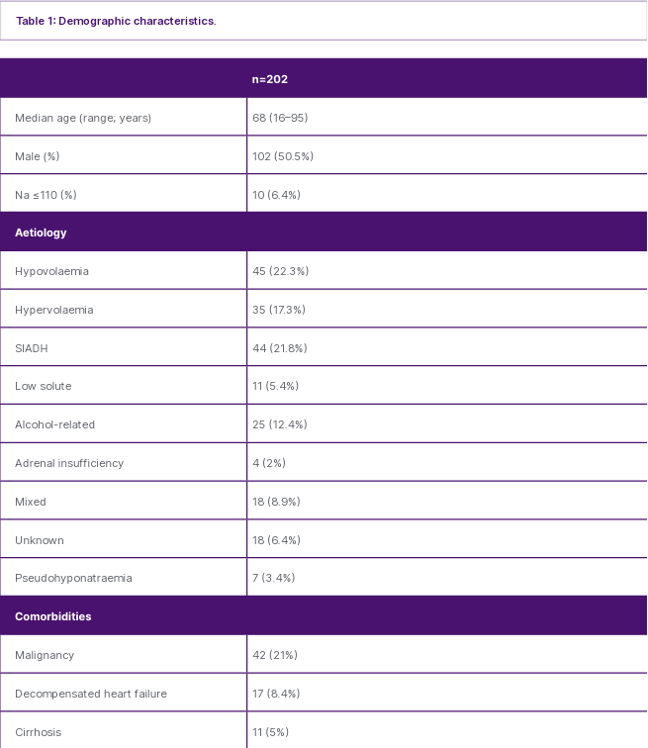
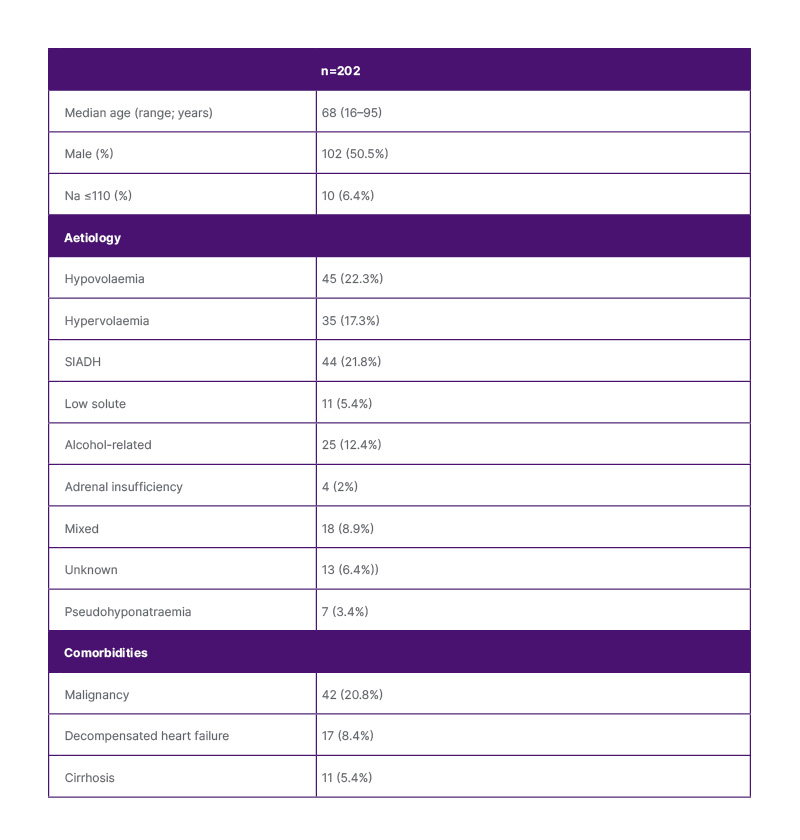
In Table 1, the wrong data was present in the ‘Unknown’, ‘Malignancy’, and ‘Cirrhosis’ rows. The original data read 18 (6.4%), 42 (21%), and 11 (5%), respectively. These have now been updated to read 13 (6.4%), 42 (20.8%), and 11 (5.4%), respectively.
Original Table 1
Updated Table 1
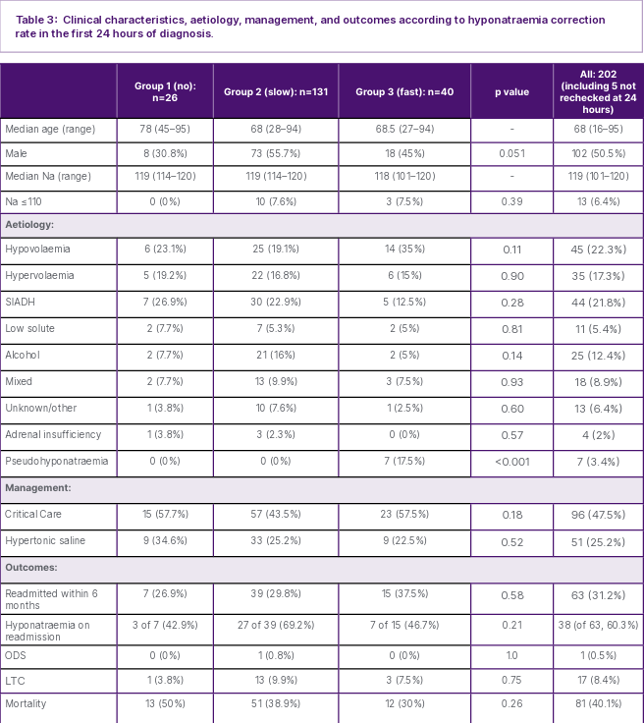
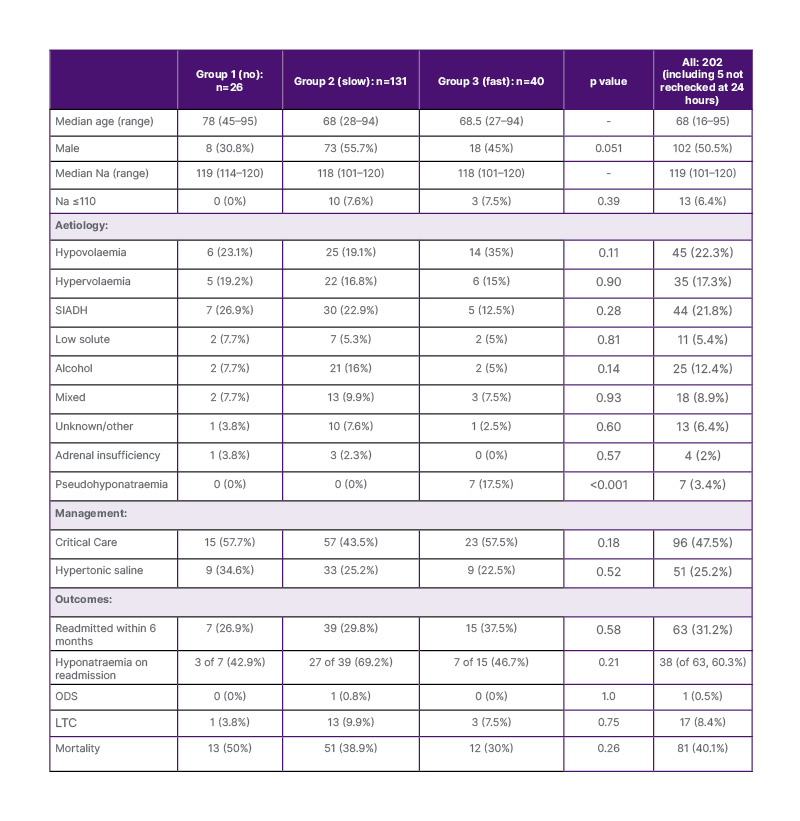
In Table 3, the data in the ‘Median Na (range)’ row under ‘Group 2 (slow): n=131’ had been duplicated from the prior cell. This has now been updated to 118 (101–120).
Original Table 3
Updated Table 3
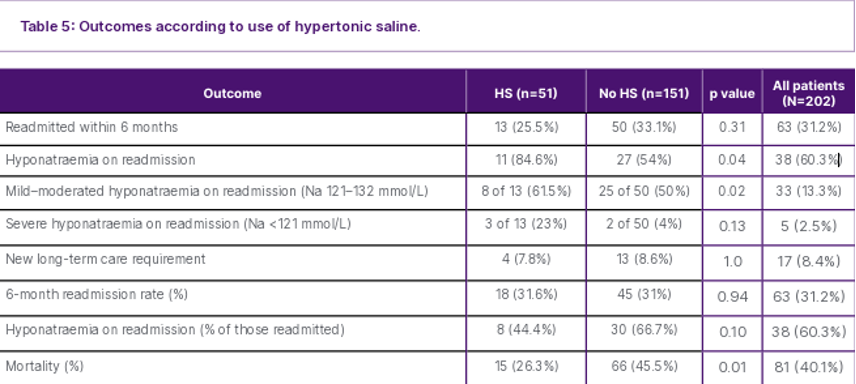
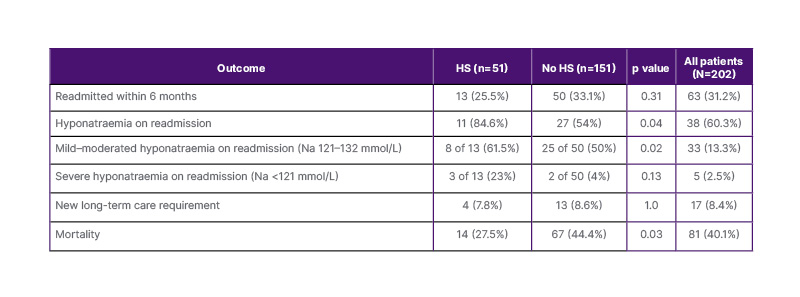
In Table 5, two rows from Table 4 had been included in error: ‘6-month readmission rate (%)’ and ‘Hyponatraemia on readmission (% of those readmitted)’. These have now been removed.
In Table 5, incorrect data was included in the final row in the ‘HS (n=51)’, ‘No HS (n=151)’, and ‘p value’ columns. This data previously read: 15 (26.3%), 66 (45.5%), and 0.01, respectively. This has now been updated to read: 14 (27.5%), 67 (44.4%), and 0.03, respectively.
Original Table 5
Updated Table 5
EMJ apologises for the errors and any inconvenience caused.
Reference:
1. Connellan D et al. Retrospective cohort study of long-term outcomes associated with severe hyponatraemia. EMJ Nephrol. 2026;14[1]:68-77