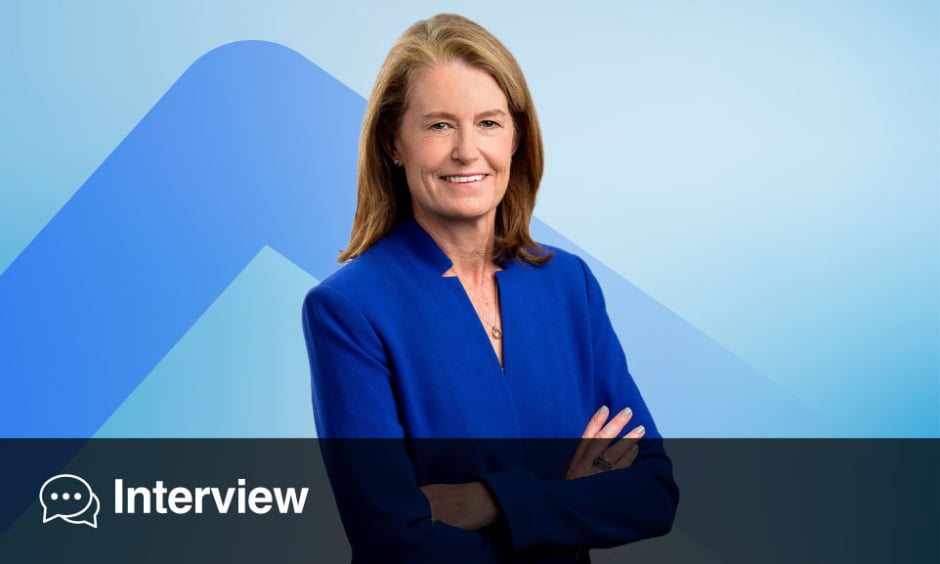
Elizabeth Mittendorf | President (2026–2027), American Society of Clinical Oncology (ASCO) Chief, Division of Breast Surgery, Beth Israel Deaconess Medical Center and Chief of Multi-Disciplinary Oncology at Dana-Farber Cancer Institute, Boston, Massachusetts, USA
Citation: Oncol AMJ. 2026;3[1]:103-106. https://doi.org/10.33590/oncolamj/VS8G2992

You have built a unique career as a surgeon‑scientist, and your commitment to breast cancer immunotherapy has not diminished. What keeps you in the field? And how has your work in immunotherapy shaped the way you approach patient care and research?
I like to suggest that I was into immunotherapy before it became cool. When I was serving in the military, after I finished my surgical training, I had the opportunity to staff the breast center at the Walter Reed Army Medical Center, Bethesda, Maryland, USA, and I met a woman there who had recurrent breast cancer. She had a chest wall recurrence after being treated for a really indolent Stage 1 hormone receptor-positive breast cancer about 15 years earlier. And I just remember thinking to myself that her immune system failed her. So, after that, in short order, I went to MD Anderson, Houston, Texas, USA, to do my surgical oncology fellowship, and I suggested I wanted to do my research in immunotherapy. I remember the director of the program said that he couldn’t allow that, that immunotherapy would never work, and that was based on his experience with IL-2, which was very toxic. But I was very fortunate to be early in recognizing that, in fact, we just needed to improve our basic understanding of how the immune system works. Federally funded research gave us a lot of insight into how the immune system worked, which allowed us to have these advances. Having been in the field from its early days, it’s exciting to think that immunotherapy is now a pillar of cancer care, along with surgery, which is what I do, as well as chemotherapy and radiation.
Your lab has led several vaccine‑based trials, including the Phase III PRESENT study and a multicenter Phase II trial combining a CD8 T‑cell‑eliciting vaccine with trastuzumab. Which recent findings from these or related trials are you most excited about, and how might they change the therapeutic landscape for patients with HER2‑positive or triple‑negative breast cancer?
Our lab has led a number of clinical trials, including a Phase III study that involved more than 750 women. It was an international study asking the question, did this vaccine that we developed improve their survival? It was a very simple vaccine. We took a little piece of that HER2 protein and tried to teach the immune system that, in the setting of cancer, this is foreign, so you should recognize it as such, and attack and destroy it. That trial actually was what we call a negative study. It did not demonstrate the survival benefit that we had hoped for. And I think that was in part because the standard of care in breast cancer had improved. But it was also in part because we didn’t yet have a good understanding of how best to stimulate that immune system. We had given it a target, but perhaps not the other aspects of a vaccine that are necessary to make it work. For example, we had an inferior adjuvant, the spark plug, to get the immune response going. It was very early work, and we learned a lot. And for our team, it really did help inform the research that’s being done now by others, including my former fellows and mentees, who are now taking much more sophisticated approaches to stimulating the immune system through novel vaccines, targeting neoantigens, and using technologies such as mRNA. But I will say that when I was doing these vaccine trials, it was becoming clear that we weren’t quite understanding how to stimulate enough of an immune system.
I had the opportunity to meet and then work with Jim Allison, University of Texas MD Anderson Cancer Center in Houston, Texas, who’s a Nobel laureate for his work looking at immune cell regulation, T cell regulation specifically. We did a little bit of a pivot, and our group was the first to report on programmed death-ligand 1 (PD-L1) expression in triple-negative breast cancer, which now, fast forward, we’ve done a number of clinical trials that have demonstrated this when we add immunotherapy targeting PD-L1 to chemotherapy. In the early stage, women with triple-negative breast cancer have higher rates of what we call pathologic complete response. It’s also approved for patients with PD-L1-positive metastatic triple-negative breast cancer. I like to think that the opportunity that I had to more broadly explore how we could use the immune system allowed us to keep an open mind and pivot in that direction.
As only the fourth surgeon ever elected ASCO President, your term offers a unique opportunity to highlight the multidisciplinary nature of cancer care. How do you envision bringing your perspective to the American Society of Clinical Oncology’s (ASCO) strategic plans to efforts to improve access to clinical trials, strengthen team‑based care, and advance the use of technologies, such as AI?
I think it’s a unique opportunity as a surgeon to be president of ASCO. The majority of our members are, in fact, probably medical oncologists. But I would highlight that ASCO is the society for oncology professionals. So I think it’s a critical organization for folks such as myself, surgical oncologists, and I’m proud to represent that group, along with radiation oncologists and others. Now we think about multidisciplinary care. And when we say that, we often think to ourselves, a patient needs a good surgeon, a good medical oncologist, and a good radiation oncologist. During my presidential term, I am promoting the theme of intentional teams’ exceptional care. And what I mean by that is not a multidisciplinary team, but an entire team that impacts the patient’s experience. So that’s everybody, from those of us who have the privilege of actually touching the patient to those whose impactful work is behind the scenes but still informs a patient’s care. I think it’s critical that we build these teams intentionally. We then create an environment, a culture where the team can really thrive, where everybody can be operating at the top of their skill set. And if we do that, I believe that we’re going to offer care that’s efficient. It’s going to be of high quality, the patient will have a good outcome, and a good experience. And importantly, the team will feel very positive about the work we’ve done with this shared purpose. So, when I say care in my message, I mean both care of the patient and care of the team. I’m really looking forward to the opportunity to think about the vast resources that ASCO has for its members through the lens of a surgeon, to think about how we can, as an organization, support these outstanding teams providing care for our cancer patients.
ASCO’s membership boasts more than 50,000 professionals in over 170 countries. Building on your former roles within the society, how would you like to make ASCO’s work more inclusive globally and translate that research into equitable care?
I’ve been very privileged during my career to be involved with the organization. I’ve had the opportunity to work on the Concord and Conquer Cancer Grant selection committee, helping identify investigators who should receive those awards. I’ve also had the opportunity to be involved with planning the annual meeting and to represent ASCO with other societies in planning their sessions, for example. It has really been a journey for me to then serve on the board, and within my time on the board, as treasurer and now as president. I have tremendous enthusiasm for this organization, and I’m really looking forward to the opportunity to expand opportunities to get others involved with ASCO. And by others, I don’t mean just my colleagues at home or not even just my colleagues here in the United States, I mean those globally. One of the opportunities that I hope to capitalize on is to think about ASCO’s global efforts. We have a number of regional councils, and those regional councils give us an opportunity for a bidirectional relationship where we can learn from our colleagues globally what’s meaningful to them. We can then take some of the outstanding programs we have at ASCO, the leadership development program being one example, institute them in those countries, and then hopefully allow them to further their leadership skills and, in turn, learn from them what’s been effective in their own journeys to cancer care in their countries and bring them back to strengthen our programs here at ASCO. I’m really looking forward to the opportunity to take my boots-on-the-ground experience as a volunteer in the organization to this opportunity to this role on the board and as president, to think strategically about how ASCO can expand those efforts.
Mentorship, sponsorship, and advocacy for research funding and key issues faced by early‑career oncologists. During your presidential year, what initiatives do you hope to champion to address to mentor the next generation of oncologists, particularly for clinician-scientists in the face of funding challenges?
ASCO is very dedicated to our junior colleagues, the early-career individuals. There are a number of programs that ASCO has available. I think everybody’s aware of one of the flagship programs, the leadership development program, but there are many others. And in fact, we have a fairly new initiative called TCAG, the Training and Early Career Advisory Group, where we have actually pulled together a group of younger early career investigators, early colleagues, in order to hear from them what they need from us as ASCO. And I think this is a critical time. There is something I’ve been thinking a lot about in my leadership roles, both at my home institution and within ASCO, and that is what I refer to as generational leadership. The way I was led, mentored, and sponsored early in my career is not the way we need to do it for this new generation. And so ASCO is very aware of that and is working to bring in that voice so that we can best support our colleagues. I would also highlight that one of the things that early career investigators are most concerned about is funding for their research. Funding is very competitive, and there are concerns with the landscape of funding and what the different opportunities are. One of the things that we’re so proud of at ASCO is the Conquer Cancer Foundation, which is a part of our organization that enables us to generate philanthropic support in order to fund these early investigators through the Young Investigator Awards and our Career Development Awards. This has been an incredible initiative that just keeps getting stronger. We’re very excited about the number of awards we were able to give at the Annual Meeting this year. And it comes full circle because later at the Annual Meeting, at our plenary session, we’re going to be hearing work from an investigator who started with a Young Investigator award and took that idea from that lab, that idea, to a clinical trial, and now to the podium here at ASCO. I think that’s another thing for our early investigators that will continue to prioritize.
At ASCO 2026, what themes, scientific advances, or policy discussions do you hope to draw attention to? How will these align with your broader goals for the society during your presidency?
Every Annual Meeting, the week that we spend here in Chicago, USA, gets me excited about the tremendous advances that we’re making in cancer care. And this year is no exception. One of the things that I’m excited about, based on my own research interest, is immunotherapy and how we continue to identify ways to augment a patient’s immune system to treat their cancer. Another thing that’s pretty near and dear to my heart as a surgeon, and is a point of emphasis at the Annual Meeting, is what we refer to as de-escalation, which I might suggest we would say is the opportunity to better personalize a patient’s treatment. Some studies will be reporting out on de-escalation or personalized strategies. And again, as a breast surgeon, one of those areas is looking at the right amount of axillary surgery to perform for a patient. We’ve made such tremendous advances in the care of our patients that we now have many survivors, and the toxicities and long-term effects of treatment are critically important for those individuals. So the goal is to right-size treatment to provide the care they need while minimizing the associated toxicity. And the other thing I’m excited about is the broader recognition of the importance of science. The theme of our 2025–2026 president, Eric Small, emphasizes that science matters, and translating that science to the benefit of all of our patients also matters. And I think we see that throughout the Annual Meeting. And so it’s really nice to be able to see how that theme has resonated in so many different ways.