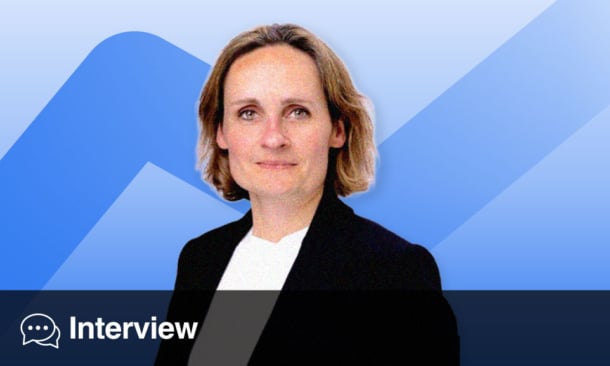
Elizabeth Smyth | Consultant Medical Oncologist, Oxford University NHS Foundation Trust, UK
Citation: EMJ Oncol. 2026; https://doi.org/10.33590/emjoncol/30797912

What are the biggest unanswered questions in oesophagogastric cancer research today, and where do you think the field needs to focus its efforts next?
We have more effective treatments than ever, but we are still not good enough at knowing which patient needs which treatment, and when. Oesophagogastric cancer is extraordinarily heterogeneous, yet we still treat fairly broad groups of patients in much the same way.
For me, the next step is dynamic personalisation: using tumour biology, early response assessment, and circulating tumour DNA (ctDNA) to decide whether to continue, escalate, switch, or stop treatment. In early disease, we also need to work out who really needs surgery, who needs additional treatment afterwards, and who may already be cured and can safely avoid more therapy. Progress is not just about finding more drugs. We also need better prevention and earlier diagnosis, and trials that tell us how to use treatment more intelligently in real patients and real healthcare systems.
How is research at Oxford University, UK, helping to change the way oesophagogastric cancers are diagnosed and treated, and what makes the institution particularly well placed to drive this work?
The university is very good at joining up discovery science, biomarkers, clinical trials, and patient care. In oesophagogastric cancer, that matters, because interesting biology only becomes useful when you can test it quickly and properly in patients.
Our work spans early detection, molecular profiling, experimental therapeutics, and perioperative trials. We are particularly interested in using biomarkers and ctDNA to make treatment more individualised, rather than simply adding more treatment for everybody.
We also have strong early-phase research, investigator-led trials through the Oncology Clinical Trials Office, and close collaboration between oncologists, surgeons, pathologists, scientists, and trial methodologists. That makes it possible to take a good biological question and turn it into a clinically meaningful study. But no centre can answer the important questions alone. Increasingly, we need national and international collaboration, and Oxford University is well placed to contribute both ideas and infrastructure to that effort.
What makes a successful clinical trial in gastrointestinal (GI) oncology, and what are the biggest challenges when translating promising research into treatments that can benefit patients?
A successful clinical trial starts with an important clinical question, not simply an interesting drug. It needs a sound biological rationale, endpoints that matter to patients, and, crucially, a design that can actually be delivered and change practice.
A trial should also teach us something even if the answer is negative. If a treatment works, we should understand who benefits. If it fails, we should understand why.
One of the biggest problems is that trials have become too complicated. Biomarkers, regulation, contracting, tissue requirements, and multiple stakeholders can make studies slow and expensive, and that can exclude both hospitals and patients.
We need to simplify them without lowering standards, use technology sensibly, and bring research closer to patients. We also need to get much better at testing new treatments. A scientifically elegant trial that cannot recruit, or cannot be implemented afterwards, has limited value.
What are you most looking forward to at this year’s European Society for Medical Oncology (ESMO) Congress?
For me, ESMO is where you get a real sense of which results are actually going to change practice.
In GI oncology, I am particularly interested in the next generation of biomarker-selected therapies, including Claudin 18.2-directed antibody–drug conjugates. We expect important data this year that may provide real proof of principle for this approach.
But congress is also one of the few times when the international oncology community is in one place. Some of the best conversations happen after the presentations: why a study worked or did not, whether the result is implementable, and what the next trial should be.
I also enjoy hearing how people working in very different healthcare systems interpret the same data. That often tells you a great deal about whether an advance will genuinely matter to patients. And from an education perspective, bringing together oncologists at different career stages from across the world is enormously valuable.
As ESMO Director of Education, what are your priorities for the role, and how do you hope to shape cancer education for the next generation of clinicians?
Oncology is changing so quickly that education cannot simply be about giving people more information. We already have too much information. The job is to help oncologists work out what matters, how to judge the evidence, and how to apply it to the patient in front of them.
I want ESMO education to remain scientifically rigorous, but also to be practical, interactive, and accessible. Face-to-face education remains very important, but our digital education needs to be much better. We should have more discussions, use more case-based teaching, and utilise new technologies where they genuinely add something.
We also need to invest in younger oncologists by not just teaching today’s standards, but giving people the judgement, research skills, mentorship, and opportunities they need to shape what comes next. ESMO is a global organisation, so our education has to work for oncologists practising in very different healthcare systems. That means listening to what people actually need rather than assuming one model works everywhere.
Which emerging treatment, technology, or research development in GI oncology are you most excited about, and why do you think it could make a difference for patients?
I am still very interested in ctDNA, but I think we need to ask better questions about how to use it.
We know that ctDNA is a very strong prognostic marker. What has been much harder is showing that changing adjuvant treatment on the basis of ctDNA actually improves outcomes. Recent colorectal cancer trials have been important because they remind us that a good biomarker does not automatically give you a good treatment strategy.
I am increasingly interested in what ctDNA could do to redesign follow-up. Instead of bringing large numbers of patients back to hospital repeatedly after curative treatment, could we use ctDNA to identify recurrence earlier, direct imaging and specialist review towards the patients who need it, and move routine surveillance closer to home? That is the kind of question we should be asking next.
For me, that is where biomarkers become really useful: not because the technology is clever, but because they may allow us to organise care better around patients.
Looking back on your career, what have been the biggest turning points, and how have they shaped the work you do today?
Getting involved in clinical trials early in my oncology career was probably the most important turning point. It taught me to look at what happens in clinic and ask: why are we doing this, and could we do it better?
Working through collaborative groups such as the European Organisation for
Research and Treatment of Cancer (EORTC) was also formative. It showed me very early on that the best clinical research is rarely done by one centre or one person; it comes from people with different expertise working together around a clear question.
Coming to Oxford gave me the environment to build investigator-led trials and work closely with translational scientists while remaining very clinically involved. ESMO then broadened that perspective further. Working with colleagues across Europe and the world makes you realise that the challenge is often not simply generating evidence, but interpreting it, deciding what matters, and making sure it can actually change practice.
That has increasingly shaped how I work: bring the right people together, ask a clear question, and try to get something useful done.
What advice would you give to early-career researchers and clinicians who are considering a career in oncology and want to make a meaningful contribution to the field?
Show up. Go to the meetings, introduce yourself, ask questions, and get to know people.
A huge amount of a career in oncology comes from the relationships you build. Networking is not about collecting contacts; it is about finding people you enjoy working with, people who know things you do not, and people with whom you can build ideas over time.
Learn the fundamentals as well: cancer biology, clinical trial methodology, and how to interpret data critically. Find good mentors, but do not wait for someone to map out your career for you. Volunteer, contribute, and say yes to opportunities that put you in the room.
And finally, stay close to patients. They continually show you where our assumptions are wrong and where the important unanswered questions really are. If you combine that clinical curiosity with good collaborators and a willingness to show up, opportunities tend to follow.