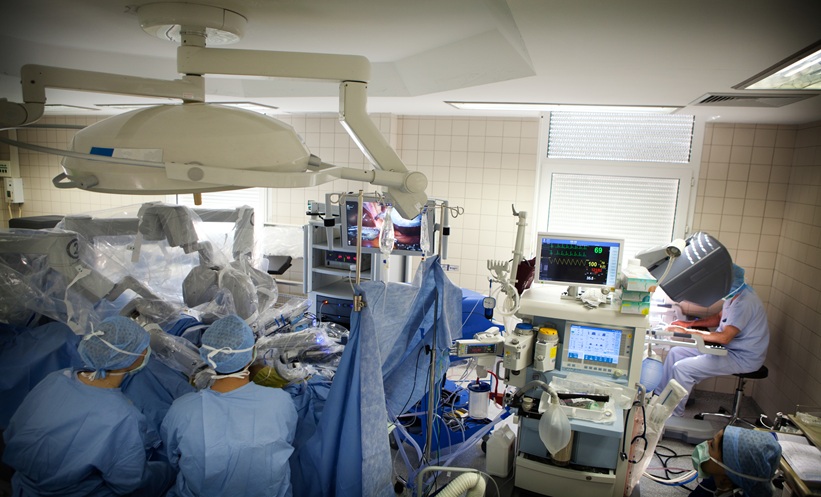
ELEVATED BMI did not significantly worsen most short term outcomes after robot-assisted radical prostatectomy for prostate cancer.
Researchers evaluated 1,366 patients undergoing robot-assisted radical prostatectomy to determine whether excess body weight affected clinical, pathological, surgical, or postoperative outcomes. Patients were categorized as having normal BMI, below 25 kg/m², or elevated BMI, defined as 25 kg/m² or higher.
Elevated BMI Shows Limited Impact on Outcomes
Elevated BMI was not significantly associated with pathological stage, extraprostatic extension, lymph node involvement, seminal vesicle invasion, tumor volume, International Society of Urological Pathology grade, or surgical margin status.
Patients with elevated BMI had numerically higher frequencies of positive surgical margins and higher postoperative prostate specific antigen levels, but neither difference reached statistical significance. The researchers therefore cautioned against interpreting these findings as evidence that elevated BMI contributes to worse oncological outcomes.
Similarly, operative time, anesthesia time, operating room stay, mechanical ventilation, and intraoperative blood transfusion did not differ significantly between BMI groups.
Postoperative complications including infection, bleeding, venous thromboembolism, fistula, and erectile dysfunction were uncommon and showed no significant differences according to BMI.
Cardiometabolic Comorbidities Remain Important
Patients with elevated BMI had significantly higher rates of systemic arterial hypertension and diabetes mellitus, with both associations reaching p<0.001. The findings indicate that although elevated BMI may not independently compromise most short term prostatectomy outcomes, clinicians may encounter a greater cardiometabolic burden in these patients.
One postoperative finding did differ significantly. Absence of spontaneous postoperative diuresis occurred more frequently in patients with elevated BMI, with a p value of 0.017. The retrospective study could not establish the mechanism underlying this association, and the authors emphasized that the finding requires prospective confirmation.
BMI Alone May Not Capture Surgical Risk
The study was conducted at a single tertiary referral center and relied on BMI as its sole measure of adiposity. BMI does not distinguish fat mass from lean body mass or quantify visceral fat distribution, potentially limiting its ability to reflect clinically important differences in body composition.
Long term outcomes including biochemical recurrence, prostate cancer specific survival, and overall survival were also not evaluated.
Overall, elevated BMI alone did not appear to substantially influence pathological findings, surgical variables, or most early postoperative outcomes following robot-assisted radical prostatectomy. Larger prospective multicenter studies incorporating detailed body composition measures and longer oncological follow up are needed.
Reference
Silva Carvalho P et al. The Association Between Elevated Body Mass Index and Clinical and Surgical Outcomes in Patients Undergoing Robot-Assisted Radical Prostatectomy: A Retrospective Study. Cureus. 2026;18(7).
Featured Image: RFBSIP on Adobe Stock.