Meeting Summary
Extensive-stage small cell lung carcinoma (ES-SCLC) is an aggressive subtype of lung cancer that progresses and metastasizes rapidly, making early initiation of effective first-line therapy essential. Obrixtamig, a novel delta-like ligand 3 (DLL3) and cluster of differentiation 3 (CD3) IgG-like T cell engager, is undergoing clinical investigation for ES-SCLC. It targets DLL3, which is overexpressed on the majority of SCLC tumor cells.
At the 2026 American Society of Clinical Oncology (ASCO) Annual Meeting, Solange Peters from Lausanne University, Switzerland, presented updated efficacy and safety data from the ongoing Phase I DAREON-8 study of obrixtamig in combination with standard of care (SoC) carboplatin, etoposide, and atezolizumab for the first-line treatment of ES-SCLC. These results showed encouraging efficacy and persistent clinical activity with first-line obrixtamig plus SoC in patients with ES-SCLC, particularly with the 60 mg selected target dose. The overall response rate (ORR) with obrixtamig 60 mg plus SoC was 76%, and 10% of patients achieved a confirmed complete response (CR). Obrixtamig, used in combination with SoC, showed a safety profile consistent with the individual treatments. Maximum tolerated dose was not reached, and no patients experienced Grade ≥3 cytokine release syndrome or neurotoxicity.
Collectively, these updated efficacy and safety data from DAREON-8 support the continued investigation of obrixtamig in combination with first-line SoC in patients with ES-SCLC. Clinical development with the selected obrixtamig target dose (60 mg) is currently ongoing in the global Phase III DAREON-Lung-1 study.
Unmet Needs in First-Line ES-SCLC
SCLC represents 10–15% of all lung cancer cases and is characterized by aggressive disease progression and a tendency to metastasize.1 The majority of patients, up to 80%, will have ES-SCLC at the time of their initial diagnosis.1 Due to the aggressive nature of ES-SCLC, early initiation of optimal therapy is important, as many patients may not reach the maintenance phase of treatment.1-3
In recent years, the first-line treatmentlandscape in ES-SCLC has evolved from chemotherapy alone to chemoimmunotherapy.1,4 Carboplatin and etoposide, in combination with the immune checkpoint inhibitor atezolizumab or durvalumab, are now considered a SoC.1,4 While survival outcomes have been improved by the addition of immunotherapy, many patients still progress early, and the overall prognosis remains poor.1,4 This underscores the need for new investigational approaches in the first-line treatment setting for ES-SCLC.
Targeting DLL3 with Obrixtamig
Obrixtamig is a novel IgG-like T cell engager that targets both DLL3 and CD3. DLL3 is minimally expressed in normal tissues but is a hallmark of neuroendocrine cancer, expressed on over 90% of SCLC tumor cells.5 Obrixtamig binds simultaneously to DLL3 on tumor cells and CD3 on T cells, forming a dynamic junction between the immune cell and its malignant target. T cells are thereby activated and directed to attack DLL3-expressing tumor cells, destroying them via apoptosis.2,6-9
Obrixtamig is currently under clinical investigation in ES-SCLC in the ongoing Phase I DAREON-8 study, preliminary results from which were disclosed at last year’s European Society for Medical Oncology (ESMO) Congress.10 This article summarizes updated data from the dose escalation and expansion cohorts of DAREON-8 presented at the 2026 ASCO Annual Meeting.2
DAREON-8 Study Design
DAREON-8 employed an induction-to-maintenance study design where obrixtamig was combined with carboplatin, etoposide, and atezolizumab for cycles 1–4 (induction) and obrixtamig plus atezolizumab given from cycle 5 onward (maintenance). During dose escalation (Part A), patients received obrixtamig at three target dose levels: 10, 30, and 60 mg. For dose expansion (Part B), the 60 mg target dose was selected for further investigation.2
The primary study endpoint was dose-limiting toxicities (DLT). Secondary endpoints (Part B) included safety, ORR, and duration of response (DoR) by investigator-assessed Response Evaluation Criteria in Solid Tumors (RECIST) v1.1. Key inclusion criteria were histologically/cytologically confirmed ES-SCLC, eligibility for SoC therapy, and adequate liver, bone marrow, and renal function.2
As of March 26, 2026, 46 patients were treated in DAREON-8 (28 in Part A and 18 in Part B), with 44 patients receiving ≥1 dose of obrixtamig. Median patient age was 69 years, 52% were male, and median treatment exposure to obrixtamig was 10 months (range: 0–20).2
Updated Efficacy Results
First-line obrixtamig demonstrated encouraging efficacy and durable responses in combination with SoC, most notably in patients receiving the target dose of 60 mg.2
ORR was 73% (95% CI: 58–84), and the disease control rate was 91% (95% CI: 79–96) in all patients (n=44). In the obrixtamig 60 mg target dose group (n=29), ORR was 76% (95% CI: 58–88), including 10% CR (n=3), 66% partial responses (n=19), and 14% stable disease (n=4). Disease control rate was 90% (95% CI: 74–96).2
At a median 10.5 months follow-up, 6-month progression-free survival (PFS) was 78% and 9-month PFS was 62% in all patients. Corresponding PFS rates were 85% and 73%, respectively, in the 60 mg obrixtamig dose group (Figure 1).2
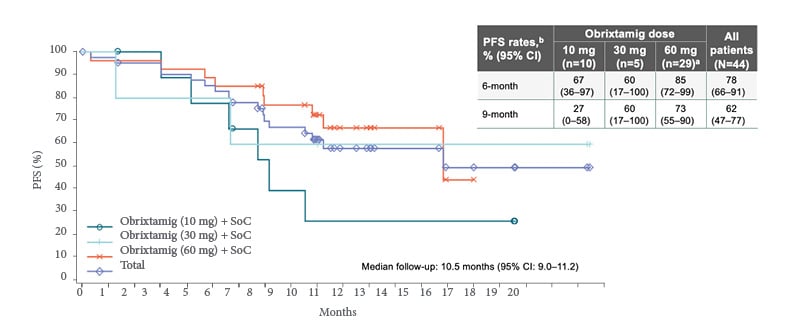
Figure 1: PFS in the DAREON-8 study of obrixtamig.2
ᵃObrixtamig 60 mg group includes patients from Parts A (n=13) and B (n=16).
bKaplan–Meier estimates.
PFS: progression-free survival; SoC: standard of care.
Responses to obrixtamig plus SoC appeared durable in this study, with a 6-month DoR in all patients of 74%. DoR was 81% in the 60 mg target dose group. In total, 22 patients remained on obrixtamig treatment at data cut-off (Figure 2).
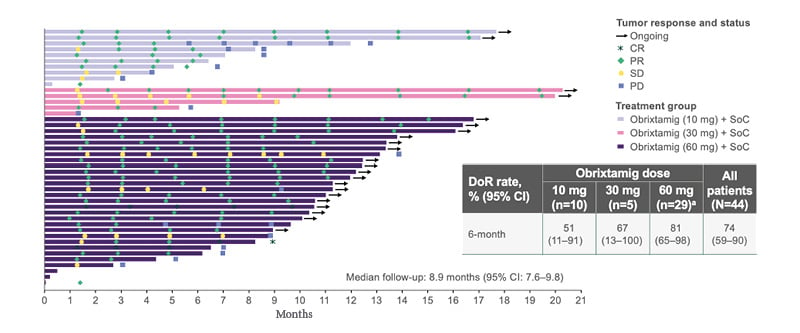
Figure 2: DoR in the DAREON-8 study of obrixtamig.2
ᵃObrixtamig 60 mg group includes patients from Parts A (n=13) and B (n=16).
CR: complete response; DoR: duration of response; NC: not calculable; PD: progressive disease; PR: partial response; SD: stable disease; SoC: standard of care.
Updated Safety Results
Updated data from the DAREON-8 study showed a consistent safety profile for the combination of obrixtamig and SoC, in line with that expected for the individual treatments (Figure 3)
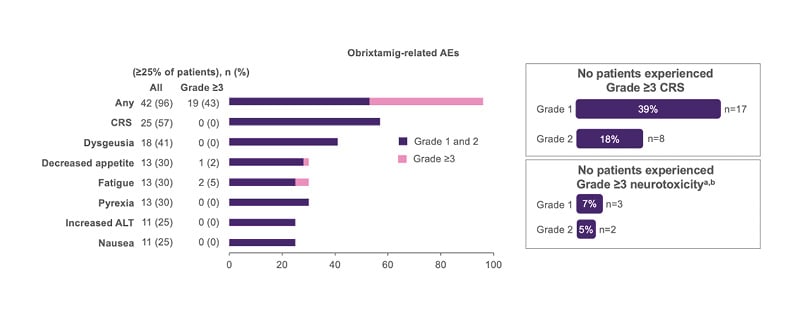
Figure 3: Obrixtamig-related AEs in the DAREON-8 study.2
aICANS or potential ICANS-like neurotoxicity events.
bNeurotoxicity events were ICANS (n=3), confusional state (n=1), and memory impairment (n=1).
MTD was not reached (three patients experienced DLTs: tumor pain, increased blood creatine phosphokinase, and pneumonitis); obrixtamig 60 mg was selected as the target dose for Part B.
One patient discontinued etoposide due to TRAEs (Grade 3 anemia, Grade 2 decreased platelet count) and two patients discontinued obrixtamig and atezolizumab due to TRAEs (Grade 2 stress, Grade 2 asthenia).
AE: adverse event; ALT: alanine aminotransferase; CRS: cytokine release syndrome; DLT: dose-limiting toxicity; ICANS: immune effector cell-associated neurotoxicity syndrome; MTD: maximum tolerated dose; TRAE: treatment-related adverse event.
The maximum tolerated dose of obrixtamig was not reached. Three patients experienced DLTs: tumor pain, increased blood creatine phosphokinase, and pneumonitis. Notably, there were no reports of Grade ≥3 cytokine release syndrome or Grade ≥3 neurotoxicity.2
Grade ≥3 treatment-emergent adverse events occurred in 89% of patients in this study, mainly cytopenias attributable to chemotherapy. The overall rate of discontinuations was low. One patient discontinued etoposide (due to Grade 3 anemia and Grade 2 decreased platelet count) and two patients discontinued obrixtamig and atezolizumab (due to Grade 2 stress and Grade 2 asthenia).2
Ongoing Phase III Development
In updated results from the DAREON-8 study, first-line obrixtamig in combination with carboplatin, etoposide, and atezolizumab demonstrated encouraging efficacy in ES-SCLC and a consistent safety profile, supporting its continued clinical development.2
Obrixtamig has now advanced into the ongoing global Phase III DAREON®-Lung-1 study (NCT07472517). The primary endpoint of this multicenter, open-label, randomized trial is overall survival with obrixtamig, at the selected target dose of 60 mg, plus SoC in patients with ES-SCLC.11