Interview Summary
Dupilumab, a monoclonal antibody targeting receptors for the inflammatory cytokines IL-4 and IL-13, was the first targeted biologic therapy to be approved for the treatment of COPD. It is indicated for patients with COPD with Type 2 inflammation, identified based on raised eosinophil levels. To explore the optimal use of dupilumab in the management of COPD, by identifying eligible patients who can benefit most from treatment, EMJ sought expert insights from Wisia Wedzicha, Professor of Respiratory Medicine at the National Heart and Lung Institute, Imperial College London, UK. Discussing the role of dupilumab in the management of COPD, Wedzicha highlighted the importance of prompt intervention to control exacerbations, and the value of achieving consistent and sustained control.
INTRODUCTION
COPD is a heterogeneous condition, with varying clinical and pathophysiological features, including airway inflammation driven by different mechanisms. Airway inflammation in COPD is often mediated predominantly by a neutrophilic response to triggers. However, a significant proportion of patients (approximately 20–40%)1,2 exhibit an eosinophilic phenotype, characterised by raised eosinophil levels in blood and sputum, indicative of Type 2 inflammation.3-5
The advent of targeted treatment, tackling underlying pathophysiological mechanisms rather than relying only on symptomatic treatment with bronchodilators, represents an advance in treatment options for COPD.6 Dupilumab was the first targeted biologic therapy to be approved for the treatment of COPD,7 and is currently approved for COPD in multiple countries including in the European Union (EU) and UK, USA, China, Brazil, and United Arab Emirates. Dupilumab targets receptors for IL-4 and IL-13, blocking IL-4/IL-13 signalling and thereby inhibiting the Type 2 inflammatory pathway. It is indicated for the treatment of multiple Type 2 inflammatory conditions, including severe asthma, chronic rhinosinusitis with nasal polyps, and atopic dermatitis.8,9 Dupilumab’s indication for COPD is as add-on maintenance therapy to inhaled bronchodilators for adults with uncontrolled COPD, characterised by raised blood eosinophils.8
Dupilumab was approved for COPD based on the results of two RCTs, BOREAS and NOTUS, involving >1,800 patients with COPD with blood eosinophil count (BEC) ≥300 cells/µL.10,11 In these pivotal Phase III trials, dupilumab reduced the annualised rate of moderate or severe exacerbations by 31% overall, compared with placebo.12 The 2026 Global Initiative for Chronic Obstructive Lung Disease (GOLD) report recommends that physicians should consider adding dupilumab for patients with BEC ≥300 cells/µL and symptoms of chronic bronchitis, if they are on triple therapy (a long-acting beta-2 antagonist [LABA], a long-acting muscarinic antagonist [LAMA], and an inhaled corticosteroid [ICS]) and still have exacerbations.13 Wedzicha emphasised that any exacerbation can be an indicator of a need to improve disease control.
This article summarises a wide-ranging discussion of factors that can guide treatment decisions for patients with COPD, including clinical features and biomarkers for Type 2 inflammation, with a view to optimising the benefits of targeted treatment among patients who are eligible for treatment with dupilumab.
OPTIMISING BACKGROUND THERAPY AND ASSESSING TREATMENT RESPONSE
Dupilumab is indicated in adult patients with raised eosinophils whose COPD is uncontrolled, with exacerbations despite adequate treatment with an inhaled therapy regimen. The GOLD report recommends that patients with raised eosinophils and a history of exacerbations should receive LABA+LAMA+ICS triple therapy,13 as raised eosinophils are predictive of better response to ICS.2-5 Therefore, most patients who are candidates for dupilumab would be on triple therapy, unless ICS is contraindicated, for example, in patients with a history of recurrent pneumonia, who may be on LABA+LAMA dual bronchodilator therapy.
Patients’ response to their inhaled regimen should be monitored over a period of 6 months to a year, encompassing a winter season, as exacerbation rates can increase as much as two-fold during winter,14,15 most likely due to increased exposure to circulating respiratory viruses.16 Wedzicha emphasised that inhaled therapy and other modifiable factors should be optimised as far as possible, by checking patients’ adherence to treatment, inhaler technique and encouraging non-pharmacological approaches such as smoking cessation.
If exacerbations continue on optimised triple therapy, the next step is to consider systemic therapy. Clinical evidence does not support intensifying ICS treatment before adding systemic treatment; Wedzicha cited the ETHOS study, in which exacerbation rates were similar in patients receiving budesonide 160 µg and 320 µg as part of a triple therapy regimen.17
Wedzicha reiterated that any exacerbation is a burden to the patient, and could indicate a need to step up treatment. Wedzicha pointed out that one episode lasting a few weeks can do more damage than multiple exacerbations lasting a few days for each episode. She also stressed the importance of educating patients on the nature of exacerbations and their consequences, and encouraging them to report exacerbations to their respiratory care team. She explained that it is common practice, in the UK, to prescribe a supply of oral corticosteroid (OCS) or antibiotic rescue medication, so patients often manage even moderate exacerbations at home without presenting to a healthcare professional (HCP). It is important, however, that they inform their HCP to enable them to monitor exacerbations and potential need for a medication review.
If a step-up in treatment is warranted, whether from single/double to triple inhaled therapy or addition of systemic therapy, Wedzicha recommended doing so promptly on occurrence of an exacerbation. Delaying leaves patients at risk of further exacerbations and their consequences in terms of impact on quality of life (QoL), disease progression, hospitalisation, and mortality. She cited real-world evidence that prompt initiation of triple therapy following an exacerbation is associated with improved outcomes compared with delayed initiation.18-20
SELECTION OF SYSTEMIC ADD-ON TREATMENT
Once the need for adjunctive treatment is established, selection of a systemic treatment option is determined by patient phenotype. For patients without raised eosinophils, and for all patients before the approval of dupilumab, systemic options for COPD maintenance treatment were limited. The phosphodiesterase-4 (PDE-4) inhibitor, roflumilast, is approved as add-on maintenance treatment for severe COPD, but is associated with side effects, including gastrointestinal and psychiatric adverse events.21 Macrolide antibiotics such as azithromycin can help reduce exacerbations; prophylactic azithromycin may be used in winter, but Wedzicha advised a break during summer months when infection risk is lower.
Eligibility for Dupilumab Based on Blood Eosinophil Count
For patients with raised eosinophils, approval of dupilumab provides an effective targeted treatment option. Dupilumab is indicated in COPD for patients with raised blood eosinophils or eosinophilic phenotype,8,9 with no BEC threshold defined in the product label. A cut-off of 300 cells/µL was used to determine eligibility for clinical trials, so this threshold is generally used in clinical practice. Wedzicha commented that this threshold was determined through analysis of two COPD studies,1 and suggested that the threshold may be refined in future, to avoid excluding patients who may benefit from biologic treatment for COPD. If a patient had BEC ~150 cells/µL but was experiencing frequent exacerbations, she explained, she would repeat BEC, as eosinophil levels can fluctuate, and are affected by multiple factors including concomitant medications. She recommended repeating BEC at least once a year, in a stable state (at least 4 weeks after an exacerbation has resolved) to obtain a ‘baseline’ BEC, as transient increases in eosinophils often occur during exacerbations. Wedzicha noted that BEC at the time of an exacerbation is also important, but its significance in terms of guiding treatment decisions is not fully understood at present.
Evidence for Efficacy and Safety of Dupilumab
Wedzicha highlighted data demonstrating consistent and sustained effects of dupilumab, describing the BOREAS and NOTUS trials.10,11 These two Phase III, randomised, placebo-controlled trials had similar designs and patient populations, both enrolling patients with COPD with BEC ≥300 cells/µL.10,11 The trials, involving a total of 1,874 patients (938 randomised to dupilumab and 936 to placebo), produced consistent findings across both studies.12 The primary endpoint, annualised rate of moderate or severe exacerbations, was reduced by 30% in BOREAS and 34% in NOTUS (Figure 1).10,11 Wedzicha noted that this is a greater reduction in exacerbation rates than has been seen in other COPD trials, and commented that these significant reductions were achieved despite a relatively low background rate of exacerbations. She explained that the trials were conducted during the COVID-19 pandemic, when measures introduced to limit spread of COVID-19 led to fewer respiratory infections and, therefore, reduced overall exacerbation rates among patients with COPD. Nonetheless, dupilumab significantly reduced exacerbations in BOREAS, and this was replicated in NOTUS.
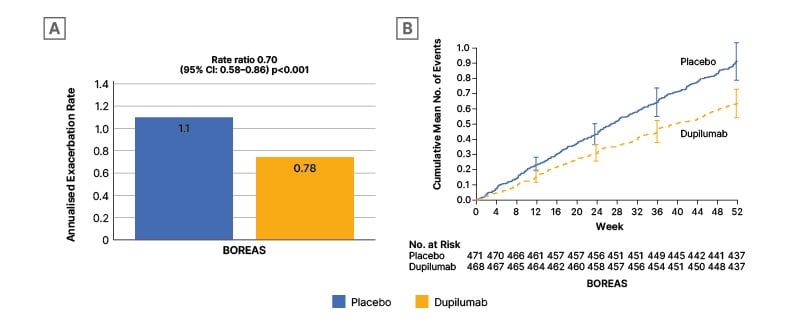
Figure 1: Moderate or severe exacerbations in dupilumab versus placebo groups in BOREAS.10
A) Annualised exacerbation rates and B) cumulative incidence.
These studies also showed that dupilumab was consistently effective in reducing exacerbations across patient subgroups with different characteristics; for example, both current and ex-smokers achieved similar benefits, as did patients with and without emphysema symptoms.10-12,22 Further exploration of patient subgroups in BOREAS showed that efficacy of dupilumab was also maintained regardless of BMI, airway obstruction, dyspnoea, and exercise capacity (expressed as a composite BODE score).23
Lung function was also improved in dupilumab groups, compared with placebo, in both trials. Improvements in prebronchodilator forced expiratory volume in one second (FEV1) were seen as early as Week 2 in BOREAS and Week 4 in NOTUS and were sustained throughout the 1-year follow-up period in both trials (Figure 2).10,11 Wedzicha hypothesised that rapid improvement of lung function could be due, in part, to reduced mucus plugging in the small airways, as dupilumab reduces mucus hypersecretion through its effects on the IL-13 axis.10,24
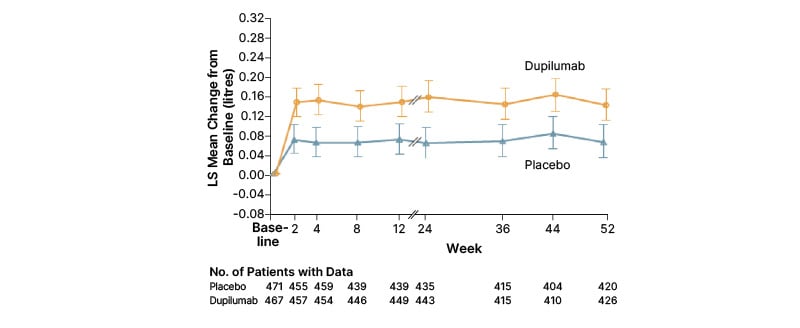
Figure 2: Increases in prebronchodilator FEV1 with dupilumab versus placebo from baseline to Week 52 in BOREAS.10
FEV1: forced expiratory volume in 1 second; LS mean: least squares mean.
Patients on dupilumab in BOREAS and NOTUS also reported improvements in health-related QoL, with significant improvements in symptom, impact, and activity domain scores, as well as overall scores, on the St. George’s Respiratory Questionnaire (SGRQ) and Evaluating Respiratory Symptoms in COPD (E-RS:COPD) tool.25 This reflects the fact that, as Wedzicha noted, sustained improvement in symptoms is a benefit that patients notice in their day-to-day lives. She also noted that, while patients may still experience exacerbations (for example, triggered when they catch a cold), they are more likely to be limited to mild exacerbations, with less impact on patients’ lives, and less likely to require treatment with OCS or antibiotics or result in hospitalisation, than more severe exacerbations.
Dupilumab has a well-established safety profile, having been used to treat many patients with various Type 2 inflammatory conditions since its initial approval for atopic dermatitis in 2017. The BOREAS and NOTUS trials revealed no new safety signals in the COPD patient population.10,11 Wedzicha pointed out that patients with COPD comprise an older patient population. These patients are particularly vulnerable to side effects of OCS, such as osteoporosis and diabetes. Therefore, reducing the frequency of exacerbations that require treatment with OCS could further improve patient safety.
Cardiovascular (CV) safety may also be improved by effective treatment to reduce COPD exacerbations. Several studies have shown increased incidence of CV events following COPD exacerbation.26-35 Post-hoc analyses of the IMPACT and ETHOS studies suggest reduced risk of severe cardiopulmonary events in patients treated with triple therapy.36,37 Further evidence is needed to elucidate the link between treatment-related reductions in exacerbations and CV risk.38,39 Nonetheless, Wedzicha emphasised, the substantial body of evidence for heightened CV risk associated with COPD exacerbations highlights the urgency of tackling even moderate exacerbations and strengthens the case for prompt intervention when exacerbations occur.
Asthma is another common comorbidity in COPD, and dupilumab is approved for the treatment of severe eosinophilic asthma.8,9 The BOREAS and NOTUS trials focussed on a pure COPD population and excluded patients with a current diagnosis or history of asthma.
Summarising her thoughts on the role of dupilumab in COPD, Wedzicha reiterated that the consistent and sustained effects of dupilumab seen in patients with COPD with raised eosinophils provide convincing evidence for its benefits in this population, and stated that she envisages dupilumab being fully incorporated into clinical practice in COPD clinics.
MAT-GLB-2506985-v2.0-09/2026
| Adverse events should be reported. Reporting forms and information for the United Kingdom can be found at www.mhra.gov.uk/yellowcard or search for MHRA Yellow Card in the Google Play or Apple App Store. Adverse events should also be reported to Sanofi S.A. via the online reporting system at https://ae.reporting.sanofi/pvi-web/login or on 1800 633 1610. |