THE FDA Approves first oral drug for dermatomyositis. ORAL brepocitinib significantly improved global disease activity and enabled steroid tapering in adults with active dermatomyositis. Following recent regulatory milestones evaluating targeted therapies for refractory autoimmune disorders, findings from the pivotal Phase 3 VALOR trial demonstrate robust therapeutic benefits with daily oral brepocitinib in dermatomyositis. This first in class dual inhibitor selectively blocks tyrosine kinase 2 and Janus kinase 1 to suppress downstream signaling of pathogenic cytokines, including type I and II interferons, interleukin-6, and interleukin-23. Among 241 adults with treatment-refractory active muscle and skin involvement, once-daily brepocitinib at a 30 mg dose met its primary composite endpoint at week 52, achieving a mean Total Improvement Score of 46.5 compared with 31.2 for placebo.
Efficacy of Brepocitinib in Dermatomyositis and Steroid Sparing
Patients receiving the 30 mg daily regimen exhibited meaningful clinical responses across all nine multiplicity-controlled secondary endpoints. Moderate disease improvement, defined as a Total Improvement Score of at least 40, was achieved by 68 percent of patients receiving 30 mg of brepocitinib, compared to 44 percent receiving placebo. Furthermore, nearly half of the treated cohort achieved major improvement. Glucocorticoid reduction represented a critical secondary outcome. Among patients on baseline oral corticosteroids, 62 percent in the 30 mg cohort successfully tapered daily prednisone equivalents to 2.5 mg or less by week 52, while 42 percent eliminated oral glucocorticoids entirely.
Cutaneous Outcomes and Clinical Safety Profile
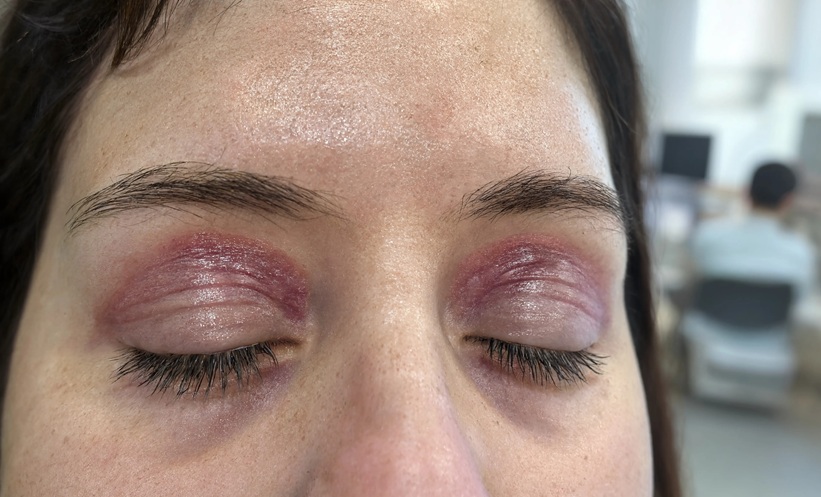
Cutaneous dermatomyositis manifestations improved rapidly, with statistically significant reductions in skin disease activity observed by week 4. By week 52, 44 percent of patients with moderate-to-severe baseline skin disease achieved complete clinical remission on the Cutaneous Dermatomyositis Disease Area and Severity Index. Treated individuals also recorded substantial improvements in physical functioning and disability index scores. Overall adverse event incidence remained comparable across study arms, though serious infections occurred more frequently with the 30 mg dose than with placebo. These infectious events resolved with standard medical care, and no study-related deaths occurred, establishing a favorable benefit-risk profile for this targeted oral intervention.
Reference
Vleugels RA et al. A Phase 3 Trial of Brepocitinib in Dermatomyositis. N Engl J Med. 2026;394(19):1883-1893.
Featured Image: Natallia on Adobe Stock.