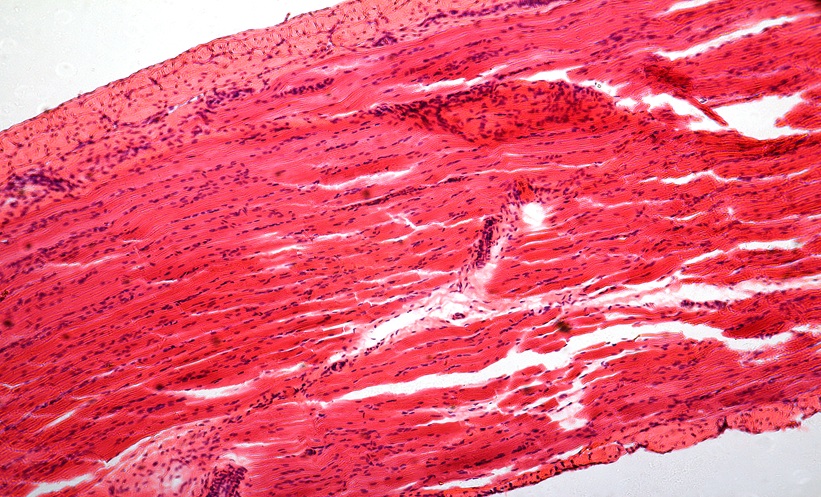
NONCANONICAL TRF2 activity in muscle stem cells orchestrates skeletal muscle regeneration independently of classical telomere dysfunction. Skeletal muscle repair relies on resident satellite cells that undergo dynamic cell-state transitions to reconstruct damaged myofibers following traumatic injury or chronic pathology. Telomeric Repeat-binding Factor 2 exhibits dynamic regulation across these functional states, sharply dropping as quiescent progenitor cells enter active proliferation and returning as cells re-establish self-renewal. When TRF2 in muscle stem cells is selectively disrupted, tissue regeneration fails completely, leading to extensive tissue fibrosis, loss of functional myofibers, and marked accumulation of intramuscular adipose tissue.
Noncanonical Roles of TRF2 in Muscle Stem Cells
Unlike canonical models in other adult stem cell niches, deleting TRF2 in muscle stem cells does not trigger telomere attrition, end-to-end chromosome fusions, cellular senescence, or p53-dependent apoptotic pathways. Proliferative capacity remains intact, indicating that repair failure is driven by a distinct cell-fate mechanism. Instead, extra-telomeric TRF2 operates as a genome-wide transcriptional regulator necessary for maintaining myogenic lineage identity. Integrated chromatin profiling and transcriptomic analyses reveal that TRF2 associates with regulatory elements enriched for G-quadruplex DNA structures near pivotal stem cell genes, including Pax7, Sdc4, and MyoD1. Loss of TRF2 suppresses the expression of these key myogenic factors while preserving overall chromatin accessibility, causing stem cells to forfeit their identity and fail during niche reentry.
Clinical Relevance in Dystrophic Myopathies
These mechanistic findings carry profound clinical relevance for progressive neuromuscular disorders, particularly Duchenne muscular dystrophy. Dystrophic mouse models featuring deletion of TRF2 in muscle stem cells exhibit accelerated pathology, displaying severe muscle atrophy, progressive spinal kyphosis, extensive diaphragm damage, and premature mortality within 28 weeks. Importantly, pharmacologic stabilization of G-quadruplex DNA using the small-molecule modifier PhenDC3 restores Pax7 expression and rescues defective myogenic commitment in vitro and in vivo. Targeted modulation of G-quadruplex structures and extra-telomeric TRF2 signaling offers a potential therapeutic strategy to combat skeletal muscle loss and preserve regenerative capacity in patients with chronic degenerative muscle diseases.
Reference
Lee JH et al. TRF2 couples muscle stem cell identity to regenerative repair. Sci Adv. 2026;12:eaei7316.
Featured Image: Emilio Ereza on Adobe Stock.