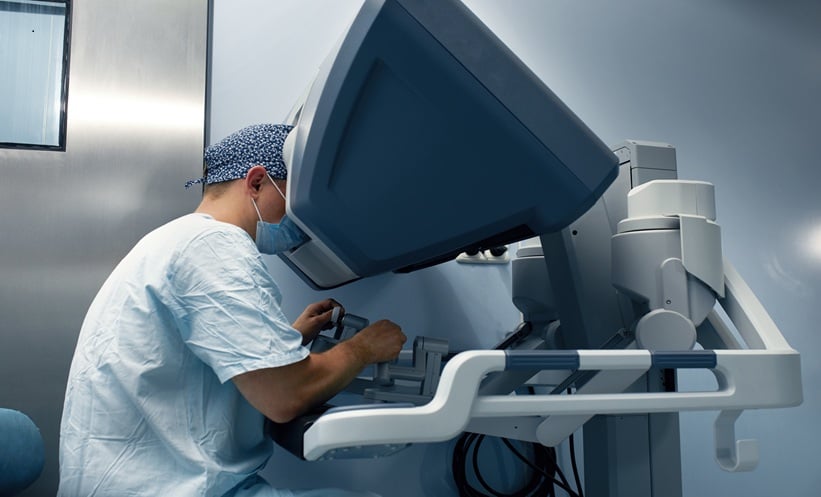
ROBOTIC ureteric reimplantation is a safe and effective treatment for benign ureteric disease, according to new findings from a tertiary UK centre, with most complications occurring within the first year after surgery.
The procedure is increasingly used to manage distal and mid-ureteric pathology, particularly following surgical injury. However, data on medium-term outcomes, especially in UK clinical practice, have been limited. This retrospective study aimed to evaluate real-world safety, efficacy, and follow-up needs in patients undergoing robotic ureteric reimplantation.
Researchers analysed outcomes from 67 patients treated between 2016 and 2023. The cohort included 40 females and 27 males, with benign ureteric conditions most commonly resulting from prior urological (54%) or gynaecological (45%) procedures. Surgical techniques varied, with the majority undergoing the Lich–Gregoir approach, alongside smaller numbers receiving psoas hitch or Boari flap reconstructions.
Data Show Low Complication Rates Following Robotic Ureteric Reimplantation
Results showed favourable perioperative outcomes, including a short median hospital stay of just 2 days. Over a mean follow-up period of approximately 2 years, only 6% of patients developed radiological obstruction, with three requiring further intervention. Renal function remained stable overall, with no statistically significant deterioration observed.
Postoperative complications were relatively low, with 11 patients experiencing Clavien–Dindo grade II complications. One patient with a history of radiotherapy required cystectomy due to a poorly compliant bladder, highlighting the need for careful patient selection and monitoring in higher-risk groups. Only one case required conversion to open surgery, occurring early in the surgical learning curve.
Future Clinical Implications for Benign Ureteric Disease
The findings suggest that robotic ureteric reimplantation offers a reliable minimally invasive option for benign ureteric disease, with good functional outcomes and manageable complication rates.
Importantly, the study indicates that most adverse events arise within the first year following surgery, supporting focused early follow-up. However, extended monitoring may be warranted in select patients, particularly those with prior radiation exposure.
Further studies are needed to refine long-term follow-up protocols and confirm durability of outcomes across broader patient populations.
Reference
Folkard SS et al. Robotic ureteric reimplantation for benign disease in a tertiary UK centre: safe and effective. World J Urol. 2026;44:298.
Featured image: Georgii on Adobe Stock
- Author: