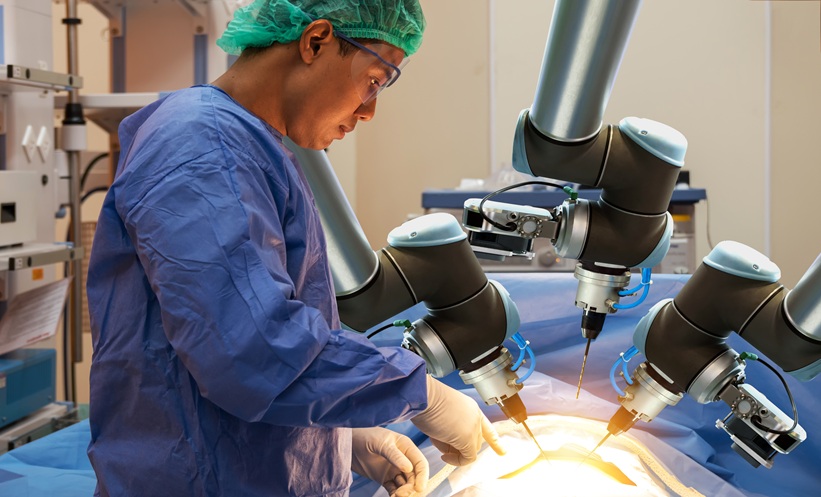
SINGLE-PORT robot-assisted radical prostatectomy may be adopted efficiently by surgeons with prior experience using the multiport Xi platform, according to a learning curve analysis of 200 consecutive procedures.
Researchers found that surgical proficiency developed with the Xi system appeared transferable to the single-port approach, supporting a smooth transition between robotic platforms.
Learning Curve Patterns in Robotic Surgery
The retrospective study evaluated the first 100 consecutive multiport Xi robot-assisted radical prostatectomy procedures and the first 100 consecutive single-port robot-assisted radical prostatectomy procedures performed by a single surgeon between March 2020 and July 2026.
The single-port programme began only after completion of the initial 100 Xi cases.
Learning curves were assessed using cumulative sum analysis of console time. Significant change points were identified at case 24 for Xi and case 57 for the single-port platform.
Despite the later change point for single-port surgery, operative performance remained relatively stable from the earliest cases.
Researchers noted that the single-port cohort started from a higher baseline level of efficiency than the surgeon’s initial Xi experience.
Single-Port Platform Demonstrates Operative Efficiency
The single-port group achieved significantly shorter median operative time (95.0 versus 145.0 minutes).
Median console time was also reduced (67.0 versus 97.5 minutes), while non-console time was shorter (28.0 versus 44.0 minutes).
Pelvic lymph node dissection was performed less frequently in the single-port cohort (1.0% versus 29.0%).
No intraoperative complications occurred in either group. Rates of 30-day emergency department visits and readmissions were similar between platforms.
Prolonged catheterisation due to anastomotic leakage occurred in 5.0% of single-port cases and 14.0% of Xi cases, although this difference did not reach statistical significance (p=0.051).
Clinical Implications for Platform Transition
Pathological outcomes were broadly comparable between groups.
The overall positive surgical margin rate was lower in the single-port cohort (13.0% versus 27.0%).
However, stage-stratified analyses showed no significant differences between platforms, suggesting that accumulated surgical experience and procedural selection may have influenced outcomes.
The researchers concluded that prior experience with multiport Xi robot-assisted radical prostatectomy facilitated efficient adoption of single-port robot-assisted radical prostatectomy.
They suggested that Xi and single-port systems should be viewed as complementary platforms, with platform selection tailored to procedural requirements and the anticipated need for pelvic lymph node dissection.
Reference
Son YM et al. Adoption of single-port robot-assisted radical prostatectomy following multiport xi experience: lessons from a learning curve analysis. J Robotic Surg. 2026;DOI:10.1007/s11701-026-04013-0.