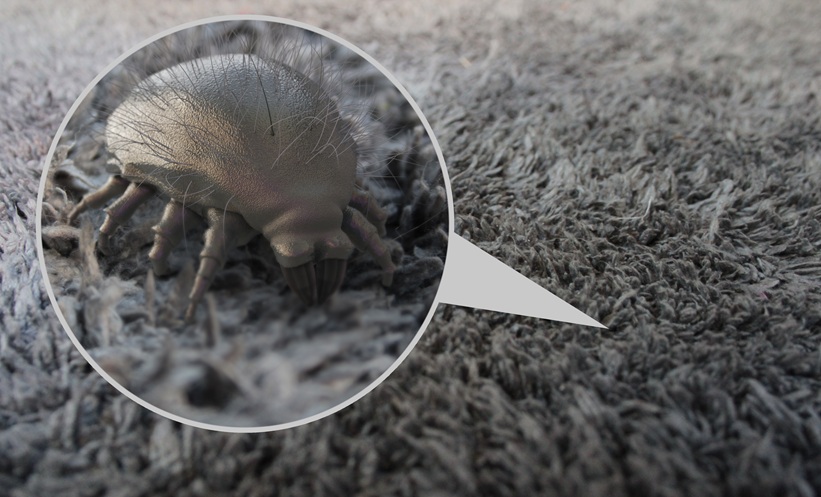
HOUSE dust mite sensitisation was associated with concomitant asthma in patients with allergic rhinitis, according to an Albanian study.
The cross-sectional research identified distinct molecular sensitisation profiles associated with different clinical presentations, highlighting variation within a single national patient cohort.
Four Distinct Allergy Profiles
Researchers assessed 140 patients with allergic rhinitis, with and without asthma, in Tirana. Participants underwent a detailed allergy-history interview, skin prick testing and the Allergy Explorer Test 2 multiplex array.
Using latent class analysis, the team identified four predominant profiles: grass pollen sensitisation in 56 patients (40%); house dust mite sensitisation in 38 (27.1%); pathogenesis-related class 10 sensitisation in 25 (17.9%); and broad sensitisation to inhalant and food components in 21 (15%).
Associations With Clinical Presentation
The dust mite group had higher odds of allergic rhinitis with asthma rather than rhinitis alone.
The PR-10 group had higher odds of pollen-food allergy syndrome. Across the cohort, dust mite sensitisation and persistent, severe rhinitis were associated with concomitant asthma.
Sensitisation to HDM and persistent, severe AR were associated with AR with concomitant asthma.
Putting Molecular Results in Context
These findings sit within a wider move towards more detailed allergy assessment. European Academy of Allergy and Clinical Immunology guidance on food allergy diagnosis includes testing for IgE antibodies against individual allergen components.
However, that guidance emphasises that assessment should begin with an allergy-focused clinical history. Skin and blood tests identify sensitisation, and their significance must be interpreted alongside the patient’s reported reactions. A positive result therefore requires clinical interpretation before conclusions about food allergy are drawn.
Where uncertainty remains after initial testing, a medically supervised oral food challenge may be needed. This diagnostic context is particularly relevant when interpreting profiles involving both inhalant and food components. Molecular information can add detail to an assessment, while the relationship between test results and symptoms remains central.
The Albanian study demonstrates associations rather than causation; its cross-sectional design cannot establish whether sensitisation preceded asthma.