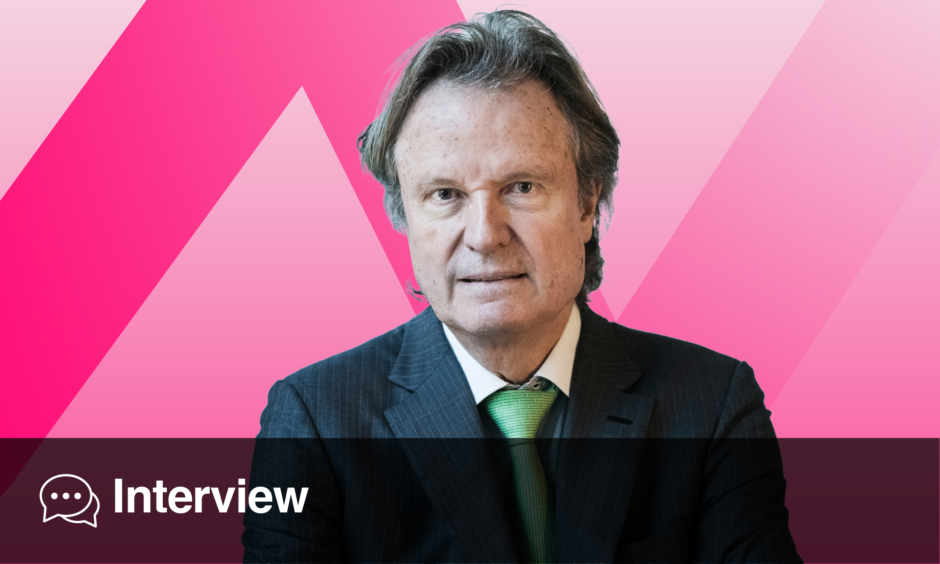
Thomas Felix Lüscher | Director of Research, Education & Development and Consulting Cardiologist, Royal Brompton & Harefield Hospital GSTT Trust, London, UK; Professor of Cardiology, King’s College and Imperial College, London, UK
Citation: EMJ Cardiol. 2026;14[1]:99-103. https://doi.org/10.33590/emjcardiol/7011JTW9

Looking back over your career, what do you consider the most transformative moment or development in cardiology that you have witnessed firsthand?
If I may focus on my role as the European Society of Cardiology (ESC) President, we reorganised governance. The ESC is a huge enterprise with a 70 million EUR turnover, 240 employees, a site near Nice, France, and another in Brussels, Belgium, and over 5,000 volunteers who work for us for the good of cardiovascular medicine. For board members in particular, it is quite an extensive job to do on the side. We clarified who decides what and how, whether that is the President, the Presidential Trio, the management group, or the entire board. We wanted to make the ESC fit for the future and able to allow the President and the management group to react quickly to changes, including wars and other unforeseen events that require rapid decisions, and leave strategic decisions to the board.
I also made AI a major strategic priority. We ensured that all employees have access to appropriate AI tools, to make them more efficient and familiar with the new ways of working. We created ESC Chat; a large language model built around all ESC guidelines. When using it, you may type in questions, and you will receive specific guideline-based recommendations immediately.
We also created a dedicated congress on Digital Cardiology and AI. The first took place in Berlin, Germany, last November, and the next one will be held in Basel, Switzerland. This is mainly for specialists, but AI has also become a major theme of the ESC Congress itself. At this year’s opening programme, you will see a very exciting discussion on how our speciality developed in the last 75 years of the existence of the ESC, and where the cardiologist of tomorrow is heading to. I believe the profile of the cardiologist will change massively as a result of digital transformation and AI requiring different skills.
We also reorganised some associations within the ESC. There are seven associations covering areas such as acute cardiac care, heart failure, imaging, prevention, arrhythmias, intervention, and nursing. Most of them are very successful. For example, the European Heart Rhythm Association (EHRA) attracted more than 7,000 participants at its congresses in Paris, France, this year, and the Heart Failure Association (HFA) around 6,500.
We created a new integrated interventional cardiology strategy for the European Association on Percutaneous Cardiac Intervention (EAPCI), where we focus not only technical aspects of percutaneous coronary intervention itself, but also imaging, periprocedural guidance, and medical management after interventions. The first congress took place in Munich, Germany, and we will have a larger one next year in Milan, Italy.
We worked with the imaging community and the European Association on Cardiovascular Imaging (EACVI) on establishing certificates of competence not only for echocardiography, but also for MRI and CT. This is being developed together with the European Union of Medical Specialists (UEMS) and hopefully, eventually, with our radiology colleagues in a collaborative spirit.
We also strengthened our engagement with the EU. For the first time, we were able to contribute to an EU Safe Hearts Plan, with 10 major prevention-focused topics, including personalised prevention using AI, unhealthy nutrition and soft drinks, obesity in adults and children, smoking and nicotine vaping, and vaccination as a form of cardiovascular prevention.
We are also developing recommendations for what a modern cardiovascular health check should contain. Beyond demographics, blood pressure, and lipids, this could include lipoprotein(a), N-terminal pro B-type natriuretic peptide, screening tools for depression, and eventually ECG assessment. A final version has yet to be approved by the EU.
These are some of the major things we have accomplished. It has been a fantastic team effort, and I will continue working on specific ESC projects over the next 2 years.
As you approach the conclusion of your ESC presidency, has the experience matched what you imagined when you first took on the role, or have there been unexpected lessons along the way?
I have run several departments of cardiology and internal medicine during my career, so I was already experienced in managing people. You have to be smart, well prepared, and diplomatic to achieve what you want to achieve. One challenge has been keeping the Society together as different subspecialties become increasingly independent. But keeping the ESC united is one of the most important responsibilities of the President. Indeed, there is only one legal entity, the ESC, as the associations are subunits, not independent organisations. That unity is one of our greatest strengths.
How have you found leading through today’s volatile geopolitical and healthcare environment?
It is the task of the President and the Presidential Trio to think ahead about threats that may affect the ESC. One major threat is a conflict that interferes with travel, such as a war or a geopolitical conflict. Another is economic crisis. If people do not have money, they cannot travel and attend congresses, or participate in ESC activities.
The pharmaceutical and device industries are important sponsors of our programmes. While we have developed other important sources of income through memberships, journals, and textbooks, sponsorship remains important. Changes in pharmaceutical policies globally could affect us, so we need to be prepared and continue diversifying income streams.
Another concern is financial pressure on hospitals and universities. For instance, in the UK, where I work, many institutions face deficits. This reduces the willingness of institutional leaders to support travel and volunteer activities. Hence, we must work with them and communicate the obvious advantages for institutions to work with the ESC
The ESC depends heavily on volunteers. They provide their expertise, work, and time for free, which is remarkable. Therefore, we need institutional leaders to recognise the value of their employees’ participation within the ESC for their own strategy and business. We are developing programmes to engage chief executive officers and university presidents and to demonstrate how involvement with the ESC enhances institutional reputation, professional development of their members, and clinical excellence through our educational programmes and clinical practice guidelines.
What has been the most rewarding aspect of representing more than 100,000 ESC members and the wider cardiovascular community?
The ESC represents 58 national cardiac societies. When I became President, I felt the organisation was still somewhat focused on Western Europe.
To address this, I created three task forces covering the North African Rim, Eastern Europe, and Eurasia. We conducted surveys asking societies how they felt about their ESC membership and what they expected from the ESC.
We organised meetings in Belgrade, Serbia, and Almaty, Kazakhstan, to bring the leaders of these societies together and discuss how the ESC could support them better. The most important thing is making people feel involved and making them feel that we care about them and are ready to help develop cardiology further in their countries.
It was also important that representatives from Eastern Europe were elected to the board, including members from Romania and Poland, during this year’s elections for the ESC Board 2026–2028. We want everybody to feel represented in our Society. The ESC is not only about France, Germany, and the UK. We represent all of Europe and want every region to develop and succeed.
What advice would you give leaders who want to build an inclusive environment?
Throughout my career, I have had fellows from 30 different countries. What is wonderful about science and medicine is that we can discuss things independently of religion, ethnicity, politics, or personal beliefs. We find a common ground. What matters is your interest and commitment to the mission, not your race or gender.
Of course, we also want quality and excellence. The good news is that talented people exist everywhere. Every country has brilliant individuals, and those are the people we want to encourage and support to become members and future leaders of the ESC.
Last year, you spoke largely about what you hoped to achieve. This year, as your presidency draws to a close, what achievements are you particularly proud of?
The achievements I am most proud of include the governance reforms; the integration of AI into ESC strategy, including the development of ESC Chat; the creation of the Digital Cardiology and AI congress; the reshaping of interventional cardiology within ESC structures; our engagement with the EU through the Safe Hearts Plan; the expansion of journal activities; and the strengthening of inclusion across national societies.
I am also proud that we created an advisory board consisting of experts from different backgrounds, ethnicities, and professional fields. They provide outside perspectives on strategy, digital transformation, geopolitics, global health, and industry developments.
The world has become very volatile. Geopolitics, economics, and conflict affect all organisations, so it is important that the ESC has mechanisms to think beyond its traditional boundaries.
In our interview last year, you outlined an ambitious vision for the ESC’s future. Which aspects of that vision are now a reality, and which will take longer to achieve?
I think it is essential to convince people of your vision and strategy. As Paul Hugenholtz, one of the founders of the ESC, used to say, you must “stir the blood of the people”. You have to show people that the ESC is moving forward, winning, and becoming the leading cardiovascular society globally. People like to be part of something dynamic, especially cardiologists.
Of course, we are a very diverse organisation. Imagers, interventionists, nurses, heart failure specialists, and others all have different cultures and viewpoints. Bringing them together behind a common vision is challenging, but it is also one of the most important and stimulating parts of the role.
You have mentored generations of cardiologists and researchers. What qualities do you think are most important for the next generation of cardiovascular leaders?
First of all, leaders need what I call ‘frontal control’. You must control your emotions. You have to be polite, respectful, listen to others, and be clear about what you expect.
Beyond that, AI will transform cardiology dramatically. There are huge opportunities but also risks. One risk is deskilling. If ECG interpretation algorithms become commonplace, people may gradually lose their own ECG interpretation skills. Another risk is cognitive surrender, where people begin trusting algorithms unquestioningly, even when those algorithms hallucinate or make errors.
Future cardiologists must therefore primarily develop critical thinking and contextual thinking. AI should be used as a co-pilot, but the physician must remain the pilot. Doctors need to ask whether an algorithm has been properly developed in thousands or hundreds of thousands of patients, and whether it has been externally validated and works across different countries and populations. For example, risk profiles differ among ethnic groups and need to be vigorously tested.
Hopefully, AI will free time for patient interaction. It can gather histories, analyse imaging, integrate laboratory data, and increase efficiency. That should allow physicians to spend more time explaining conditions, showing empathy, and providing personalised care.
AI is going to change the world. There are many positive developments, but there are also concerns that require careful thought, and the ESC wants to be in the lead here.
The ESC Congress has long been one of the most influential events in cardiovascular medicine. What are you most looking forward to at the ESC Congress 2026?
For participants, the most exciting aspect will probably be the Hot Line Sessions. We have 10 Hot Line Sessions featuring clinically important trials and major developments. I cannot discuss specific results because those remain confidential before presentation, but they cover highly important topics.
We will also present four major guidelines. One focuses on heart failure, another on chronic kidney disease and cardiovascular disease, another on rehabilitation, and the fourth one on the universal definition of myocardial infarction.
The rehabilitation guideline is especially important, because it focuses on helping patients recover after cardiovascular events and return to their lives and work. This has major benefits not only for patients, but also for society.
The ESC Congress is always a reflection of where the specialty stands at a particular moment in time. What do you think this year’s Congress will say about the current state of cardiovascular medicine?
It shows that we have moved from cardiology to cardiovascular medicine. Around 40 or 50 years ago, cardiology focused mainly on the heart. Today, we realise that understanding heart disease requires an understanding of diabetes, inflammation, kidney disease, liver disease, hypertension, and obesity.
We are expanding our perspective. Obesity is perhaps the newest major area, because it was once considered uninteresting for cardiologists but has now become central to cardiometabolic disease.
Over the last 50 years, cardiology grew like a tree into many subspecialties. Now, we are realising that obesity and cardiometabolic dysfunction connect all of these systems.
Eventually, patients who are obese and have cardiometabolic dysfunction die from heart attacks, heart failure, stroke, and cardiovascular death. Therefore, we need a more integrated approach. We need what I call a ‘systems cardiologist’ who understands how organs interact, much like systems biology transformed biomedical research.
Many of the newest therapies reinforce this concept, because they work across organ systems. Glucagon-like peptide-1 receptor agonists and sodium-glucose co-transporter 2 inhibitors improve cardiovascular outcomes, renal function, metabolic health, inflammation, and sometimes blood pressure simultaneously.
The ESC has a responsibility to keep all of these fields connected.
The ESC has evolved significantly during your involvement with the Society. Where would you like to see it in another 5–10 years?
The main goal is to shape the transformation towards digital cardiology.
We cannot predict the future, but we can help to shape it. The ESC should be influential in deciding what works, what does not, and how new technologies are implemented responsibly for the benefit of heart patients.
In fact, we are discussing the creation of a new ESC entity with a longer-term mandate than most committees. Its purpose would be to guide the Society through the digital transformation and ensure that cardiovascular medicine remains at the forefront of technological innovation.
As you conclude your term as ESC President, what are you most looking forward to focusing on next?
I remain very excited about research. Despite the demands of the presidency, I maintained strong scientific productivity thanks to a fantastic group of young colleagues and international partners.
We are using and developing algorithms to predict outcomes after myocardial infarction in patients with and without cancer, and we are applying our gained expertise to several other areas of cardiovascular medicine.
Of note, we also have three Fast Track presentations at this year’s ESC Congress, where papers will be published simultaneously with the oral presentations. I intend to continue pushing strongly forward on the research front.