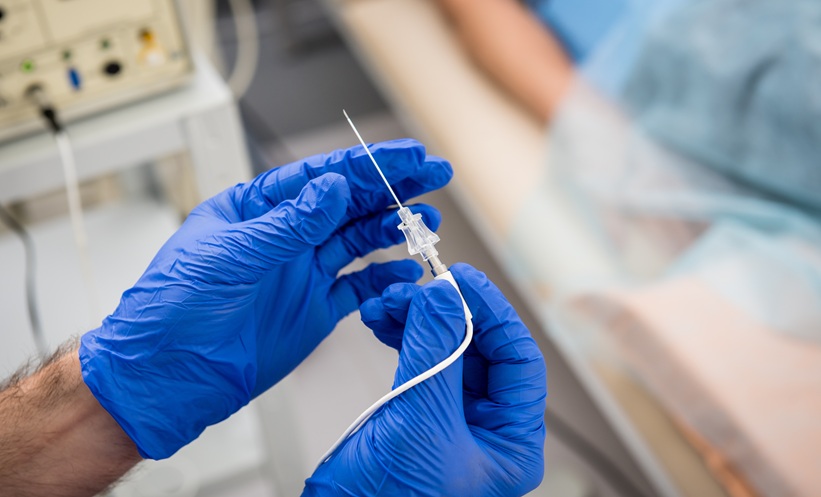
TRANSSEPTAL puncture procedures could become more precise and streamlined with the Protaryx transseptal puncture device, which demonstrated early feasibility and safety in a five-patient first-in-human study.
The novel catheter incorporates an echogenic nitinol mesh designed to improve visualisation and targeting during left-sided cardiac interventions, potentially addressing limitations associated with conventional transseptal puncture techniques.
Transseptal Puncture Challenges in Cardiac Interventions
Transseptal puncture is an essential initial step in several percutaneous left-heart procedures, including atrial fibrillation ablation, left atrial appendage occlusion and percutaneous mitral valve repair or replacement.
However, conventional techniques present challenges related to imaging visibility, precise puncture-site control and procedural learning requirements.
Accurate targeting of the fossa ovalis is particularly important for achieving appropriate access to the left atrium.
The Protaryx transseptal puncture device was developed to address these limitations through enhanced catheter manoeuvrability and improved visualisation during procedural guidance.
Its design incorporates an atraumatic, highly echogenic nitinol mesh end effector that can be deployed and retracted from an extendable catheter.
These features are intended to facilitate more accurate positioning and controlled targeting during transseptal access.
Protaryx Device Demonstrates Early Procedural Success
Early clinical evidence included a prospective, non-randomised observational first-in-human study involving five patients undergoing transseptal puncture with the Protaryx catheter.
The study demonstrated rapid, on-target puncture of the fossa ovalis, supporting the device’s technical feasibility.
Importantly, no adverse events were reported during the initial clinical experience.
All five patients subsequently underwent successful structural heart interventions following transseptal puncture, representing a procedural success rate of 100%.
These findings suggested that the device could support reliable access for left-sided cardiac procedures.
However, the small study population and non-randomised design limit conclusions regarding comparative safety, procedural efficiency and effectiveness.
Larger investigations are required to determine whether the proposed advantages translate into consistent clinical benefits.
FDA Approval Expands Transseptal Puncture Options
The device has received approval from the United States Food and Drug Administration, expanding the available technologies for clinicians performing left-sided cardiac interventions.
Its combination of an extendable catheter and highly visible mesh end effector may offer additional procedural control when targeting the fossa ovalis.
The technology could be relevant to interventional cardiologists and electrophysiologists performing complex structural heart and electrophysiological procedures.
Nevertheless, the reported first-in-human experience provides preliminary evidence rather than definitive confirmation of superiority over established transseptal puncture approaches.
Further studies involving larger patient populations and direct comparisons with conventional devices will be important for evaluating procedural outcomes, safety and reproducibility.
Overall, the Protaryx device represents a promising development in transseptal puncture technology, with encouraging early clinical findings supporting continued evaluation.
Reference
Quinn RW et al. Evaluation of a novel transseptal puncture device for use in cardiac procedures requiring left atrial access. Future Cardi. 2026.