BACKGROUND AND AIMS
American Indian and Alaskan Native (AI/AN) people face inequalities in access to specialized physicians, underrepresentation in clinical trials, and unique health challenges related to social determinants of health. For example, 94.5% of AI/AN people report a history of skin conditions, and yet dermatology services are only offered in 9.0% of tribal and Indian Health Service facilities. Studies have been published to characterize these disparities, but understanding the current state of research and the gaps that need to be addressed within this area is essential to maximizing efforts to address the existing inequalities. A scoping review allows for a broad understanding of the current direction of research and areas that still need to be addressed.1
MATERIALS AND METHODS
A scoping review was conducted in accordance with Preferred Reporting Items for Systematic Reviews and Meta-Analyses Extension for Scoping Reviews (PRISMA-ScR) guidelines using a modified Joanna Briggs Institute methodology.1,2 An a priori protocol is hosted on the Open Science Framework (Center for Open Science, Charlottesville, Virginia, USA). An exhaustive search for peer-reviewed publications at the intersection of AI/AN populations and dermatology in the last 10 years was performed (Medline/Embase/Scopus) in April 2025. All screening was done in duplicate using Rayyan™ (Rayyan Systems Inc., Cambridge, Massachusetts, USA).3 Abstracts (n=3,128) were pre-screened for publications related to dermatology and AI/AN populations in the USA. Abstracts (n=792) and full-text articles (n=151) were then screened with the additional criteria of access to dermatology.4 After screening, 42 reports remained for data extraction (Figure 1).
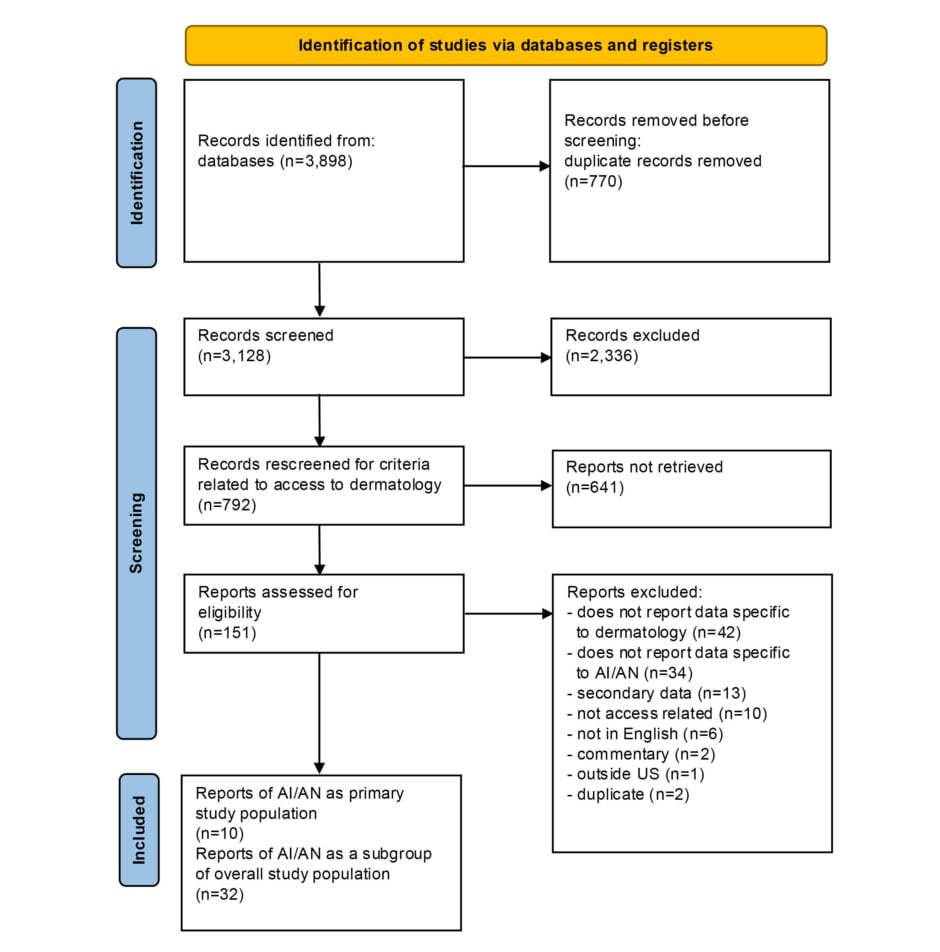
Figure 1: Preferred Reporting Items for Systematic Reviews and Meta-Analyses (PRISMA) style flow diagram summarizing study identification, screening, eligibility review, and inclusion.
AI/AN: American Indian and Alaskan Native.
RESULTS
Ten reports included AI/AN people as the primary study population, and 32 as a subgroup. Overall, only six studies focused specifically on access to dermatologic care for AI/AN people. Fourteen studies evaluated inclusion in clinical trials. It was sometimes difficult to determine whether publications on clinical trial inclusion included international trials, but reports of US-only trials showed statistically lower rates of AI/AN inclusion. AI/AN people had longer travel times to dermatologists, but some studies were limited based on an inability to capture traveling dermatologists and telemedicine services. Studies without this limitation still showed that AI/AN people travelled farther to receive dermatology care compared to other races. Few publications reported more granular information on AI/AN participants, such as tribal affiliation. Importantly, many articles described a lack of access, whilst few evaluated specific barriers to care.
CONCLUSION
Lack of access to dermatology services remains a significant issue for AI/AN populations, but relatively few publications focus on factors contributing to lack of access specifically for these groups. Studies evaluating access to dermatology for AI/AN populations should take into account the role of traveling dermatologists and telemedicine within the Indian Health Services. Understanding the barriers to care faced by AI/AN people is essential for improving equitability in dermatology.