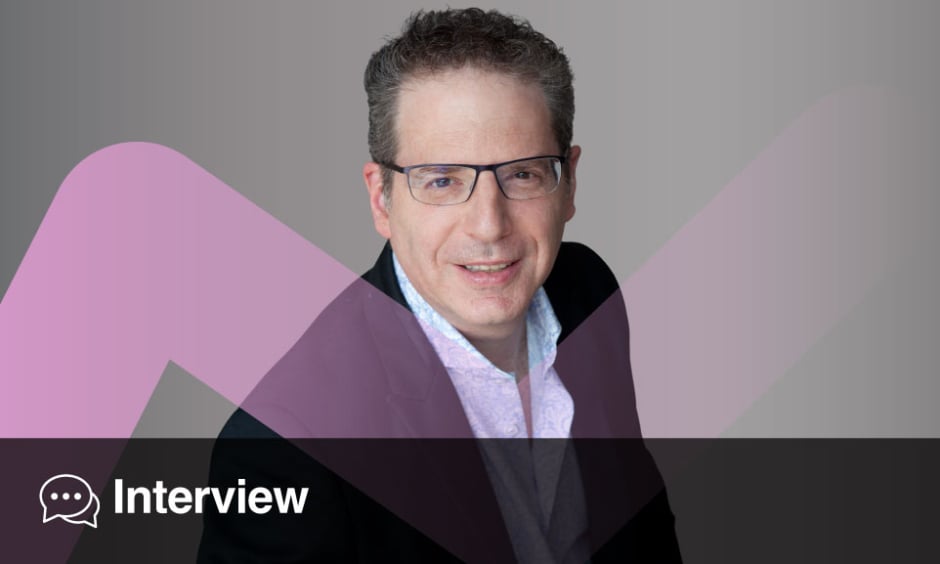
Brian Biesman | Co-Chair and Co-Founder, Music City SCALE; Associate Clinical Professor of Ophthalmology, Dermatology, and Otolaryngology, Vanderbilt University Medical Center, Nashville, Tennessee, USA
Citation: Dermatol AMJ. 2026; https://doi.org/10.33590/dermatolamj/3PM319D9

What aspects of your medical and surgical training most deeply influenced the way you care for patients today, and how might younger physicians replicate that kind of formative experience?
I came from the teaching that the patient always comes first, no matter what you’re doing. There was a deep respect for patients and medical science, and if there was a patient need, that automatically superseded every other aspect of whatever I was doing, including family and life, because my patient needed me.
I had a couple of mentors along the way to help guide decision-making when I had difficult decisions. One was a surgeon, and one was a very wise internal medicine specialist, both of whom are unfortunately deceased. I think it’s an old-fashioned work ethic. We all want to get out of work in a timely manner, if possible, but patients come first. It’s not necessarily the mentality that we always observe today, but it’s just a deep commitment and respect that was grilled into me from the very beginning that I adopted, and then mentorship to help me make decisions if I was faced with difficult times.
What were the pivotal career decisions that allowed you to balance surgical work, technology development, and leadership?
Opportunities came along, and I said, “I’ve got to figure out some way to make this happen…” It’s just one of those things where I don’t have a good answer as to how or why certain things happened when they did. It could have been a surgical opportunity, it could have been a non-surgical opportunity, but I just did what came along at the time and found a way to make it work, and I had a difficult time saying no, which I’m trying to get better at.
During your career, which innovations have most improved patient outcomes?
Devices, surgery, and injectables have been the most game-changing innovations. Topicals have certainly evolved tremendously as well.
In terms of improving patient outcomes, there have been certain devices that I think have been remarkable. Some are obsolete now, but, for a long time, they represented something groundbreaking. One was the pulsed dye laser, or the longer pulse duration pulsed dye laser, where you could perform pulsed dye laser treatment without causing purpura. The first CO₂ resurfacing laser was a big deal, as was fractional resurfacing and the development of cryolipolysis. At the time, and for probably 15 years until glucagon-like peptide-1s came around, non-invasive fat reduction was a really big deal. Non-invasive skin tightening was also a game-changing technology.
There is a new resurfacing device, the UltraClear® (Acclaro Medical, Smithfield, Rhode Island, USA) laser, which I have done a lot of work on developing. Some of the device technologies I have had the opportunity to participate in have been very meaningful, and there are many others that have not done as well but were still worthwhile.
We also developed something to enhance laser tattoo removal, which was a cool project. I do not know if it was as pivotal or game changing as some of the others, but for our tattoo patients, it made a great difference.
Injectable-wise, the first hyaluronic acid fillers were a big deal. When we first started, we had bovine collagen, and that was really all we had. We did not have fillers per se, so having hyaluronic acid fillers and then biostimulators was a major shift. We did not really understand biostimulators very well at first. I started injecting them in 2004, and for 20 years, no one really talked about them. Then, a couple of years ago, perhaps because of an influencer, everyone suddenly started asking about it. Patients would say, “I want that new stuff,” and I would think, “This is something we have been using since 2004.”
Some of the innovation has not just been in the drugs themselves, but in their applications. We are using biostimulators, for example, on the body to solve problems such as wrinkles above the knees and wrinkles on the arms, areas where we do not have many good solutions.
I love solving novel problems. What are the hard problems for which we do not have a solution, and how can we use existing tools, whether they are devices, drugs, or combinations, to actually solve them? That has been really fun and exciting. There are things we have been able to do with that approach, and now that is what I try to focus on: how can I leverage the knowledge I have gained from experience to come up with unique combinations and solve very difficult problems? For me, that is fun.
Your numerous publications range from laser blepharoplasty to consensus guidelines on fillers and ablative resurfacing. How do you approach clinical research in aesthetic medicine, and what advice would you give to practitioners who want to contribute to the literature while maintaining a busy clinical schedule?
I love my patients, and I love patient care. After as many years as I have been doing this, probably since the early 1990s, it’s the research that keeps me continuously thinking and challenged intellectually. It gives me the opportunity to gain experience with new products and new devices, and to evaluate those newer products against the backdrop of everything else that has been around for the past 30 years.
Sometimes people think, “Oh yeah, this is new,” and I think, “It is just like what we did 15 years ago.” They were not practicing yet, so they think it is new.
Other times, you realize that you have something that has never really been seen before, and it really is new. I like bringing my experience and perspective to it. I love doing research in that way. It is challenging, it is interesting, I get to think, and it keeps me intellectually engaged.
The Symposium for Cosmetic Advances and Laser Education (SCALE) began as a small meeting and is now a major multispecialty conference attracting thousands of attendees. What gap in education or collaboration did you see that led you to create SCALE, and how has the mission evolved over time?
That was complete happenstance. It seemed to make sense because Michael Gold (Gold Skin Care Center, Nashville, Tennessee, USA) and I were the two people in Nashville in 2005 who had a strong interest in lasers and so forth.
He asked if I wanted to organize a meeting. I didn’t really know him well, but we knew of one another, so I said, “Okay, sure.” I had been in Nashville for about 7 years, so I was still relatively new, but I had the bandwidth. So, I agreed to collaborate. The first meeting was small. It was half a day with about 25 people together in a hotel room. We had a few sponsors and didn’t really go into this with a vision of what we could build. It evolved as more and more advances came along in the aesthetic space. The meeting began to grow to reflect that and then began to expand to include other topics. We became more mindful and deliberate about it. We realized we had something here, and we started thinking maybe we can add this, maybe we can add that… What would that do? Each year we built on the previous year’s success and tried to identify areas of improvement, and the meeting grew year after year.
From an organizer’s standpoint, what elements of SCALE’s design have been the most successful in changing practice patterns?
I think there is a lot that can translate for people who are interested. The most successful elements are the things you can take from the meeting and use when you get back to your office on Monday.
Some of the injection and injection safety content have been very valuable. I have been doing a course with Sebastian Cotofana (Vanderbilt University, Nashville, Tennessee, USA) for the last 6 years, the day before the meeting, and with the material we build into the meeting itself, I think people can get pearls that you go home with and you’re good to use right away.
I think the treatment paradigms on the medical dermatology side can be very helpful for people who haven’t kept up. They are changing the way people think about certain diseases and how they want to treat them. Sometimes it just takes a bit more information about something new or hearing how someone you respect does things.
The same is true for energy-based devices. You will get some pearls that you can take back and start using. Cotofana has completely changed the way I inject and the way I think about facial anatomy over the past several years. I think that’s a very powerful course. Also, the adoption of ultrasound. I cannot, in my practice, do injections without having ultrasound available. I just can’t do it. I think it’s an absolutely integral part of practice, and we offer exposure to and demonstration of that. In the US, ultrasound is not as popular and well-recognized as it is in Europe, for example, but hopefully we’ll get there. For patient safety and outcomes, I think it’s extraordinary.
Looking ahead, which emerging technologies or clinical challenges do you believe will dominate future SCALE agendas?
There are some interesting technologies, but there’s a difference between what’s interesting, and what’s interesting and commercially relevant.
If we are talking about what’s novel, or what’s going to solve a problem that we haven’t been able to solve up to this point, I don’t know if there’s something I’m seeing that, in the next year or so, we can really use to make dramatic differences in people’s lives. There are some really interesting things happening in regenerative medicine, longevity, hair growth, and restoration. I think we’re going to see some game-changing treatments in those areas. They are really important to pay attention to.
You juggle roles as a surgeon, researcher, mentor, and conference co‑ How do you balance your ongoing responsibilities?
Not very well. It comes at the sacrifice of a work-life balance at times, because I do not really have a great work-life balance. It is not for lack of effort. I am getting better, but, still, it has taken me a long time to get here, and I am still not great at it.
I love mentoring young people. I didn’t have that type of mentorship, although I had, like I said, two wonderful mentors. I try to mentor young, early-career people as much as I can. I find it extraordinarily rewarding. I really love being able to give back, especially in ways that would have been helpful to me when I was at earlier stages of my career, and I didn’t have anyone to do that. Partly because no one had done it before, so we were all figuring it out, and I think the world was a little bit different then as well.
How has the mission of SCALE evolved over time?
It’s always focused on education first. The podium is not for sale. I also don’t really care how many Instagram followers people have. All I care about is how credible and knowledgeable someone is as a speaker. We’ve been very deliberate in trying to keep it free from commercial bias and limited to actual information. The talks are no more than 10 minutes long, which keeps people on track and keeps the information clear. We try to minimize the overlap of information. I try to make it non-stop, high-quality information from speakers who have been carefully selected based on their experience, their perspective, and work that they have done previously. I will sometimes try to get folks with different perspectives, but it’s curated carefully and deliberately.
We try to just look at the speakers as a whole: who’s going to bring the best up-to-date information in a relatable, interesting way to the audience, so that everyone can learn from it. I tell my faculty that I don’t care who’s sitting in the audience, you present as if you’re presenting at a society meeting. If someone doesn’t understand and can’t keep up, then they know what they have to work on, as opposed to teaching to the lowest common denominator, which in our injection course and in our laser basics course, we do. We know that people don’t know this stuff as well, but, for the scientific sessions that are presented, it’s as if the faculty are presenting with other faculty as their audience.
Are those deliberate and purposeful choices something you always had in mind from the start?
We’ve always had it in mind, but now what has happened is, as the space has grown and as the relationships between industry and physicians have gotten more complicated, you’d start to see more speakers who would say one thing one week and the opposite thing another week depending on whose device they’re talking about. I noticed that and have tried to be very mindful about who we invite and what we want people to talk about, and so forth. We encourage open debate and difference of opinions.
I just want someone who has their own opinion and not just the opinion of a company, depending on which talk they’re giving or which company they’re getting paid by to give their talk. I’ve tried to keep people who can think independently, express themselves, and talk about different things, about advantages and disadvantages of each, and people can make their own decision as to what they want to do. They don’t work for a laser company, or a device company, or for injectables; those companies have salespeople whose job it is to sell products. The SCALE faculty’s job is to teach in a way that is as unbiased as possible.
My job is to report the news to the best of my ability and that’s what I try to do. I want to get the best possible information that can be presented as objectively as possible without the use of trade names, unless it’s the only product. For example, there’s only one platelet-derived growth factor (PDGF) product on the market. So, you can say Ariessence® (LRM Aesthetics, Fremont, Michigan, USA) in your talk if you need to, but you’re not promoting it over another PDGF, if you want to use PDGF.
If you’re talking about CO2 lasers, and there’s one that’s truly unique, you can say, “I think this one has these advantages, but that doesn’t mean you can’t get good results with others, and this is why I like this particular technology.” But the next week you can’t say, “I love the other technology better.” You can say, “I used to love this one and here’s why I migrated to that one,” but at least be consistent. You need to be balanced in your comments to maintain credibility.
Those are the things that I look for, and that has become more deliberate as the industry and the number of choices has grown, because, again, when it was all brand new, there weren’t many choices, and now there are tons. You just need people who can be fair and balanced, and I want to see fair, balanced, high-quality science, which I’ve really focused on.