Key Summary:
- GLP-1 users reported nail detachment more than four times as often as controls.
- Nail disorders affected 66% of GLP-1 users compared with 53% of controls.
- Prospective research was planned to investigate causes and reversibility.
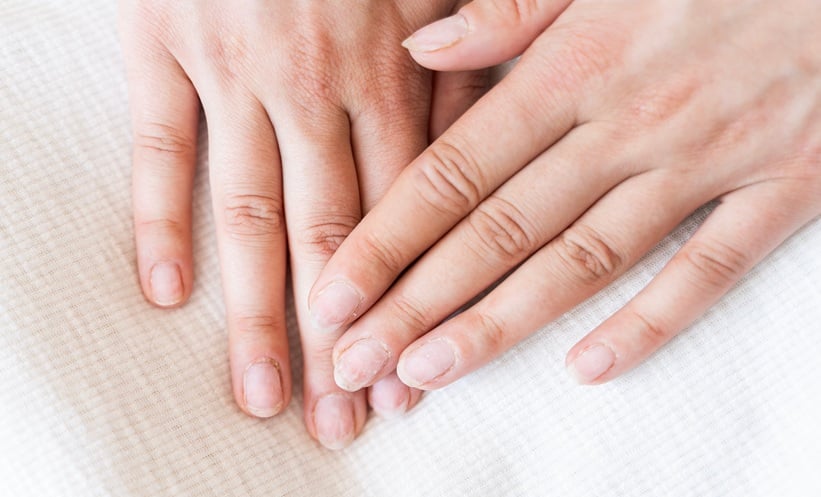
GLP-1 nail disorders were more common among people taking glucagon-like peptide-1 (GLP-1) receptor agonists than comparable controls in the first controlled study of their potential effects on nail health, presented at EADV Congress 2026.¹ GLP-1 receptor agonists are increasingly used to treat type 2 diabetes and obesity, although their effects on nail health have remained largely unexplored.²
The multinational study compared 575 GLP-1 receptor agonist users with 1,329 people with type 2 diabetes and/or obesity who had never taken the drugs. Participants were recruited across France, the United States, Brazil, and Mexico.
Overall, 66% of GLP-1 users reported at least one nail disorder compared with 53% of controls. Nail detachment was reported by 39% of users versus 9% of controls, representing more than a four-fold difference. Nail discolouration was also more common among GLP-1 users, affecting 46% compared with 17% of controls.¹
The increased prevalence of nail problems did not appear to be explained by weight loss alone, with differences between GLP-1 users and controls remaining significant among participants who had lost weight.
The researchers cautioned that the findings could not establish that GLP-1 receptor agonists caused the nail changes. Around half of users reported experiencing nail problems before treatment initiation, while adjustment for dermatological conditions and nutritional deficiencies reduced the strength of some associations. However, nail detachment and discolouration remained around two to three times more frequent among users following adjustment.¹
A companion study involving the same participants found that hair and scalp changes were also more common among GLP-1 users. Unusual hair loss was reported by 50% of users compared with 34% of controls, while loss of hair volume or density affected 42% versus 19%. Hair loss beginning after treatment initiation occurred in 26% versus 12%, while scalp redness was around three times more frequent among users.³
The nail and scalp investigations were cross-sectional and based on patient-reported symptoms, so the findings demonstrate associations rather than establishing that GLP-1 receptor agonists caused the reported changes.¹,³
The researchers plan to follow patients prospectively from treatment initiation. Standardised dermatological assessments and biological monitoring will be used to investigate when nail, hair, and scalp changes emerge, explore potential mechanisms, and assess whether they resolve over time.¹,³
References
Featured image: Valentina on Adobe Stock
Each article is made available under the terms of the Creative Commons Attribution-Non Commercial 4.0 License.