NEW research has explored how paroxetine may improve symptoms of refractory erythematous rosacea by altering systemic molecular pathways. The secondary analysis of a randomised clinical trial investigated changes in plasma proteins after treatment and identified potential biomarkers that could help predict which patients may respond.
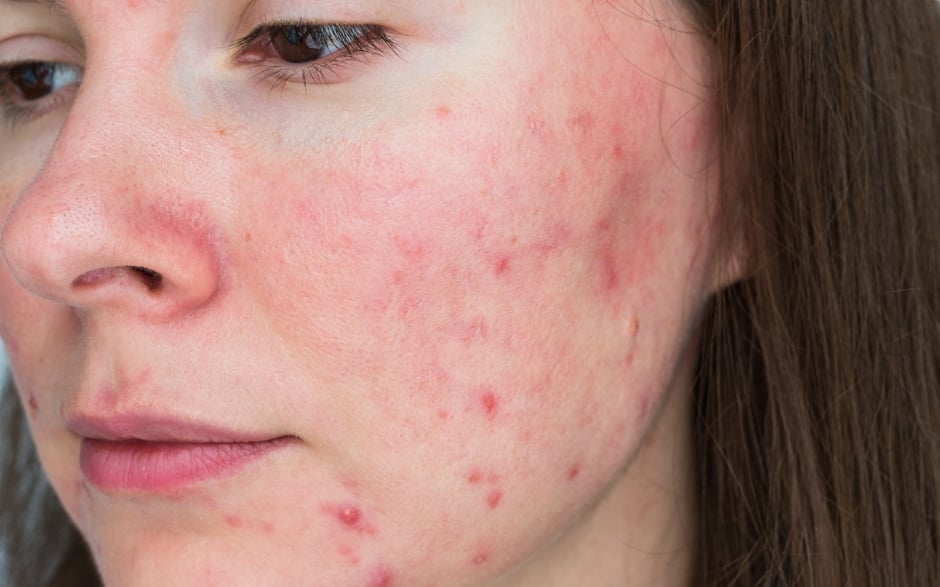
The study included 24 women with refractory rosacea who received oral paroxetine 25 mg daily for 12 weeks. Participants had persistent facial erythema despite previous treatments, with clinical outcomes assessed using the Clinician’s Erythema Assessment (CEA) and Flushing Assessment Tool.
After 12 weeks, paroxetine treatment was associated with significant improvements in both erythema and flushing symptoms. Mean CEA scores decreased from 3.1 to 2.3, while flushing scores fell from 3.1 to 2.0.
Paroxetine Linked to Immune, Vascular and Neurological Pathway Changes
Using plasma proteomic profiling with data-independent acquisition liquid chromatography-tandem mass spectrometry, researchers identified 497 proteins that changed following treatment.
The altered proteins were mainly associated with pathways involved in immune activation, insulin receptor signalling, neuronal regulation and vascular function. Researchers also identified a subgroup of 98 “reversed-response” proteins, which showed patterns suggesting a shift towards normalisation after treatment.
These proteins were particularly linked to synaptic vesicle cycling and vascular smooth muscle contraction, supporting the theory that rosacea symptoms may involve interactions between nervous system regulation, inflammation and blood vessel responses.
Candidate Biomarkers May Support Personalised Rosacea Treatment
The study also examined whether protein changes could predict clinical improvement. Protein signatures were associated with reductions in erythema and flushing severity, with 65 proteins linked to erythema improvement and 73 linked to flushing improvement.
Two proteins, OLFML3 and IGFBP2, showed potential as predictive biomarkers. OLFML3 demonstrated an area under the receiver operating characteristic curve (AUC) of 0.87, while IGFBP2 showed an AUC of 0.80, suggesting they may help identify patients more likely to benefit from paroxetine therapy.
Future Directions for Rosacea Management
The authors concluded that paroxetine may act beyond symptom control by influencing systemic neurovascular and immune pathways involved in rosacea. However, they emphasised that the findings are exploratory and require validation in larger patient populations.
The results provide early evidence that circulating protein signatures could eventually support more personalised approaches to rosacea treatment, helping clinicians identify patients most likely to respond to specific therapies.
Reference
Wang B et al. Biomarkers of paroxetine response in refractory rosacea: a secondary analysis of a randomized clinical trial. JAMA Dermatol.2026;DOI: 10.1001/jamadermatol.2026.1437.
Featured image: Shauerman on Adobe Stock
- Author: