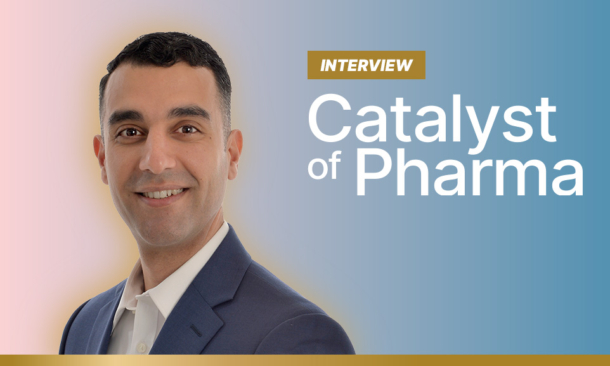
In our latest 5 minutes with, Dr Siddharth Jain, Head, Global Medical Unit for Growth & Launch Brands in Rare Diseases, Takeda, discusses the opportunities, obstacles and aspirations that define his role
Interview by Isabel O’Brien
What first drew you to this work, and what continues to motivate you today?
What first drew me to medical affairs was a realisation early in my clinical and research training: science only fulfills its purpose when it meaningfully changes outcomes for patients. I saw how much effort goes into generating knowledge, yet how often that knowledge remains disconnected from real-world clinical decisions. That gap felt both important and solvable.
Medical affairs offered the opportunity to bridge science, strategy and patient care. Over time, that motivation has deepened, particularly through my work in rare diseases, where unmet needs are significant. Contributing to real-world evidence, publications and scientific dialogue has made that connection tangible.
What continues to motivate me is the possibility that our work helps patients be diagnosed earlier, understood better and treated more effectively, and ultimately reach care that truly changes their lives.
How do you see the role of medical affairs evolving, and how has that influenced your approach to your work?
Medical affairs is evolving into a far more central and strategic function, one that connects science not only with clinicians, but also with access decisions, health systems and enterprise leadership. Today’s expectation is not simply to generate evidence, but to translate it into insight that informs real-world decision-making.
This evolution has shaped my approach in a very practical way. I focus on building evidence that can travel from generation to publication, scientific exchange and, ultimately, to action. Through work in the rare disease and gastrointestinal fields, I’ve seen how publications and congress presentations can elevate important conversations beyond the medical community.
Having lived in India, Singapore and the United States, and also working closely with stakeholders across Asia-Pacific, Latin America, the Middle East, Africa, China and Brazil, I have learned that effective medical affairs requires both scientific rigour and cultural adaptability.
I believe the future of medical affairs lies in being globally strategic, locally relevant and consistently grounded in patient impact.
Medical affairs requires both scientific rigour and cultural adaptability
What are the biggest challenges you are currently facing in your role, and what have those challenges taught you?
Navigating complexity while maintaining clarity and alignment. In a global rare disease environment, priorities are constantly shaped by evolving evidence needs, diverse regional realities, access considerations and resource constraints. Balancing these factors while keeping teams focused on what matters most can be demanding.
These challenges reinforce the importance of adaptability, thoughtful prioritisation and transparent communication. Working across multiple geographies and cultures has also shown me that there is rarely a single ‘right’ answer. Progress can depends on understanding context and tailoring approaches accordingly.
I have come to see that leadership is less about having perfect answers, and more about helping teams stay focused and aligned in the face of uncertainty.
What impact do you hope your work has on patients, colleagues and the wider community?
For patients, particularly in rare diseases, I hope my work helps bring clarity – clearer evidence, greater awareness and ultimately better-informed decisions. Many of the publications and real-world evidence efforts I have contributed to are aimed at addressing gaps in understanding that can directly influence patient outcomes.
For colleagues, my focus has been on creating an environment where people feel empowered to grow and contribute meaningfully. Having worked in diverse, multicultural teams, I have seen how inclusive collaboration and mutual respect can unlock stronger outcomes.
For the wider community, I hope to contribute through scientific publications, congress participation and industry forums, helping advance shared knowledge and strengthen medical affairs as a discipline.
If the work helps patients receive better care and leaves teams stronger and more confident, that is the most meaningful impact I can aspire to.
Looking back on your career journey, what experiences have most shaped your perspective, and what keeps you grounded and inspired outside of your day-to-day responsibilities?
The experiences that have shaped me most are those that required both breadth and adaptability. Early clinical and research roles instilled scientific rigour and empathy, while building systems in evolving organisations taught me resilience and problem-solving.
Working and collaborating with diverse healthcare systems and cultures has deepened my appreciation for cross-cultural understanding, humility and adaptability in leadership. These experiences have consistently reinforced that impact comes from aligning science, people and context.
Scientifically, some of the most meaningful milestones have been seeing work evolve from concept to evidence, and from evidence to publication and recognition at global forums. Contributions to long-term studies have been especially fulfilling because they reflect sustained collaboration over time.
Outside of work, I stay grounded through continuous learning, whether through leadership development, exploring AI in healthcare, or mentoring others.
What keeps me inspired is the sense that this journey is still evolving, and there is always more to learn, contribute and improve for the patients we ultimately serve.