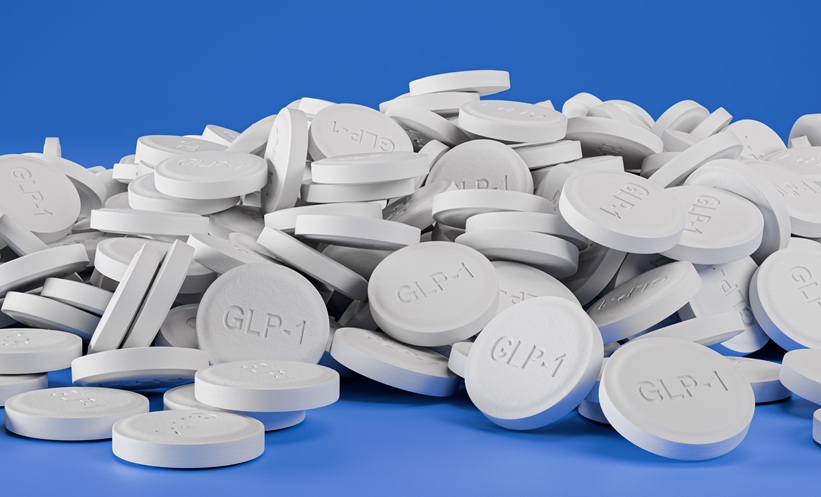
Novo Nordisk’s semaglutide tablets have become the first once-daily glucagon-like peptide-1 (GLP-1) receptor agonist pills approved in the UK, by the Medicines and Healthcare products Regulatory Agency (MHRA).
They will be available as an alternative to weekly injections for adults living with obesity or overweight with a weight-related condition, alongside diet and exercise.
Novo anticipates the pill will be available via private prescription within weeks.
Sebnem Avsar Tuna, general manager, Novo Nordisk UK, said: “This marks an important milestone for obesity care in the UK.
“For the first time, people living with obesity have access to a GLP-1 treatment in a daily pill, allowing them the choice and flexibility of oral treatment to support their long-term weight management.”
The OASIS 4 trial
The MHRA approval is based on data from the OASIS 4 phase 3 clinical trial.
The study evaluated semaglutide tablets 25mg in 307 adults with obesity or overweight with at least one weight-related condition, without diabetes.
Regardless of adherence, adults with obesity receiving semaglutide tablets 25mg achieved 13.6% weight loss, compared with 2.4% with placebo after 64 weeks, in addition to lifestyle modifications.
Results showed that if there was 100% adherence, semaglutide 25mg achieved weight loss of 16.6% against 2.7% for placebo after 64 weeks.
Plans to launch
Novo has previously announced plans to launch the semaglutide pill in select markets in the second half of 2026.
The MHRA is the third regulatory authority to license the medicine, after the US Food and Drug Administration and the United Arab Emirates, Emirates Drug Establishment.
Professor Naveed Sattar, Professor of Cardiometabolic Medicine, School of Cardiovascular & Metabolic Health, University of Glasgow, said: “The approval of the once-daily oral form of [semaglutide] is welcome news for people living with obesity, particularly those who would prefer not to use injections.
“Expanding the range of effective treatments is important in helping people sustainably reduce caloric intakes within an increasingly obesogenic environment.
“With obesity rates in the UK now at very high levels, and associated with substantial multimorbidity, additional treatment options for sustained weight loss are greatly needed.”
Featured image: Marevgenna on Adobe Stock
- Author: