Author: *Han Naung Tun1,2
1. Geisel School of Medicine at Dartmouth, Hanover, New Hampshire, USA
2.Department of Medical Sciences, Bouvé College of Health Sciences, Northeastern University, Boston, Massachusetts, USA
*Correspondence to [email protected]
Conflicts of interest: The author declares there are no conflicts of interest.
Funding statement: The author declares they received no funding for this work.
Keywords: Cardiometabolic health, cardiovascular disease, climate change, environmental exposures, preventive cardiology.
Citation: EMJ Cardiol. 2026; https://doi.org/10.33590/emjcardiol/J917WK45

CLIMATE CHANGE is increasingly discussed as an environmental crisis, but its biological consequences make it equally a cardiovascular and metabolic health challenge. At its physical core, anthropogenic climate change reflects a perturbation of Earth’s energy balance. Incoming shortwave solar radiation is partly reflected and partly absorbed by the Earth system, whereas energy is lost to space primarily as outgoing longwave radiation. Greenhouse gases including CO2, methane, and nitrous oxide alter this radiative balance, and increasing anthropogenic greenhouse-gas concentrations have produced positive radiative forcing and accumulation of energy within the climate system.1,2 The consequences extend beyond an increase in mean surface temperature to changes in heat extremes, hydrological patterns, wildfire risk, atmospheric chemistry, and extreme weather.1,3 From a health perspective, climate change should therefore be conceptualised not as a single exposure, but as an exposure amplifier capable of simultaneously modifying temperature, air quality, food systems, physical activity environments, socioeconomic conditions, and healthcare delivery.3,4
CLIMATE CHANGE AS A CARDIOVASCULARRISK MULTIPLIER
Cardiovascular disease remains a dominant cause of global morbidity and mortality, yet conventional prevention remains centred largely on individual-level risk factors such as hypertension, dyslipidaemia, diabetes, smoking, obesity, and physical inactivity. Environmental exposures increasingly challenge the completeness of this framework.5 In 2026, the European Society of Cardiology (ESC), American College of Cardiology (ACC), American Heart Association (AHA), and World Heart Federation (WHF) jointly identified environmental stressors including air pollution, heat extremes, floods, wildfires, and other climate-related hazards as important contributors to cardiovascular risk, and called for greater integration of environmental health into cardiovascular prevention.5
Temperature is perhaps the most direct interface between climate physics and cardiovascular physiology. Both high and low ambient temperatures are associated with cardiovascular morbidity and mortality, with risk generally increasing outside a location-specific optimal temperature range.6,7 A global analysis using data from 32 countries estimated approximately 1.8 million annual cardiovascular deaths associated with non-optimal temperatures during 2000–2019, representing approximately 8.9% of cardiovascular mortality in the analysis; although cold accounted for the larger historical burden, the heat-related mortality ratio increased over time.8
The cardiovascular consequences encompass multiple disease phenotypes. The 2026 AHA scientific statement concluded that short-term exposure to non-optimal temperature increases the risk of myocardial infarction, stroke, heart-failure decompensation, arrhythmias, and sudden cardiac death.6 A 2024 systematic review of 492 observational studies similarly found sufficient evidence linking extreme temperature with adverse cardiovascular outcomes, while demonstrating substantial heterogeneity by exposure, geography, and population vulnerability.3
The physiological basis is compelling. During heat exposure, cutaneous vasodilation and sweating facilitate heat dissipation but can produce fluid loss, reduced circulating volume, tachycardia, and increased cardiovascular workload.6,9 Dehydration, haemoconcentration, electrolyte disturbance, autonomic and neurohormonal activation, endothelial dysfunction, inflammation, and increased myocardial oxygen demand may further destabilise susceptible patients.6,9 These mechanisms provide biologic plausibility for increased cardiovascular events among individuals with coronary disease, heart failure, hypertension, kidney disease, diabetes, or impaired thermoregulatory capacity.6,7
BEYOND HEAT: AIRPOLLUTION, WILDFIRES, AND COMPOUND EXPOSURES
Temperature represents only one component of the climate–cardiovascular pathway. Climate change interacts with air quality through multiple processes, including atmospheric chemistry, heat-enhanced ozone formation, wildfire activity, drought, and meteorological conditions that influence pollutant concentrations and dispersion.3,10 Fine particulate matter and other environmental pollutants can promote oxidative stress, systemic inflammation, endothelial dysfunction, autonomic imbalance, thrombosis, and atherosclerotic processes that intersect directly with established pathways of cardiovascular disease.10,11
Wildfires illustrate this convergence. Climate conditions conducive to severe wildfire activity can expose populations far beyond the fire perimeter to smoke and particulate pollution.3 Evidence supports adverse health consequences from wildfire smoke, although the cardiovascular-specific evidence remains less consistent than the evidence for extreme temperature or conventional ambient particulate pollution.3 This distinction is important as climate-health communication should not outrun the strength of the underlying evidence.
More concerning may be compound exposure. Environmental stressors rarely occur independently. Heat may coincide with high concentrations of particulate matter or ozone, potentially producing risks greater than those expected from either exposure alone.3,12 In a California case-crossover study, concurrent exposure to extreme maximum temperature and elevated fine particulate matter was associated with substantially greater mortality than exposure to either factor alone.12 More recently, a large study in the USA found that joint exposure to higher ozone concentrations and high temperatures was associated with increased risk of acute myocardial infarction among adults aged 18–64 years.13 These observations argue for moving cardiovascular environmental epidemiology beyond one-exposure-at-a-time models toward an exposome framework incorporating temperature, air pollution, wildfire smoke, noise, chemical exposures, built environments, andsocial vulnerability.10,11
THE METABOLIC CONSEQUENCES MAY BE UNDERAPPRECIATED
The metabolic dimension of climate change deserves comparable attention. Diabetes, obesity, hypertension, dyslipidaemia, kidney disease, and cardiovascular disease form an interconnected cardiometabolic continuum, and environmental exposures may influence several components through physiological, behavioural, nutritional, and socioeconomic pathways.11,14 Heat exposure is particularly relevant for people with diabetes and other chronic metabolic disorders, because thermoregulatory impairment, dehydration, vascular dysfunction, and accompanying cardiovascular or renal disease may reduce physiological resilience.6 A 2025 systematic review and meta-analysis focused on low- and middle-income countries found positive associations between environmental heat exposure and morbidity or mortality related to cardiovascular disease, chronic respiratory disease, and diabetes, although substantial heterogeneity and limitations in the available evidence remain.15
Climate change may also affect metabolic health through less direct pathways. Extreme heat can constrain safe outdoor activity, while urban form can influence physical activity, heat exposure, air pollution, food access, green-space exposure, and other determinants of cardiometabolic health.14,16 Extreme weather and climate-related disruptions may additionally affect food systems, socioeconomic stability, medication access, and continuity of chronic-disease care.3 Importantly, these associations should not be translated into the simplistic conclusion that climate change causes diabetes or obesity. The evidence for long-term causal effects of climate change on incident obesity, insulin resistance, and Type 2 diabetes remains less mature than the evidence linking extreme temperature with acute cardiovascular outcomes. A more defensible framework is that climate change modifies a network of metabolic risk determinants including thermal stress, pollution, physical activity, diet, sleep, socioeconomic stress, and healthcare continuity that may collectively increase cardiometabolic vulnerability.11,14
CLIMATE VULNERABILITY AS A HEALTH-EQUITY PROBLEM
Climate exposure and climate vulnerability are not uniformly distributed. Older adults, people with established cardiovascular disease, outdoor workers, under-resourced communities, and people without reliable access to climate-controlled environments are particularly vulnerable to non-optimal temperatures.6,7 Social conditions including housing, occupation, neighbourhood design, access to cooling, and healthcare resources can therefore modify the cardiovascular consequences of the same meteorological exposure.6
The geographic evidence base is similarly unequal. In the 2024 systematic review by Kazi et al., the 492 included observational studies represented 30 high-income countries and 17 middle-income countries, but only one low-income country.3 More recent evidence continues to identify substantial data gaps across low- and middle-income settings, particularly in sub-Saharan Africa.17 This imbalance creates both a scientific and an ethical problem. Risk estimates generated in populations with widespread air conditioning, resilient electrical grids, emergency medical systems, and comparatively robust health infrastructure cannot automatically be generalised to populations without these protections. Climate vulnerability is therefore determined not simply by the environmental hazard, but by the interaction among exposure, biological susceptibility, and adaptive capacity.3,6,17
FROM CLIMATOLOGY TO PREVENTIVE CARDIOLOGY
The cardiovascular community should move beyond viewing climate change solely as an environmental-policy issue. Climate information increasingly has potential relevance to cardiovascular prevention. Heat-health warning systems, air-quality monitoring, wildfire forecasts, neighbourhood heat mapping, and individualised environmental exposure assessment may ultimately complement conventional risk assessment for susceptible patients.6 However, prospective evidence demonstrating that climate-informed clinical interventions reduce cardiovascular events remains limited, making this an important area for implementation research. A distinction between adaptation and mitigation is essential. Adaptation aims to reduce harm from hazards already occurring, for example, through heat-warning systems, improved access to cooling, climate-resilient housing and health facilities, and preparedness for disruptions in chronic-disease care.5,6 Mitigation addresses upstream drivers by reducing greenhouse-gas emissions and otherclimate-forcing activities.5
Importantly, several mitigation strategies may simultaneously improve cardiovascular health. Greater use of clean energy can reduce combustion-related air pollution; active transportation can reduce emissions while increasing physical activity; and well-designed urban green infrastructure can contribute to heat mitigation while supporting healthier environments.16,18 A systematic review of climate-mitigation strategies identified renewable energy, active transportation, green space, and dietary change as interventions with potential cardiovascular co-benefits.18
This framework (Figure 1) also illustrates why climate change challenges the traditional boundary between environmental science and clinical medicine.
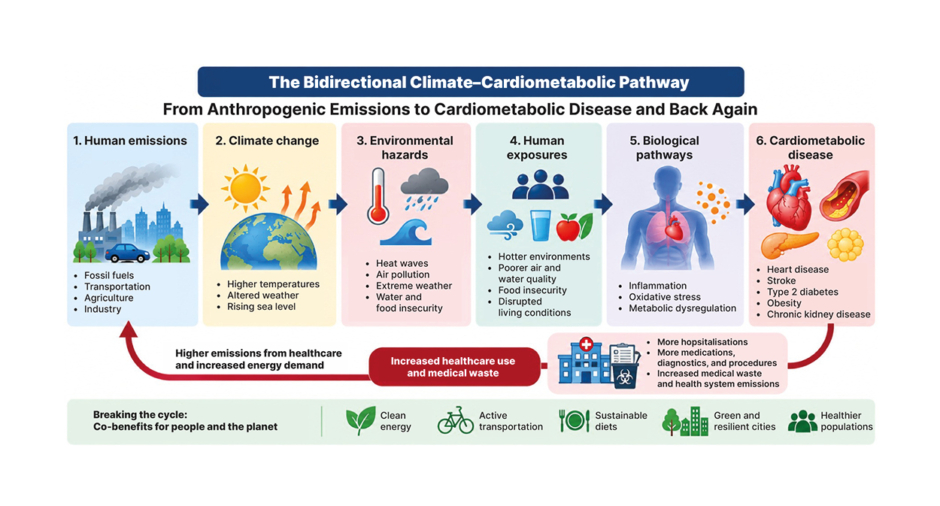
Figure 1: Bidirectional climate–cardiometabolic pathway.
A molecule of CO2 does not precipitate myocardial infarction in the conventional proximal sense. Rather, alteration of the planetary energy balance changes environmental exposures that converge on vascular biology, autonomic regulation, inflammation, thrombosis, metabolism, behaviour, and healthcare systems.3,5,6,10
Anthropogenic emissions drive radiative forcing and climate hazards that promote adverse environmental exposures, biological and behavioural responses, and cardiometabolic disease. Increased healthcare demand and associated resource use may, in turn, contribute to emissions, creating feedback loops. Mitigation and adaptation strategies can interrupt this cycle while providing cardiometabolic health co-benefits.
CONCLUSION
The next generation of climate-health research should therefore connect climate physics, exposure science, cardiovascular physiology, metabolic medicine, epidemiology, and implementation science. Such integration could move the field beyond documenting associations toward forecasting vulnerability, identifying clinically meaningful exposure-response relationships, testing targeted interventions, and designing climate-resilient cardiovascular care. Climate change is not simply a future environmental threat; it is an evolving determinant of cardiometabolic health. Cardiovascular prevention for the coming decades will increasingly need to account for the changing physical environment in which cardiovascular and metabolic disease occurs.