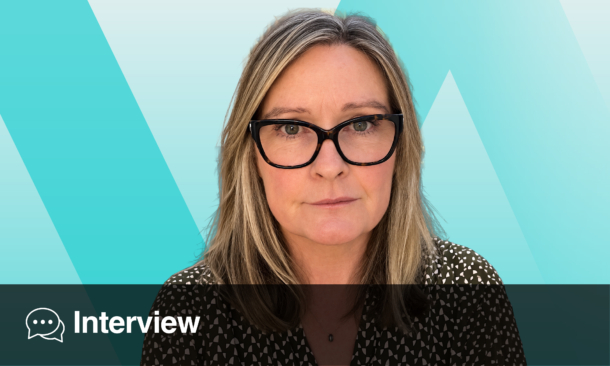
Matt Rutter | Professor of Gastroenterology, Newcastle University, UK; University Hospital of North Tees, Stockton-on-Tees, UK
Citation: EMJ Gastroenterol. 2026; https://doi.org/10.33590/emjgastroenterol/W1087QW6

How do you strike the right balance between setting faecal immunochemical test (FIT) thresholds that identify those who need further investigation and managing limited endoscopy capacity?
I think it is important to step back and ask ourselves what we are trying to achieve. Our aim is to improve population health, and, to do that, we want to find as many colorectal cancers as we can, at the earliest stage possible. That has to be at the forefront of our minds when deciding how to use these tools.
The challenge is that, although symptoms give us some steer as to someone’s cancer risk, they are quite poorly correlated with cancer risk. Historically, that is all we have had to go on, so general practitioners (GP) have had a lower and lower threshold for referring patients for colonoscopy. Although that has allowed us to find more cancers, we have had to do a tremendously higher amount of colonoscopies to achieve that, and that was not sustainable.
Then, FIT came along. The beauty of FIT is that it is essentially a filter test. It means we can ask GPs to have an even lower threshold for considering cancer in patients and starting investigations, but rather than the first test being colonoscopy, the first test is FIT. The correlation between the FIT result and cancer is far closer than the correlation between symptoms and cancer risk, so it is a much better test than relying on symptoms alone.
Used well, FIT is a really good rule-out test. We want to be able to rule out a large number of patients and reassure them that their risk is very low, while identifying those with a significant enough risk to warrant further investigation with colonoscopy. Setting the FIT threshold is therefore key, and it needs to be low enough that clinicians have confidence that a negative result effectively rules out cancer.
No test is perfect, so FIT should not be used in isolation. Age, rectal or abdominal masses, weight loss, and iron-deficiency anaemia all need to be considered. But taken together with FIT, the miss rate for cancer is incredibly low. The challenge now is using FIT effectively. If units investigate all patients who are FIT-positive but continue to investigate patients who are FIT-negative who do not need investigation, they do not reap the potential benefit in endoscopy capacity. There is still some way to go in the UK before FIT is used as effectively as it could be.
What is ColoFIT™ (Labcorp, Burlington, North Carolina, USA) and how can it be used to address the rise in early-onset colorectal cancer without significantly affecting colonoscopy capacity?
Colorectal cancer is an age-related disease, with more than 90% of cases occurring in people over the age of 50 years. That is still the case, but there has been a concerning increase in early-onset colorectal cancer, defined as occurring below the age of 50 years. Although these cases are increasing, they remain in the minority, and that is an important message. We do not really know why the early-onset increase is occurring though, so there are still a lot of unanswered questions about whether this could continue to increase.
This creates a particular challenge in primary care. If an 80-year-old has rectal bleeding, there is a fairly high risk that it will be caused by colorectal cancer; in an 18-year-old, the risk is virtually zero. Age is therefore an important consideration. However, when a GP has a young patient in front of them, they do not know whether that patient is going to behave like the average patient and have an incredibly low risk, or whether they are the rare patient who actually does have colorectal cancer. I really empathise with GPs on that.
FIT does not completely solve this problem, because, even if a young patient is FIT-positive, their risk of colorectal cancer is still really low. This can lead to many young patients being referred for investigation, causing anxiety, when in reality their risk remains very low.
ColoFIT is our next best bet for addressing this. It is an evolution of FIT that incorporates the numerical FIT result, age, sex, and two full blood count variables: platelet count and mean cell volume. UK data show that ColoFIT is better than FIT alone at stratifying risk and, because it includes age, behaves better in younger patients. It could help identify the rare young cancers while avoiding investigation of a huge number of young patients.
The latest annual bowel screening figures in the UK show people in their 50s are less likely to complete FIT testing. What factors do you think are driving this, and how can uptake be improved?
Until recently, bowel cancer screening in England, UK, was only offered to people between the ages of 60–74 years, so the entry point was 60 years. It is only really in the past 5 years that we have gradually dropped this to 50 years, and in some regions it has only been in the last year that 50-year-olds have been included.
The 60–74-year-old population is therefore very used to receiving their FIT kits and invitation letters, and their friends and family will have done the test. There is familiarity with it, comfort with the test, and a realisation that it is not difficult. It is not glamorous, but you do it in your own home, it takes a couple of minutes, and then you are done. It has almost become normalised in the older cohort, whereas the younger population has not yet caught up with that process. We saw uptake steadily increase year by year in the 60–74 year age group, so I think we will see the same in younger cohorts over time.
The younger cohort also has other challenges in their lives. They may be working, looking after families or elderly relatives, and there is a lot going on. If something unexpected comes through the door when you are rushing off to work, you might put it on a shelf somewhere and forget about it. I think that busyness feeds into it as well.
In terms of improving uptake, I think it is about publicity and public awareness campaigns, as well as local champions helping to normalise the test. Primary care can also play an important role by reminding people that screening is now offered from 50 years. Ultimately, it is about publicising, promoting, and supporting people to do the test, and hopefully seeing uptake increase over time.
You served as the Joint Advisory Group (JAG) Chair from 2023–2025. Looking back, what achievements or changes are you most proud of, and what impact have they had on endoscopy services?
It was a real honour to serve as JAG Chair. It is a 3-year tenure, and it goes very quickly. As Chair, there is only so much you can achieve as an individual; you are leading a team, and it is the team that achieves these things. We have a fantastic team within JAG, including clinical leads who are national leaders in their own right, alongside a highly experienced and dedicated managerial and administrative team. As Chair, you help and facilitate, but they do the delivery.
At the outset, we developed a 3-year strategic development plan, which underpinned our work. One major achievement was the complete revision of JAG’s endoscopy service accreditation process, modernising it to better scrutinise how well services are functioning, while ensuring that the workload remains proportionate for busy endoscopy units. Importantly, we reduced the number of questions while keeping the focus firmly on quality.
We also reviewed training programmes and pathways, supported the development of immersion training, and began developing an upskilling pathway, recognising that endoscopy training is a career-long journey rather than simply taking someone from novice to independent practice.
Another major achievement was the rollout of the JAG Endoscopy Training System workforce package for nurses and nurse managers. By the end of my tenure, more than 1,000 nurses had been through the process. We also used the National Endoscopy Database (NED) to support quality improvement through NED APRIQOT. An RCT showed that automated feedback could improve endoscopist performance, and we’ve subsequently been piloting this approach in routine practice.
Finally, during JAG’s 30th anniversary year, we produced our first annual report. I was proud of that, because it demonstrates the breadth of what JAG does and provides accountability to the wider community.
Is the annual report something you would like to see continue as a regular way of demonstrating JAG’s impact?
Yes, I would certainly hope that it continues. Producing the first report takes a lot of effort, but it becomes easier year by year, particularly as some of the data capture can be automated. Ideally, I would like it to become an annual, almost semi-automated reporting process that demonstrates what JAG is doing and how well it is performing to the wider community.
You achieved the ambitious task of linking all UK endoscopy services through the NED. How do you see emerging technologies such as AI change the ways researchers and clinicians could use these data in the future?
I am very proud of the NED. It was a bit of a moonshot project, getting every UK endoscopy unit, or more than 98% of them now, to upload all of their procedures in real time. But we achieved it, and it has given us a fantastic dataset, with more than 15 million procedures now and over two million procedures being added each year. It really is an incredible resource, and we are only just scratching the surface of what it can tell us.
We already use NED for quality assurance and quality improvement, but it has also given us service intelligence that we simply did not have before. We can now understand how many procedures we are doing, who is performing them, the indications, and what we are finding. We are only beginning to explore what that data can tell us, and that is where I see huge potential for AI.
There does need to be an expert human involved, but AI can interrogate data much faster. It could help us identify deep patterns within the data, understand which cohorts of patients do or do not benefit from particular investigations, and automate reporting. AI is also good at reading free-text data, which could enrich the dataset and allow us to extract information that computer systems have historically struggled with.
The other exciting possibility is prediction. NED could potentially identify emerging patterns, such as an increase in early-onset colorectal cancer, or predict when a service might begin to run out of capacity. In that sense, AI could help us to anticipate problems before they happen and give services a much earlier warning. That ability to look a little into the future is potentially very exciting.
Are there any new developments or areas of research in the field of colorectal cancer screening that you’re particularly excited about over the coming years?
With colorectal cancer screening, I think the exciting area is moving towards greater risk stratification. Screening has perhaps slipped behind the symptomatic service in this respect. For many years, I have been pushing to move towards more risk stratification within screening, and I think that is what we will see over the next few years.
At the moment, screening is not really risk stratified. We use age as the main risk stratifier and a binary FIT cut-off, so if someone is above a certain age and their FIT is above the threshold, they go for colonoscopy. That is quite a blunt tool. We could do something similar to ColoFIT within screening, taking into account someone’s absolute age and FIT value, as well as sex and previous screening history. We could then add other information, such as full blood count results, DNA assays, or other blood- or stool-based tests.
The aim would be to identify more accurately which patients need a colonoscopy and which do not. That could allow us to get more ‘bang for our buck’ from the screening programme: identifying more cancers while using less resource. For me, that is the exciting area for development over the next few years.
Endoscopy technology is also progressing at an incredible rate. Image quality continues to improve, and AI-assisted detection is becoming more common. Therapeutically, we can already do things endoscopically that previously required major surgery. Looking further ahead, I can even envisage robotics being built into the end of our endoscopes, allowing us to perform procedures that would previously have been impossible. That may be many years away, but there is no doubt that endoscopy is heading in that direction, and it will be a very exciting journey.