Interview Summary
IRAKLIA represents the first Phase III study in multiple myeloma (MM) to incorporate the use of an innovative hands-free on-body injector (OBI) device. This international, multicentre, randomised trial showed that isatuximab subcutaneous (Isa SC) delivered via the OBI was non-inferior to Isa IV in terms of both efficacy and pharmacokinetics, when used in combination with pomalidomide and dexamethasone (Pd) to treat patients with relapsed/refractory MM. During a joint interview conducted by EMJ, two leading experts in the field of myeloma, and co-investigators on the IRAKLIA study, Sikander Ailawadhi from the Division of Hematology/Oncology at Mayo Clinic in Jacksonville, Florida, USA; and Xavier Leleu from the Service d’Hématologie et Thérapie Cellulaire, Centre Hospitalier Universitaire (CHU) and Centre d’Investigation Clinique (CIC) Inserm 1402, Poitiers, France, discussed the key findings and clinical implications of this important study.
ROLE OF ISATUXIMAB IN MULTIPLE MYELOMA
Isa is an anti-CD38 targeted monoclonal antibody that is approved across the MM treatment continuum.1,2 In both Europe and the USA, Isa is approved in the relapsed/refractory setting in combination with Pd or with carfilzomib and dexamethasone, based on the pivotal ICARIA and IKEMA trials, respectively.3-6 A quadruplet regimen of Isa with bortezomib, lenalidomide, and dexamethasone (VRd) is also indicated for the treatment of adult patients with newly diagnosed MM who are not eligible for autologous stem cell transplant (ASCT), based on positive findings from the IMROZ study.7 Isa-VRd additionally has EMA approval for the induction treatment of adult patients with newly diagnosed MM who are eligible for ASCT.4 Isa SC is now approved in the EU and USA across the same respective Isa IV indications, based on the IZALCO, IRAKLIA, and IsaSoCut studies.
ISATUXIMAB SUBCUTANEOUS ON-BODY INJECTOR
Experts explained that, as an alternative to the administration of Isa via the standard IV route, the OBI is an innovative wearable device that adheres to the skin on the lower abdomen and delivers isatuximab subcutaneously via a hidden retractable needle (Figure 1).
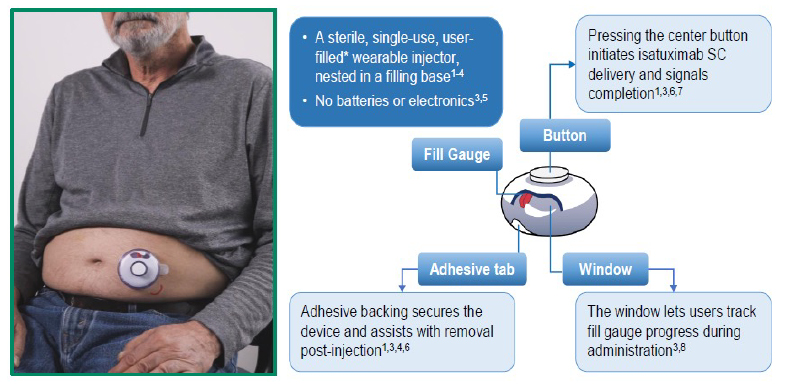
Figure 1: The on-body injector for isatuximab.1
SC: subcutaneous.
Experts explained that SC drug formulations are generally preferable to IV infusion, highlighting several specific benefits such as reduced risk of vein injury. “Treatment of myeloma is very chronic. Patients get hundreds, sometimes thousands, of injections. If you give those [IV] injections in the vein… we see patients in need of portable chambers because of constant vein injury due to IV treatments,” Leleu elaborated.
“For IV versus any SC, there are [often] advantages: less time, fewer side-effects, faster injection, patient convenience, not having to start an IV line, etc.,” affirmed Ailawadhi. “But then, within the SC realm, there are also [potential] significant advantages for OBI versus traditional SC manual push.”
Isa SC OBI is administered at a flat dose with no adjustment for body weight, although flow rate through the device is individualised based on SC interstitial pressure.8-10 “Every individual has a different thickness of the interstitial tissue, so the system takes this into consideration,” Leleu clarified. The total injection volume is 10 mL.8,9 In the IRAKLIA trial itself, the median administration time for Isa SC OBI was 13 minutes.1,2
Administration of Isa SC OBI is essentially hands-free, consisting of a small, hidden, retractable needle (approximately 30G and 7.2 mm long) that is not seen before, during, or after administration. With the push of a button, the Isa SC OBI initiates an automated, controlled delivery of a flat dose of isatuximab SC.10-14 “It’s just a one-time press,” Ailawadhi confirmed, “the mechanism starts and once the injection is complete, [median of 13 minutes], the button pops out again, the needle goes in, and the injector can be peeled off and discarded.” As experts explained, the Isa SC formulation does not contain hyaluronidase.15,16
Importantly, with the OBI, the needle is retracted into the device, meaning the user does not see the needle before, during, or after the administration process.11,12,14,17 “So when the injector is not on the body, there is no needle that is exposed to cause any injury or damage,” noted Ailawadhi, adding that this hidden needle feature also offersa “psychological advantage” forcertain patients.
THE IRAKLIA STUDY
Design and Rationale
Administration of Isa SC OBI was evaluated clinically in the IRAKLIA international, multicentre, randomised, open-label trial.1,2 As Ailawadhi explained, IRAKLIA was a non-inferiority study: “The main purpose was to be able to show that the Isa SC OBI+Pd gave [non-inferior] efficacy and no additional adverse safety signals, as compared to Isa IV+Pd when given to patients with relapsed/refractory MM.”
The co-primary endpoints of the IRAKLIA study were overall response rate (ORR) and steady state Isa trough concentrations (Ctrough; C6D1 predose), with the objective being to “determine that efficacy was non-inferior and ensure patients achieved adequate drug levels as measured after Cycle 5,” Ailawadhi elaborated. Key secondary endpoints were: very good partial response or better (≥VGPR) rate; Ctrough at 4 weeks (C2D1 predose); infusion reaction (IR) incidence rate; and patient satisfaction with the Isa SC injection method as assessed using the patient experience and satisfaction questionnaire (PESQ) administered at C5D15.1,2
A total of 263 participants received Isa SC OBI, while 268 patients received Isa IV. The median age of patients enrolled in the IRAKLIA study was 66 years (range: 31–86), and all had received one or more prior lines of therapy, including lenalidomide and a proteasome inhibitor. “Overall, it was a population of patients you would expect to encounter in relapsed myeloma,” Leleu confirmed, adding that patients were generally of good health status (majority Eastern Cooperative Oncology Group [ECOG] score: 0–1) and that Black/African-American (3.0% vs 5.2% in the Isa SC OBI vs Isa IV arms, respectively) and Asian patients (20.2% vs 21.7% in the Isa SC OBI vs Isa IV arms, respectively) were represented in this study.1,2
The proportion of patients included in each of the baseline weight categories (≤65 kg, >65–≤85 kg, and >85 kg) in the IRAKLIA study ranged from approximately 24% to 45% to ensure a decent representation of body weight subgroups. As Leleu explained: “It was important to study response, safety, and dose concentration of the product in the serum according to weight subgroups [because] these are not the same in China, Europe, and in USA.
“Overall, the characteristics of the patients were well balanced between the two arms,” Leleu confirmed, “although the Isa SC OBI arm had slightly more patients with renal insufficiency below 60 mL/minute and [slightly] more plasmacytoma, and slightly higher serum lactate dehydrogenase levels.”
Key Outcomes
As experts outlined, non-inferiority was reached for the co-primary efficacy endpoint of ORR in the IRAKLIA study. ORR was 71.1% in the Isa SC OBI arm as compared to 70.5% in the Isa IV arm (relative risk: 1.008; 95% CI: 0.903–1.126; p=0.0006), meeting the prespecified non-inferiority margin of 0.839.1,2 “But not just the overall response rate, the various response categories, VGPR or better, partial response (PR), and complete response (CR): all of them were comparable [VGPR: 46.4% vs 45.9%; PR: 24.7% vs 24.6%; and CR: 17.9% vs 20.5%, respectively],” Ailawadhi emphasised.
IRAKLIA also met its second co-primary endpoint of Ctrough of Isa at steady state (predose C6D1), which was 499 μg/mL for Isa SC OBI and 340 μg/mL for Isa IV. The steady state Ctrough geometric mean ratio was 1.532 (90% CI: 1.316–1.784), exceeding the 0.8 non-inferiority margin.2 “The trough level of Isa at steady state was actually a little bit higher for the OBI, just numerically, as compared to the Isa IV, but it was within the margin of non-inferiority,” Ailawadhi elaborated. “So, [both] the drug is non-inferior and the mechanism of administration is non-inferior.”
Among the key secondary endpoints, ≥VGPR rates were 46.4% for Isa SC OBI versus 45.9% for Isa IV, and Ctrough levels at 4 weeks (C2D1 predose) were 421.5 µg/mL and 301.9 µg/mL, respectively, both meeting their prespecified non-inferiority margins.2 Notably, the flat dose of Isa SC OBI demonstrated consistent ORR across body weight subgroups.1,2 “There was no statistically significant difference in any of the three weight categories of ≤65 kg, >65–≤85 kg, or >85 kg,” Ailawadhi reiterated. The flat dose of Isa SC OBI also showed adequate exposure for all body weight subgroups based on Ctrough at C2D1, the best predictor of efficacy in exposure-response analyses (Figure 2).1
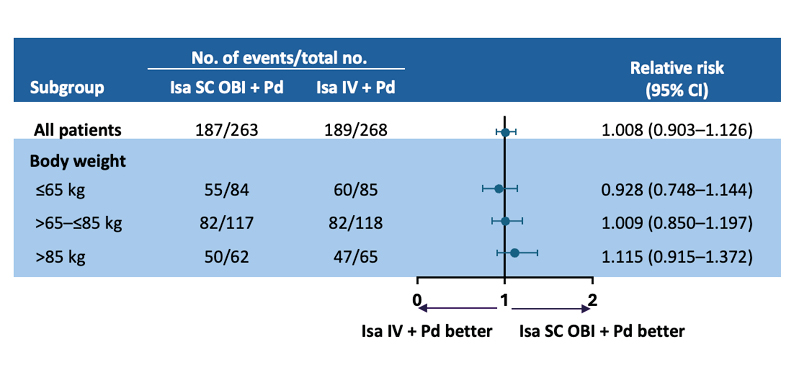
Figure 2: Overall response rate across body weight subgroups in the IRAKLIA study.1
d: dexamethasone; Isa: isatuximab; OBI: on-body injector; ORR: overall response rate; P: pomalidomide; SC: subcutaneous.
Patient Satisfaction
Patient satisfaction was one of the key secondary endpoints in the IRAKLIA study. Patient satisfaction with the Isa SC OBI delivery method was assessed at cycle 5, day 15 (C5D15) using the Patient Experience and Satisfaction Questionnaire (PESQ). Results were collected among patients who completed the questionnaire and received either Isa SC OBI+Pd (n=190) or Isa IV+Pd (n=202). Looking at the impact of the innovative OBI administration method on the patient experience, “Patient satisfaction was really much better for the Isa SC OBI arm compared to the IV globally,” Leleu remarked. In the intention-to-treat population, patient satisfaction was significantly higher for administration with Isa SC OBI compared to Isa IV, with 70% of participants in Isa SC OBI reporting being satisfied or very satisfied with the Isa SC OBI vs. 53.4% of participants in the Isa IV arm at C5D15 (p=0.0001) (Figure 3).1,2
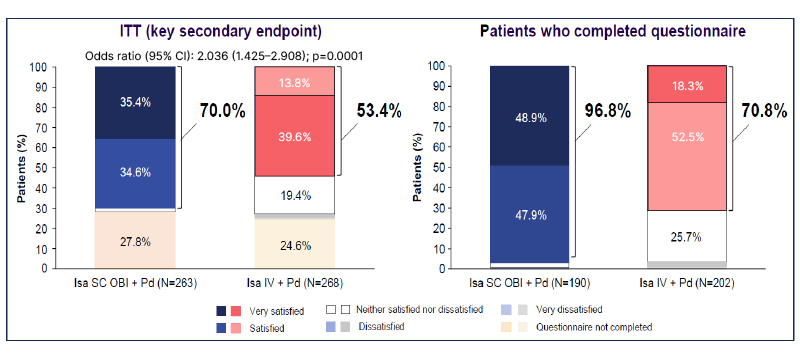
Figure 3: Patient satisfaction with the isatuximab subcutaneous on-body injector delivery method at C5D15.1
d: dexamethasone; Isa: isatuximab; ITT: intention-to-treat; OBI: on-body injector; P: pomalidomide; SC: subcutaneous.
Specifically among patients who completed the questionnaires, the proportion reporting being satisfied/very satisfied was even greater: 96.8% for Isa SC OBI compared to 70.8% for Isa IV (Figure 3).1,2 “If we look at the very satisfied percentages, these were 48.9% compared to 18.3%,” Leleu continued.
In the IRAKLIA study, the Isa SC OBI demonstrated a very low rate of device failures. “More than 5,000 injections were done and 99.9% were completed without interruption, which is pretty incredible,” Leleu remarked. “Nearly everybody had a successful injection,” Ailawadhi reiterated, “The median duration of injection was about 13 minutes, but over 97% of patients finished it under 20.”
Safety
Overall, the safety profile was similar across the Isa SC OBI and Isa IV study arms, with no unexpected safety signals observed.1,2 Injection-site reactions (ISRs) with Isa SC OBI were consistent with SC administration. “The side-effect profile was what you expect from an Isa–Pd regimen,” confirmed Leleu, “nothing emerged that was different from what we know from the historical studies that have been run with Isa–Pd, and particularly the ICARIA study that led to approval of this combination with Isa IV.”5
Grade ≥3 treatment-emergent adverse events occurred in 81.7% of patients in the Isa SC OBI arm compared to 76.1% dosed via the IV route, with similar rates of adverse events leading to permanent full treatment discontinuation (8.4% versus 8.7%, respectively). The incidence of Grade ≥3 laboratory neutropenia was lower in the Isa IV arm (74.3%) than in Isa SC OBI (84.7%), but with no differences seen in terms of infections. The most common Grade ≥3 non-haematologic adverse events in the OBI and IV arms, respectively, were: pneumonia (14.8% versus 15.5%), COVID-19 (2.7% versus 1.9%), and upper respiratory tract infection (1.5% both arms).1,2 “But nothing that was out of range in the Isa–Pd IV arm, which is the regimen we know and are experienced in, as compared to the comparator arm Isa–Pd SC OBI.”
Leleu explained that “on top of this pharmacovigilance, there was also materiovigilance, to assess anything wrong with the device or any issue that the device created.” In total, 3.4% of patients treated with Isa SC OBI in the IRAKLIA study had treatment-emergent adverse events related to the device, none of which were serious.1,2
Both experts highlighted the reduced incidence of IRs with Isa SC OBI as compared to Isa IV as a key finding from the IRAKLIA study. IRs occurred in 1.5% of Isa SC OBI patients compared to 25% on Isa IV, equivalent to a relative risk of 0.061 (95% CI: 0.022–0.164). “These 1.5% were mainly Grade 1 IRs,” added Leleu, and resolved within 1 day.
On the subject of local injection site reactions (ISR), Leleu explained that these provide important insight into the patient experience with SC administrations. “The numbers speak for themselves,” Leleu stressed, “in less than 1% of more than 5,000 OBI injections, it was reported that the patient had some local reaction.” Overall, local ISRs occurred in 0.4% of Isa SC OBI injections administered during the IRAKLIA study (4.2% of patients). The majority of these ISRs (18 out of 19) were Grade 1, and one was Grade 2.1,2
CLINICAL PRACTICE IMPLICATIONS
Both experts expressed their hope that Isa SC OBI could help to improve practice efficiency and patient convenience in MM management moving forward. They highlighted the potential for future at-home administration of Isa SC using the OBI and described some of the real-world benefits this could bring to patients.11,17-19
In the IRAKLIA study, home administration was considered after 5 cycles for Isa SC OBI arm participants on day 15 from cycle 6 onward. Eligibility for home administration was dependent on: no IRs at cycle 4 and 5, hematology test results day 1 of each cycle, and investigator’s judgment and participant’s willingness and ability to adhere to the requirements of home administration.
“These are potential benefits that we as healthcare providers do not think of in our day-to-day workflow and activities, because we are so focused on the ORR and the progression-free and overall survival ofdifferent regimens.”
Advisors also indicated that hands-free administration of Isa SC OBI has the potential to reduce nurse workload as compared to SC manual push and IV infusion. “One of the advantages we heard from the nurses was that they could attach the OBI, press the button, and […] do other work,” remarked Ailawadhi. “They didn’t have to sit there pushing onto the patient’s belly or skin with a needle.”
ADVANCING MYELOMA CARE
Despite recent advances in myeloma care, there remains an unmet need to reduce the burden faced by patients, caregivers, and clinicians throughout the treatment journey.2 Experts agreed that the benefits demonstrated by Isa SC OBI in the IRAKLIA study may help to improve the patient experience.2 In parallel to IRAKLIA, Leleu highlighted several other ongoing studies evaluating the OBI device in other Isa-approved combinations and indications and help to “complete the story.”2,20-22
“I’ve been developing drugs for 25 years and I’ve seen both bortezomib and daratumumab becoming SC, plus many other drugs, but I really never thought that we could improve the manual push,” Leleu remarked. “And here I discovered that there’s another way, a potentially better way, to give an SC formulation route to the patients, which is the OBI.”
CONCLUSION
Overall, the IRAKLIA study demonstrated that Isa SC OBI offers non-inferior efficacy and pharmacokinetics compared to Isa IV, and showed adequate exposure across all body weight subgroups. Isa SC OBI had a similar safety profile to Isa IV, with no unexpected safety signals, and a lower incidence of IRs. Notably, patients receiving Isa SC via the OBI device also expressed higher satisfaction with the injection method than patients on Isa IV. “IRAKLIA set out to say that the OBI for Isa-Pd would not be inferior to the IV Isa–Pd, and that’s exactly what was seen,” Ailawadhi concluded.