Claire Harrison: Professor of Myeloproliferative Neoplasms and Clinical Director, Guy’s and St Thomas’, NHS Foundation Trust, UK
Citation: EMJ Hematol. 2026;14[1]:41-44. https://doi.org/10.33590/emjhematol/953LFV7G

You’ve played a major role in advancing research into myeloproliferative neoplasms (MPN), including leading the first JAK inhibitor trial in Europe. Can you take us back to the COMFORT-II Phase 3 trial and explain why it represented such a turning point for patients with myelofibrosis?
Before the advent of JAK inhibitors, we did not have any effective therapy for patients with myelofibrosis. We could offer them a transplant, but we only started to do that in the latter part of the 1990s. And, as your readers will know, 95% of patients cannot have a transplant.
So, while the advent of JAK inhibitors was very exciting, they delivered benefits for patients that we were not expecting. We might have been expecting a sort of imatinib tyrosine kinase inhibitor drug in chronic myeloid leukaemia, but the JAK2 target is totally different. Although these inhibitors are not mutation specific, we saw that our patients were feeling better very rapidly. In the study, we had to call them after a couple of days on drug, and, in the end, we were all fighting who was going to call them because the patients were feeling so much better.
We saw that spleens were shrinking and that symptoms were better. Problematic things like sweating a lot at night or having very itchy skin were resolving. As we further analysed the data, we saw that patients were living longer. This became very clear when we observed the patients on the control arm of the study. In the end, the differences were so stark we had to stop the patients on drug versus on the control arm coming at the same time.
We have also learned that while these drugs are very effective, they have a limited effect for patients. They are not turning the dial and modifying the disease to a significant extent. Patients are living longer and better, but, ultimately, they are still dying of disease.
For audiences less familiar with MPNs, how would you describe conditions such as essential thrombocythaemia, polycythaemia vera (PV), and myelofibrosis, and why is earlier recognition so important?
MPNs can be very confusing as entities. We typically use disease terminology like essential thrombocythemia, PV, myelofibrosis and others. However, sometimes we have difficulty to fit a patient into one of these disease states. Furthermore, these descriptions are not really based on a biological basis, as they were only described towards the end of the 19th and early 20th century.
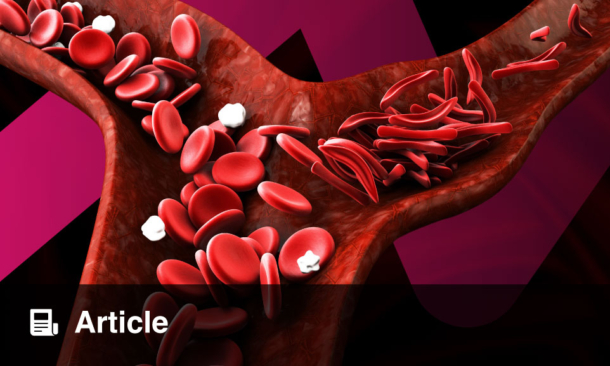
So broadly speaking, a patient with essential thrombocythemia is a patient with a high platelet count, at risk of thrombosis, haemorrhage, and, more rarely, disease transformation. They do not have fibrosis in their marrow.
A patient with PV has polycythaemia, which means increase in all blood cell types, but predominantly red blood cells. A patient with myelofibrosis typically has fibrosis in the marrow, big spleen, and symptom burden under worse prognosis. We could look at these as separate cases entirely, but, often, patients actually have features that overlap, or they are in transition from one form to another.
As a result, it is a bit problematic to use very old-fashioned disease terminology when we know a lot more about biology. For example, almost 100% of patients with PV have a JAK2 mutation, and 50% of patients with ET have a JAK2 mutation. There’s a poster presentation at European Haematology Association (EHA) 2026, where we are right now, showing that young patients with JAK2 ET are very similar to young patients with JAK2 PV. Essentially, we need to refine how we are describing the diseases.
You lead and contribute to numerous international clinical trials. What are the most exciting therapies or treatment strategies currently emerging in the MPN space?
In terms of emerging strategies in the MPN space, there is increasing awareness that we might not need to treat some patients. Patients who have no driver mutation and a high platelet count, so-called triple negative thrombocytosis, may not need to be treated, as the treatment is associated with potential harm for patients.
I am so excited by the range of targeted therapies that are emerging. For the first time in this meeting, we’re seeing data for a novel Type II JAK inhibitor that may be more mutation specific and less liable to resistance. We are also presenting data concerning INCA033989, a monoclonal antibody targeting calreticulin (CALR), which is the second most common MPN mutation. There is also a range of very exciting data with these therapies and the whole, it’s a pipeline of other CALR targeting modalities coming along behind. There are also other exciting supportive care therapies that might help with anaemia, such as elritercept, which is a TGF-β super family ligand trap, or DISC0974. All of these are super exciting. Finally, the combination study SENTRY of selinexor plus ruxolitinib delivering a survival benefit for patient.
You’ve been awarded the EHA 2026 Lifetime Achievement Award. Looking back across your career, what does this recognition mean to you, and how do you reflect on the journey that led from your early training to becoming an international leader in haematology?
It was a very overwhelming honour to receive the Lifetime Achievement Award. Although it’s nominally an individual award, the thing that I would reflect most on in preparing for an acceptance speech and thinking back on my career to date, is it’s all about people. It’s all about listening to patients, working with patients, building your team, mentoring and being mentored, as well as being very patient and determined. And I think that’s something that I’ve learned. Many of my friends and family might say I’m not a very patient person, but I think at work you just have to be, you have to understand that things can take a long time. Some of the studies we’ve done have taken 20 years to come to fruition and that’s necessary, but it was a huge honour. The other thing I would reflect on is the importance of community, which includes the pharmaceutical industry, scientists, patients, and clinicians, but also the importance of organisations like the EHA, which bring together people in a community and act as a catalyst for future collaborations. The last, but most important, reflection is the major importance of constant and steadfast support from my family.
Thrombosis and disease progression remain major concerns for patients with MPNs. What progress is being made in reducing these risks and improving long-term outcomes?
For patients with MPN, it’s true to say that thrombosis, haemorrhage to a lesser extent, and disease progression are significant problems. Most of our treatments, certainly for PV and ET, have been focused on reducing risk of thrombosis. We’ve made progress there, but we still don’t have the ability to return the risk of a patient to the risk that they would have if they didn’t have an MPN. We still have to go further. I think where we’re heading to is more aggressive treatment, focusing on lifestyle, which we often don’t do wrongly, thinking carefully about the use of anticoagulants, and maybe also the use of drugs that are revolutionising diabetic care.
I think the hardest thing to traction is reducing risk of progression because it’s not well defined. For patients with ET and PV, fortunately it’s not common, and it happens after many years. It’s hard to do a clinical trial over many years and show that, but we have made some progress. For example, we’ve shown that treatments that reduce the JAK2 mutant allele burden, even by 50%, and that can be achieved with agents such as interferon or ruxolitinib, mark a likely improvement in overall and progression-free survival. Where we really need to get some traction on disease progression is in myelofibrosis. I think the data with selinexor in combination with ruxolitinib in the SENTRY trial showing a survival benefit is really important, but we need to see longer term data with that and really understand why it is doing it and how can we make that even better.
You’ve worked closely with patient organisations including MPN Voice and Blood Cancer UK. How important is the patient perspective in shaping research priorities and clinical care?
I think patients have to be front and centre of what we’re doing, is the short answer to how important are patient organisations. My involvement with those communities has taught me the value of connecting patients with rare diseases, because they often won’t recognise somebody else with that condition. Sharing their collective experience back with the clinical community is very illuminating and powerful.
Also, these charities have such a major role in advocacy, so raising awareness, early diagnosis, and sometimes campaigning for adoption of new therapies, which is very important.
Looking ahead, what do you think the next decade could bring for patients living with MPNs in terms of diagnosis, treatment, and quality of life?
My hope for the next decade for my patients with MPNs is that we have truly moved from the era of Dameshek, through molecular discovery and new drugs, toward disease modification, so that we can have patients either being cured, or living with very minimal disease. By the later, I mean we can put the disease into such a minimal state that patients have good quality of life and a degree of certainty about the future. I think that’s really important and I definitely think we are on the verge of something very close to this for our patients. So, I’m really excited to see what happens in the next 10 years.