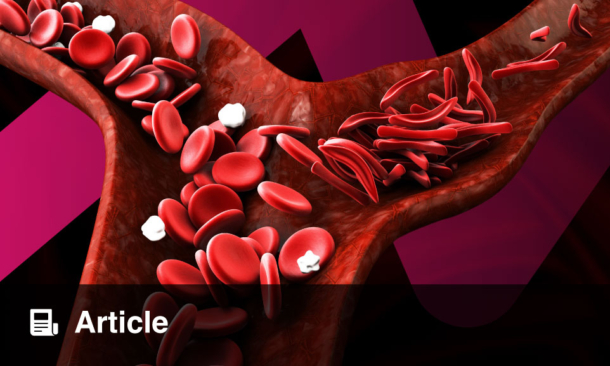
A LIBERAL transfusion strategy was associated with a lower likelihood of death or recurrent myocardial infarction than a restrictive approach in patients with myocardial infarction and anaemia, according to a post hoc analysis of a large randomised clinical trial.
Selecting the optimal haemoglobin threshold for red blood cell transfusion after myocardial infarction remains challenging because clinicians must balance the potential reduction in recurrent ischaemic events against the risk of heart failure. To further evaluate this trade off, investigators performed a Bayesian post hoc analysis of data from the Myocardial Ischemia and Transfusion trial.
The trial enrolled 3,504 adults hospitalised with myocardial infarction and anaemia at 144 sites across six countries. Participants were randomly assigned to either a restrictive transfusion strategy, in which transfusion was recommended when haemoglobin fell below 7–8 g/dL, or a liberal strategy that aimed to maintain haemoglobin above 10 g/dL. Researchers estimated the probability of benefit and harm using Bayesian analyses based on three different prior assumptions.
Lower Risk of Death or Myocardial Infarction
Compared with the restrictive strategy, the liberal transfusion strategy was associated with a 1.4%–2.4% lower risk of death or myocardial infarction within 30 days, depending on the statistical model used (95% credible interval:−0.8%–3.5% to 0.3%–4.6%).
The probability that the liberal strategy reduced the risk of death or myocardial infarction ranged from 89.1%–98.8%. The probability that treatment would prevent at least one death or myocardial infarction for every 100 patients treated ranged from 62.7%–90.4%.
The analysis also identified a modest increase in heart failure risk with the liberal approach. Compared with the restrictive strategy, heart failure risk was 0.2%–0.6% higher (95% credible interval:−1.6%–1.2% to −2.0%–0.8%). The probability of at least one additional heart failure event per 100 treated ranged from 13.3%–29.3%.
Overall Benefit Favoured Liberal Strategy
Despite the slightly higher probability of heart failure, investigators concluded that the overall balance of benefit favoured a liberal transfusion strategy. They estimated that treating 200 patients with the liberal approach would result in approximately five fewer deaths or myocardial infarctions while causing one additional heart failure event.
The authors concluded that these findings were consistent with current guideline recommendations and supported consideration of a liberal transfusion strategy for selected patients with myocardial infarction and anaemia. They emphasised that transfusion decisions should continue to reflect individual patient values alongside clinical judgement and assessment of cardiovascular risk.
Reference
Bertolet M et al. Restrictive vs liberal transfusion strategy after myocardial infarction: a post hoc analysis of the MINT randomized clinical trial. JAMA Netw Open. 2026; 9;(7):e2624991.
Featured image: Pixel-Shot on Adobe Stock