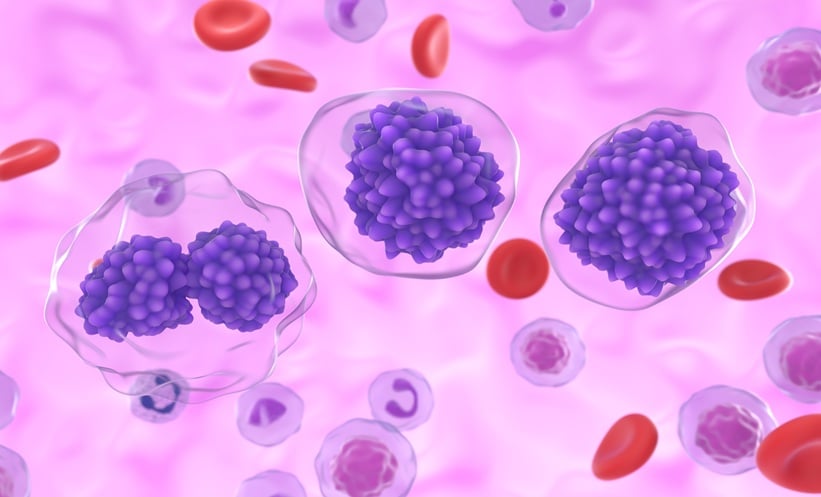
A NEW study sheds light on how early lymphocyte recovery dynamics following chimeric antigen receptor T-cell (CAR-T) therapy may influence both survival outcomes and treatment-related toxicity in patients with diffuse large B-cell lymphoma (DLBCL).
CAR-T therapies targeting CD19 have transformed the treatment landscape for B-cell non-Hodgkin lymphoma (NHL), offering durable responses in patients with otherwise limited options. However, variability in patient outcomes remains a challenge. In this study, researchers investigated whether the kinetics of lymphocyte expansion after lymphodepleting chemotherapy could help explain these differences.
Exponential Lymphocyte Growth Observed After CAR-T Therapy
The analysis demonstrated that lymphocyte growth following CAR-T infusion follows an exponential pattern, with the rate of expansion emerging as a key determinant of clinical outcomes. Notably, the speed of lymphocyte replication, rather than the absolute number of lymphocytes or peak levels achieved, was most strongly associated with treatment success.
Using receiver operating characteristic analysis, the investigators identified a lymphocyte replication rate threshold of ≥0.3876/day as a significant predictor of improved outcomes. Patients whose lymphocyte expansion met or exceeded this rate were more likely to achieve complete responses and sustain those responses over time. Importantly, these patients also experienced significantly longer overall survival, with a median survival of 3.04 years compared to 1.04 years in those with slower lymphocyte growth.
However, faster lymphocyte expansion was also linked to increased toxicity. Patients above the identified threshold were more likely to develop higher-grade cytokine release syndrome (CRS), a common and potentially serious side effect of CAR-T therapy, and were more frequently treated with tocilizumab to manage these complications.
Interestingly, other commonly considered metrics, such as the peak lymphocyte count and the total lymphocyte exposure over the first four weeks (measured as area under the curve), did not show a significant association with survival outcomes. This finding underscores the importance of dynamic, rather than static, biomarkers in predicting response to CAR-T therapy.
Implications for Personalised CAR-T Treatment Strategies
Overall, the study highlights lymphocyte replication rate as a critical biomarker for both efficacy and toxicity in CAR-T-treated DLBCL. These findings may support more personalised treatment strategies, enabling clinicians to better predict patient outcomes and manage risks in this rapidly evolving therapeutic field.
Reference
Dingli S et al. Lymphocyte dynamics after CAR-T therapy for non-Hodgkin lymphoma. Br J Haematol. 2026;00:1–8.
Featured image: LASZLO on Adobe Stock
- Author: