BACKGROUND AND AIMS
The escalating crisis of antimicrobial resistance has positioned colistin as a ‘last-resort’ therapy for carbapenem-resistant Klebsiella pneumoniae.1-5 However, in low- and middle-income countries like Pakistan, unregulated antibiotic use and high infection burdens have accelerated the emergence of colistin resistance. This study provides a critical genomic snapshot of the molecular mechanisms and clonal distribution of colistin-resistant isolates in a tertiary care setting in Peshawar, Pakistan.
MATERIALS AND METHODS
Between January 2024–December 2025, 250 clinical K. pneumoniae isolates were collected. Following species identification via matrix-assisted laser desorption/ionisation time-of-flight mass spectrometry, colistin susceptibility was assessed using broth microdilution. Whole-genome sequencing was performed on 35 resistant isolates (14.0%) to characterise sequence types (ST), resistomes, and specific colistin resistance determinants, including chromosomal mutations (e.g., mgrB) and plasmid-mediated genes (e.g., mcr-8).
RESULTS
Genomic surveillance revealed a high-pressure resistance environment dominated by two international high-risk clones: ST11 (51.4%) and ST147 (20.0%). These lineages were predominantly associated with the carbapenemase gene blaNDM-1, highlighting an extensively drug-resistant profile (Table 1).
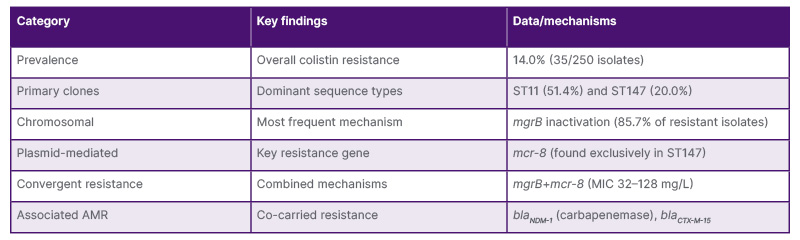
Table 1: Genomic epidemiology and resistance profiles of colistin-resistant K. pneumoniae isolates.
AMR: antimicrobial resistance; MIC: minimum inhibitory concentration; ST: sequence type.
Resistance was primarily driven by chromosomal alterations in 85.7% of isolates, with mgrB inactivation via insertion sequences (ISKpn26 and IS5-like) being the most prevalent mechanism. Plasmid-mediated resistance was identified in 14.3% of isolates, specifically the mcr-8 gene within the ST147 lineage. Notably, the study documented a critical evolutionary milestone: convergent resistance. Three ST147 isolates simultaneously harboured both plasmid-borne mcr-8 and chromosomal mgrB disruptions. This dual-mechanism profile resulted in significantly higher minimum inhibitory concentration values (90–128 mg/L) compared to isolates with single resistance determinants.
CONCLUSION
The findings underscore a shift toward pan-drug resistance in Pakistan’s clinical settings. The convergence of independent resistance pathways within globally disseminated clones like ST147 poses a severe public health threat, as these strains are both highly fit and difficult to treat. The study advocates for an urgent expansion of regional genomic surveillance, stringent antimicrobial stewardship to preserve remaining polymyxins, and enhanced infection control protocols in high-risk units like the ICU to mitigate the spread of these ‘super-clones’.