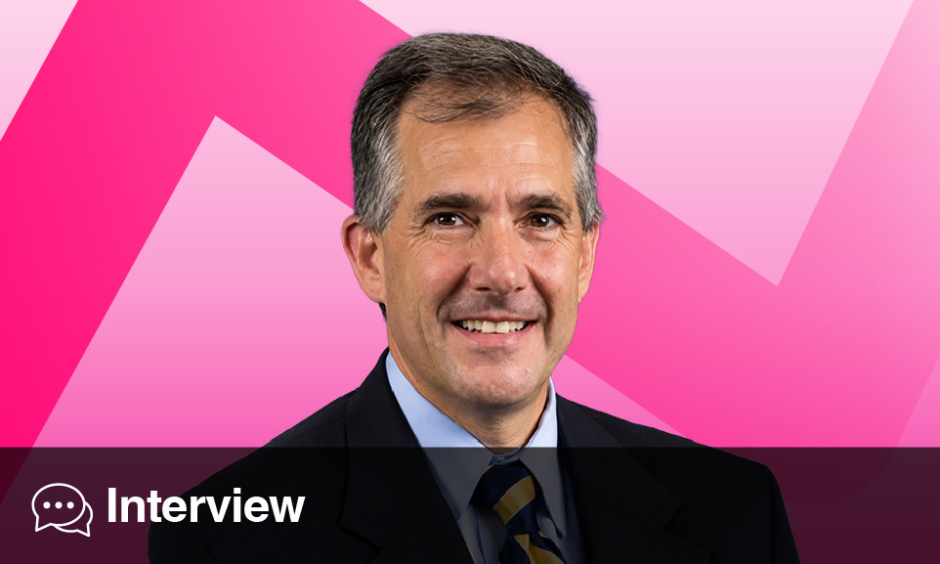
Ronald Nahass | Medical Director of Research and Partner, ID Care, Hillsborough, New Jersey, USA
Citation: Microbiol Infect Dis AMJ. 2026; https://doi.org/10.33590/microbiolinfectdisamj/5094U02A

Looking back at the beginning of your medical journey, what specific clinical encounter or early mentor initially drew you to infectious diseases?
When I was young, I had a fascination with mold on fruit, vegetables, and bread. I wondered: “What is that?” It led me to an interest in microbiology. When I was in college, as part of the rite of passage for medical school, everybody did volunteer work in a hospital. I spent a summer with a nationally known infectious diseases doctor who just amazed me with, one, his command of medicine in general; two, the respect that he had; and three, the absolute reverence that the patients seemed to have for him. That just stuck with me and was probably the greatest influence on me choosing infectious disease as a specialty.
More than 20 years ago, when you founded ID Care, New Jersey, USA, which has grown into one of the nation’s largest physician run and led infectious disease practices, what gap in care delivery convinced you that this model was needed?
It was a focus on the clinical practice of infectious diseases. The idea that the specialty and the needs of patients really extended far beyond major medical centers led me to the thought that I need to do this in a different way, so that our skill sets and the benefits of infectious disease clinicians could reach more patients. It was the mindset of getting the specialty, the field, and the benefits of the care that we bring out into the community that led me to pursue an independent model.
From antimicrobial resistance to emerging infections, infectious disease physicians are being asked to respond to increasingly complex threats. What do you see as the biggest challenge facing the specialty right now?
I think it’s a two-fold challenge. One is what you just alluded to. We have a greater complexity of medical care that leads to more complicated infectious disease problems. Antimicrobial resistance is a good example of that, but opportunistic infections would be another example, like germs, bacteria, fungi, or parasites, that are only seen in compromised hosts, transplant patients, or patients receiving advanced biotherapeutic chemotherapy. There’s a greater need for care, yet we face more challenges from a workforce point of view. We have this huge need because of resistance, opportunistic infections, and complicated patients. The population is aging, becoming more susceptible to infections that are more complicated to manage and treat, and the workforce is unable to keep up with it. We have to strike a balance or understand that we have those two tugs on the expert knowledge base that is the infectious disease clinician.
You have spoken about international health cooperation as a necessity when tackling infectious diseases. Where do you think the Infectious Diseases Society of America (IDSA) has made the biggest difference over the past year?
The last couple of years have been particularly challenging for several different reasons. That includes the challenges of communicating, information and misinformation, and managing messaging. Part of that is how we work together, not only in the USA. In the USA, we have individual states with their own state health departments. We have federal agencies that have their own content experts within the context of the infectious diseases arena. We have a political system that has challenged many people both in and out of government on how to manage messaging and communications. Then we have the international community. In the last year, we had such a powerful example with the hantavirus episode on the cruise ship, which affected so many countries and so many nations. We continue to have issues regarding Ebola, and we all saw the challenges we faced with COVID. Infectious diseases, in particular managing emerging and pandemic disease, are an international effort, not just national. The challenge for all of us is the ability to communicate and handle the information that needs to get out to the public to provide insight, understanding, and direction. At the same time, in our social media climate, we’re challenged with managing misinformation because there are lots of channels that people can access to gain information, not all of which is correct. Infectious disease is an international sport. Germs don’t recognize borders. They don’t care whether you’re Black or White. They don’t care if you’re African, South American, Asian, or European. It is an international effort, and we have to work together collaboratively. One of the things that we have done this year has been the effort to think about what the right way to approach global efforts and partnerships is. We’re really focused on that as a Society. I hope that continues going forward. I’ve certainly been focused on it as a core issue over the last year.
Ahead of IDWeek 2026, which trials or developments are you most excited to see discussed, and what do you think could have the greatest impact on clinical practice?
There are a few things that I’m most excited about. One of them is something that I’ve been integrally involved with throughout my professional career, which is antiviral work. I’ve been involved in a lot of work on HIV, hepatitis C, and hepatitis B, three significant viral infections for which there are notable global goals in regard to the reduction and/or elimination of those viruses. I’m really excited about some of the work being done on a hepatitis B cure that will be presented at IDWeek this year. I’m hoping that the infectious diseases community is equally excited to learn about the efforts toward a hepatitis B cure as one part of the effort toward hepatitis elimination. We’re going to be talking about hepatitis C and our efforts toward eliminating that, as well.
Regarding HIV, there’s been so much work recently on novel and extended therapies and preventative therapies, again toward the effort of eliminating the transmission of HIV. There’s also early work on an HIV cure, which is exciting as well. It is almost linked in methodology to the hepatitis B cure. Those things are exciting to me because that’s what a lot of my career has been directed toward.
There’s also work that’s going to be presented on antimicrobial resistance and new antimicrobial agents. That’s always front and center for the Society and infectious disease doctors because, as people age, and as more complicated chemotherapies are given, we continue to see the challenge of antimicrobial resistance, which is a big problem globally.
Then there’s a lot of discussion within the community, both locally and internationally, about whether we are prepared for the next pandemic. I am looking forward to hearing some of the discussions from thought leaders on what we are we doing and if we are preparing properly. I think we’re missing an opportunity to do that, and that concerns me greatly. I’m looking forward to the discussions at IDWeek on how we can better prepare, and what we did right in the past.
As we come to the end of your term as IDSA President, what will make you look back on your presidency as a success?
I think it would be great if we were able to spark the conversation, or redirect it, to recognise the threat of antimicrobial resistance and pandemic disease, the opportunities for global elimination of certain diseases, and the extraordinary value that the infectious diseases community brings to healthcare and getting people out of danger. If patients have an infection related to antimicrobial resistance, we, the infectious diseases community, provide that incredible support. I would like us to become truly valued, so that we have the support to expand our workforce and encourage young folks to go into the field. Then they can pursue developments for a cure to antimicrobial resistance, HIV, and hepatitis B. Hopefully, my presidency has changed the narrative in a way that affects those things. That would make me feel good about my stewardship of the Society.