Abstract
Fungal infections represent an escalating global health threat, with invasive mycoses contributing to high morbidity and mortality, particularly in immunocompromised populations. The therapeutic landscape is constrained by reliance on only a few antifungal classes, each limited by toxicity, fungistatic activity, or emerging drug resistance. In recent years, significant advances have been made in developing novel antifungal agents targeting innovative targets and mechanisms of action. Next-generation azoles, such as oteseconazole and VT-1598, offer improved specificity for fungal sterol 14α-demethylase (CYP51) while reducing host toxicity. New echinocandin derivatives, such as rezafungin, exhibit improved pharmacokinetics, enabling less frequent dosing. Previously unexploited pathways, currently under exploration, include glycosylphosphatidylinositol-anchor biosynthesis, dihydroorotate dehydrogenase-mediated pyrimidine synthesis, chitin synthase, and fungal mitochondrial respiration. In addition, drugs with novel delivery systems, such as opelconazole, thin film freezing-voriconazole, encochleated amphotericin B (CAmB), and turletricin, aim to preserve broad-spectrum fungicidal activity while minimizing systemic toxicity. Beyond small molecules, antifungal vaccines, immunotherapies, and T cell-based approaches are emerging as promising adjuncts to conventional treatments. A multidisciplinary approach to expanding the antifungal armamentarium with novel therapeutics is critical to address the urgent and growing burden of invasive fungal disease.
Key Points
1. The growing incidence of invasive fungal infections, coupled with the escalating antifungal resistance, has heightened the demand for safe and effective new antifungal treatments.
2. This narrative review examines the latest evidence regarding emerging antifungal agents and strategies, with an emphasis on innovative mechanisms of action, drug targets, and their therapeutic spectrum.
3. New antifungal agents, which encompass a broad range of activity, have the potential to address current therapeutic obstacles. However, ongoing clinical evaluation and real-world data are essential for their effective application.
INTRODUCTION
Fungal infections pose a growing yet neglected challenge in clinical practice. The clinical spectrum varies from allergic diseases through localized mucocutaneous lesions to life-threatening systemic mycoses. Invasive fungal diseases (IFD) are of particular concern among patients who are immunocompromised and in critical care settings.1,2 Notably, 6.5 million people are affected annually by IFD, leading to nearly 2.5 million deaths.3-6 The pathogenesis of fungal infections is strongly governed by host–organism interactions, including evasion of immune defense, intracellular signaling, and the host’s trained immunity.7 With advances in medical interventions and therapeutics, improved survival has come at the cost of creating a population with impaired host defenses, including patients with hematological malignancies, those undergoing chemotherapy, and the ICU population. Additionally, non-classical risk groups for IFDs have been identified, including patients with prior viral respiratory infections (influenza, COVID-19, respiratory syncytial virus), diabetes, COPD, chronic liver and kidney disease, and non-tuberculous mycobacterial infection.2 Along with the expansion of the susceptible population, global environmental and socioeconomic changes further exacerbate the problem.1,2,8,9
Despite the advances in medical mycology, the current arsenal against these infections is restricted to four major classes of antifungal drugs, namely polyenes, azoles, echinocandins, and the pyrimidine analog 5-flucytosine, along with a fifth class (the triterpenoid ‘ibrexafungerp’).8 To address this situation, the WHO published the first Fungal Priority Pathogens List (FFPL), with Candida albicans, Candida auris (present name: Candidozyma auris), Aspergillus fumigatus, and Cryptococcus neoformans included under the “critical” category.2
Low- and middle-income countries face a critical shortage of diagnostic tools and first-line antifungals. The emergence of multidrug-resistant fungi with outbreak potential, such as C. auris, further exacerbates this challenge. Drug–drug interactions (DDI), pharmacokinetic variability, and systemic toxicities are observed with azoles. Amphotericin-B formulations are associated with nephrotoxicity and hypokalemia.10 Intrinsic resistance to available antifungals also poses a hurdle, with examples including fluconazole resistance in Pichia kudriavzevii and C. auris, AmB resistance in Aspergillus terreus and Apophysomyces spp., multidrug resistance in Lomentospora prolificans, Scedosporium spp., and Fusarium spp., and variable susceptibility to echinocandins in Candida parapsilosis.3 Addressing these limitations requires the development of novel antifungal agents or innovative therapeutic approaches that can more effectively prevent and manage invasive fungal infections. The novel antifungal strategies should aim to reduce systemic toxicity, enhance drug delivery at the site of infection, and maintain feasibility and affordability. This review provides an overview of emerging antifungal drugs targeting priority pathogens and of novel therapeutic strategies currently under exploration.
CURRENT LANDSCAPE OF ANTIFUNGAL AGENTS
Despite the diversity of pathogenic fungi, only four major antifungal classes are routinely used: polyenes, azoles, echinocandins, and the pyrimidine analog 5-flucytosine. While these agents have significantly improved outcomes in invasive mycoses, limitations include toxicity, resistance, limited spectrum, and DDIs.
Polyenes, comprising nystatin and AmB, are fungicidal agents that remain the broadest-spectrum class of antifungals.11,12 Classically identified as a membrane-pore-forming agent, this antifungal is now being studied for its activity in forming an ‘ergosterol sponge’, a large extra membranous aggregate, thereby causing the extraction of essential membrane lipids.13 These agents exhibit poor oral bioavailability and therefore necessitate intravenous administration or direct instillation. Additionally, AmB may alter cholesterol content in mammalian cell membranes, leading to cell damage and toxicity.12 Lipid-associated formulations (AmB lipid complex, liposomal AmB, AmB colloidal dispersion) reduce the risk of nephrotoxicity and infusion-related reactions. Nevertheless, hydration and slow infusion are recommended to minimize adverse outcomes.
Azoles are membrane-active antifungals that contain either an imidazole or triazole ring. The systemic agents include the triazoles: fluconazole, voriconazole, posaconazole, itraconazole, and isavuconazole. Their core structure is a five-membered nitrogen-containing heterocycle that binds to the iron atom of the heme group in the active site of lanosterol 14-α-demethylase (CYP51A1). By inhibiting this enzyme, they block the demethylation of lanosterol, leading to the depletion of ergosterol and the accumulation of toxic sterol intermediates, thereby causing cell integrity loss.11 These drugs are primarily used to treat invasive mycoses and for prophylactic/pre-emptive management in the immunocompromised population.14 Though their pharmacokinetic profile and formulations remain important advantages, the emerging threats to this class are the rising drug resistance, DDIs, and sporadic absorption.
Echinocandins are cell wall-acting agents that inhibit (1,3)-β-D-glucan synthase enzyme (FKS1p and Rho1p mediated).15 They are widely effective against most Candida spp. and have good activity against Aspergillus spp., but are inactive against Mucorales, C. neoformans, C. gattii, Fusarium, Scedosporium spp. and Trichosporon spp.12,16 They are first-line drugs for managing invasive candidiasis and are also effective in combination therapy for invasive aspergillosis.15,17 However, they are available only as intravenous formulations and have poor penetration in the central nervous system (CNS), urine, and eye.12
5-flucytosine is an antimetabolite; upon entry into the fungal cell, it is converted to 5-fluorouracil by cytosine deaminase. This causes RNA miscoding and eventually blocks DNA synthesis. Effective predominantly against yeast, they have excellent bioavailability and good penetration into the CNS, joint fluid, bone, and peritoneal cavity.12 The combination of AmB and 5-flucytosine is the “gold standard” for the management of cryptococcal meningitis. It is also effective in candidiasis and chromoblastomycosis.18,19 However, they tend to develop resistance rapidly when used alone and are therefore commonly utilized in combination regimens.11
The limitations of existing antifungal classes have created a critical need for novel agents, paving the way for the development of newer antifungal agents and strategies. An overview of the novel strategies is depicted in Figure 1.
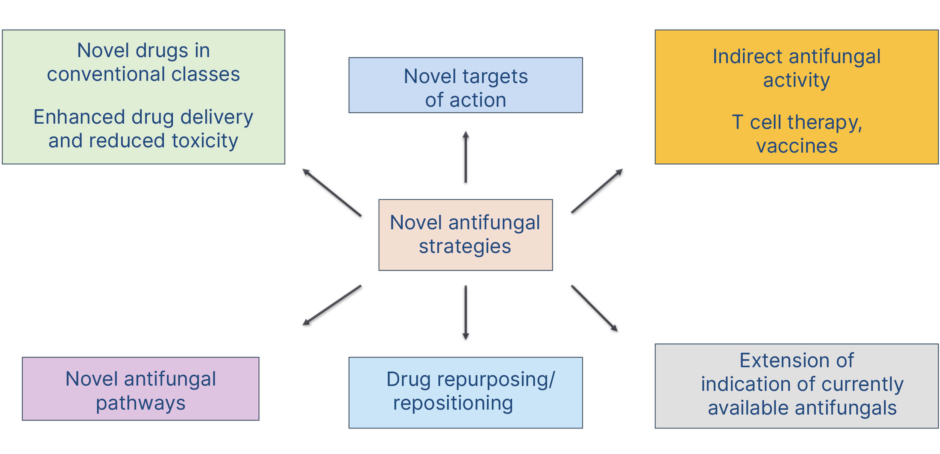
Figure 1: Novel antifungal strategies.
NEWER AGENTS IN EXISTING CLASSES OF ANTIFUNGALS
Triazoles (Opelconazole [PC945], PC1244)
Belonging to the triazole group of antifungal agents, opelconazole inhibits the enzyme CYP51A1, thereby disrupting ergosterol synthesis and causing cell membrane disruption. Opelconazole is the only antifungal agent currently in clinical trials for administration by inhalation (nebulization). Due to its lipophilic nature, the drug can achieve optimal concentrations in the epithelial lining and bronchoalveolar lavage fluid, thereby reducing systemic toxicity and DDIs.20-22 This drug has demonstrated good activity in both azole-resistant and susceptible strains of A. fumigatus and is presently under evaluation in patients with invasive pulmonary aspergillosis. PC945 also demonstrated greater inhibitory activity against C. auris isolates compared with posaconazole, voriconazole, and fluconazole.23
It is also capable of eradicating pulmonary colonization by Fusarium spp. and Penicillium spp.21 The Phase II trial (OPERA-S, NCT05238116) demonstrated good activity as a prophylactic agent against pulmonary aspergillosis in lung transplant patients, with reasonably good safety and toxicity profiles.5 A Phase III clinical trial (OPERA-T study, NCT05037851) has been terminated due to higher mortality in the treated arm. However, direct attribution to the drug is not described.
Another promising triazole agent, currently evaluated against A. fumigatus strains, is the novel PC-1244 derivative. This drug, administered intranasally, has demonstrated potent activity against azole-resistant A. fumigatus in a large in vitro study.24,25
Tetrazoles (Oteseconazole, VT-1598, VT-1129)
The traditional triazole agents (voriconazole, itraconazole) are associated with off-target inhibition of human cytochrome P450 enzymes, leading to hepatotoxicity. The newer class of tetrazoles is highly selective for fungal CYP51 proteins, due to replacing the triazole-metal binding group with a tetrazole and modifying side chains.26 Among these, oteseconazole (VT-1161) and VT-1598 are noted for their activity against Candida (including fluconazole-resistant isolates) and C. neoformans.8 In murine infection models with vulvovaginal candidiasis (VVC), oteseconazole showed potent activity against fluconazole-resistant and susceptible strains.27 In a Phase III trial (VMT-VT-1161-CL-012) evaluating treatment for recurrent VVC, oral capsules of oteseconazole were shown to be non-inferior to fluconazole in acute episodes and superior to placebo in preventing recurrence.28 Thereby, it is currently FDA-approved for the treatment of recurrent VVC in non-pregnant females.29
VT-1598, on the other hand, has additional in vitro activity against other Aspergillus spp., Rhizopus arrhizus, and agents of endemic mycoses (Histoplasma capsulatum, Coccidioides spp., Blastomyces dermatitidis).30 In murine infection models, it has demonstrated activity against invasive aspergillosis, CNS coccidioidomycosis, and cryptococcal meningitis (as monotherapy and in combination with liposomal AmB).31-33 A drawback of this agent is that cross-resistance to triazoles has been observed in C. albicans isolates. However, this remains one of the promising novel agents that shows potent activity against C. neoformans.21 VT-1129 (quilseconazole), evaluated primarily for its activity against C. neoformans and C. gattii, shows promise in in vitro studies.14,34 However, further trials demonstrating its activity in invasive infections are required.
Rezafungin
Formerly known as CD101, this second-generation echinocandin has good pharmacokinetic properties due to modification of the anidulafungin scaffold.35 It is FDA-approved for the treatment of invasive candidiasis and candidemia.21 The advantages include the longer half-life (133 hours), allowing for a weekly once-dosing, and potential for alternative routes of administration like topical and subcutaneous routes.19,20 This allows better compliance among patients who require long-term treatment. The ongoing Phase III trials (ReSTORE, NCT03667690, and ReSPECT, NCT04368559) evaluate its use in the treatment of invasive candidiasis and as prophylaxis against invasive candidiasis, aspergillosis, and infection by P. jirovecii in patients undergoing allogeneic blood and marrow transplantation.8,36 Despite sharing similar resistance mechanisms with other echinocandins, involving mutations in the fks genes, rezafungin has a low potential to develop resistance.37
Ibrexafungerp
Ibrexafungerp is the first-in-class triterpenoid antifungal, notably the first oral β-D-glucan synthase inhibitor, offering a significant advantage over traditional echinocandins. The drug is potent against numerous Candida species (C. albicans, C. parapsilosis, and Candida tropicalis), Nakaseomyces glabratus, and P. kudriavzevii. While its action is similar to echinocandins, its binding site appears different, reducing cross-resistance risk.8,19,20 It is FDA-approved for the treatment of VVC and recurrent VVC. The completed clinical trials include two open-label Phase III trials (for refractive IFDs and candidiasis by C. auris) and one Phase II RCT (invasive aspergillosis). The ongoing Phase III MARIO trial (NCT05178862), which is investigating treatment in patients with invasive candidiasis, has been suspended to assess the role of ibrexafungerp as a potential alternative step-down therapy and to focus its development in approved indications.21,36 In addition to ibrexafungerp, a second-generation triterpenoid derivative, SCY-247 shows promise in its activity against C. auris isolates (Clade I).38 It shows potent activity against FKS1-mutant isolates of C. auris and aims to improve tissue and urinary concentrations. Both qualities make it an interesting candidate for the management of invasive candidiasis. The Phase I clinical trial of this agent was completed in 2024.6
ANTIFUNGALS WITH NOVEL MECHANISMS OF ACTION
Fosmanogepix (APX001)
Belonging to the novel ‘gepix’ class of antifungals, this drug is an inhibitor of the fungal glycosylphosphatidylinositol-anchored wall transfer protein 1 (Gwt1), thereby preventing the essential step of transport of mannoproteins to the cell wall.39,40 One of the most promising antifungal candidates in terms of spectrum, it demonstrates in vitro activity against Aspergillus spp. (A. fumigatus, Aspergillus flavus, Aspergillus niger, and A. terreus), Candida spp. (C. albicans, C. auris, C. tropicalis, and C. parapsilosis), N. glabratus, C. neoformans, Fusarium, and Scedosporium.8,10 A preliminary study has also reported its in vitro activity against the primary agents of sporotrichosis (Sporothrix schenckii, Sporothrix brasiliensis, and Sporothrix globosa), with reduced potential to develop resistance even upon exposure to subinhibitory concentrations.41 Both oral and intravenous formulations have achieved the target area under the concentration-time curve for efficacy, with minimal interaction with cytochrome P450 enzymes and no severe adverse events in healthy volunteers and patients with acute myeloid leukemia and neutropenia.10,42,43 It has been proven effective in murine models of oropharyngeal candidiasis, disseminated candidiasis, pulmonary aspergillosis (A. fumigatus and A. flavus), disseminated fusariosis (Fusarium solani), and pulmonary mucormycosis caused by R. arrhizus.44,45 Given its excellent CNS penetration, analogs of manogepix have been evaluated for activity against C. neoformans and C. gattii, with nearly 32-fold increases observed.46 Synergistic activity with liposomal AmB is observed, resulting in reduced fungal load in the lungs of patients with invasive pulmonary aspergillosis.22 High success rates have been observed in two Phase II clinical trials of candidiasis and candidemia/invasive candidiasis by C. auris, and in a Phase II clinical trial for treatment of invasive mould infections (Aspergillus, Fusarium, Scedosporium, Lomentospora prolificans, and Mucorales) in seriously ill adults with limited treatment options.10,47,48 An ongoing Phase III trial (NCT05421858) in patients with invasive candidiasis aims to evaluate the efficacy of intravenous fosmanogepix followed by a step-down oral formulation, compared with the standard management of intravenous echinocandins followed by oral fluconazole. Remarkably, manogepix (active moiety of fosmanogepix) is inactive against its closest mammalian counterpart, phosphatidylinositol glycan anchor biosynthesis class W (PIGW), thereby reducing its potential for toxicity.10,22 However, intrinsic resistance to this antifungal is observed in Candida kefyr and P. kudriavzevii.8,10
Olorofim (α-Ketoamide-Based Molecule)
This antifungal is a first-in-class agent from a novel family of orotomides that exhibits intracellular activity by inhibiting pyrimidine biosynthesis. It selectively targets the enzyme dihydroorotate dehydrogenase (DHODH) and competes with its cofactor (coenzyme Q), with no cross-reactivity noted with human DHODH.8,21 It is formulated for oral administration, with bioavailability ranging from 45–82% in various animal models.21 It was the first antifungal agent to receive the breakthrough therapy designation from the US-FDA in 2019. In vitro activity has been noted against azole-resistant A. fumigatus (drug target PyrE gene), difficult-to-treat cryptic species of Aspergillus, Scedosporium apiospermum, Fusarium solani and Fusarium oxysporum complexes, agents causing dermatophytosis (also studied in in vivo models of Trichophyton spp., Epidermophyton spp., Microsporum spp.), and dimorphic agents (Talaromyces marneffei, Histoplasma capsulatum, S. schenckii, B. dermatitidis, Coccidioides posadasii, Coccidioides immitis).8,20,43 Also, it has been observed that olorofim is particularly active against the early phase of biofilm formation (adherence and germination) in A. fumigatus.49 No activity is noted against Candida, C. neoformans, and Mucorales. This molecule is metabolized by cytochrome P450 enzymes, and has weak interactions with other enzymes (weak inhibitor of cytochrome P450 family 3 subfamily A member 4 [CYP3A4] and cytochrome P450 family 2 subfamily D member 6 [CYP2D6], and a weak inducer of cytochrome P450 family 1 subfamily A member 2 [CYP1A2] and cytochrome P450 family 2 subfamily B member 6 [CYP2B6]). It has also been shown that triazoles may exert an antagonistic effect on olorofim, owing to azole-induced overexpression of the pyrimidine biosynthesis pathway and altered metabolic flux.21 On exposure of A. fumigatus to ipflufenoquin (a fungicide used in agriculture), there is rapid evolution of resistance to olorofim, thereby reducing its potential efficacy in invasive aspergillosis.50 It was granted US-FDA orphan drug designation (coccidioidomycosis, invasive aspergillosis, invasive fusariosis, invasive scopulariopsis, and infections due to Lomentospora spp. or Scedosporium spp.) and EMA orphan drug designation (invasive aspergillosis, invasive scedosporiosis, and invasive scopulariopsis).20,21 The interim results of a Phase IIB trial (NCT03583164, FORMULA-OLS) demonstrated that olorofim is a favorable alternative for patients with invasive aspergillosis, given limited treatment options.51 This drug is currently undergoing a Phase III trial (OASIS, NCT05101187) evaluating its safety and efficacy in invasive aspergillosis compared with liposomal AmB.
Nikkomycin Z
Nikkomycin Z is a nucleoside peptide natural product that inhibits the enzyme Type-1 chitin synthase.8 In fungal cell wall synthesis, chitin synthase utilizes uridine diphosphate N-acetylglucosamine to produce chitin polymers. Structurally similar to uridine diphosphate N-acetylglucosamine, nikkomycin Z competitively binds to the enzyme, inhibiting cell wall synthesis. Since its discovery, it has shown broad antifungal activity, particularly against dimorphic endemic fungi. It inhibits Candida spp. (C. albicans, C. parapsilosis, C. auris) and C. neoformans, with evidence of synergy with itraconazole for Candida and Aspergillus and echinocandins for A. fumigatus.8,43 Most notably, it is highly active against H. capsulatum, B. dermatitidis, and Coccidioides spp., where murine models demonstrated improved survival and reduced fungal burden.52,53 Recent advances include demonstrating activity in murine models of sporotrichosis with S. brasiliensis and demonstrating its safety profile upon oral administration in healthy subjects.54,55
Other Antifungal Compounds with Novel Mechanisms of Action
Apart from the above-mentioned pathways, notable novel pathways currently targeted include disruption of mitochondrial activity (ATI-2307, N’-phenylhydrazides), calcineurin inhibition, heat shock protein 90 (Hsp-90) inhibition, and fungal enzyme inhibitors (lipases, kinases, phosphatases). The primary goal of these agents is to evade activity against human target enzymes/sites, thereby providing directed therapy against invasive fungal infections. Among the novel mechanisms, the fungal-selective calcineurin inhibition pathway disrupts the fungal cellular stress response. This action, when combined with reduced host cellular activity, is suitable for the management of critical subsets of patients on immunosuppressants.19 Another remarkable agent, ATI-2307, has a dual mechanism of action. It inhibits mitochondrial respiratory chain activity in yeast and disrupts biofilm formation, both of which are vital to the pathogenesis of invasive candidiasis. This property makes this agent a strong alternative in multidrug-resistant, hospital-acquired infections.6,19 Representative examples of other novel agents within existing classes and novel mechanisms of action are listed in Table 1.8,19,21,56-59
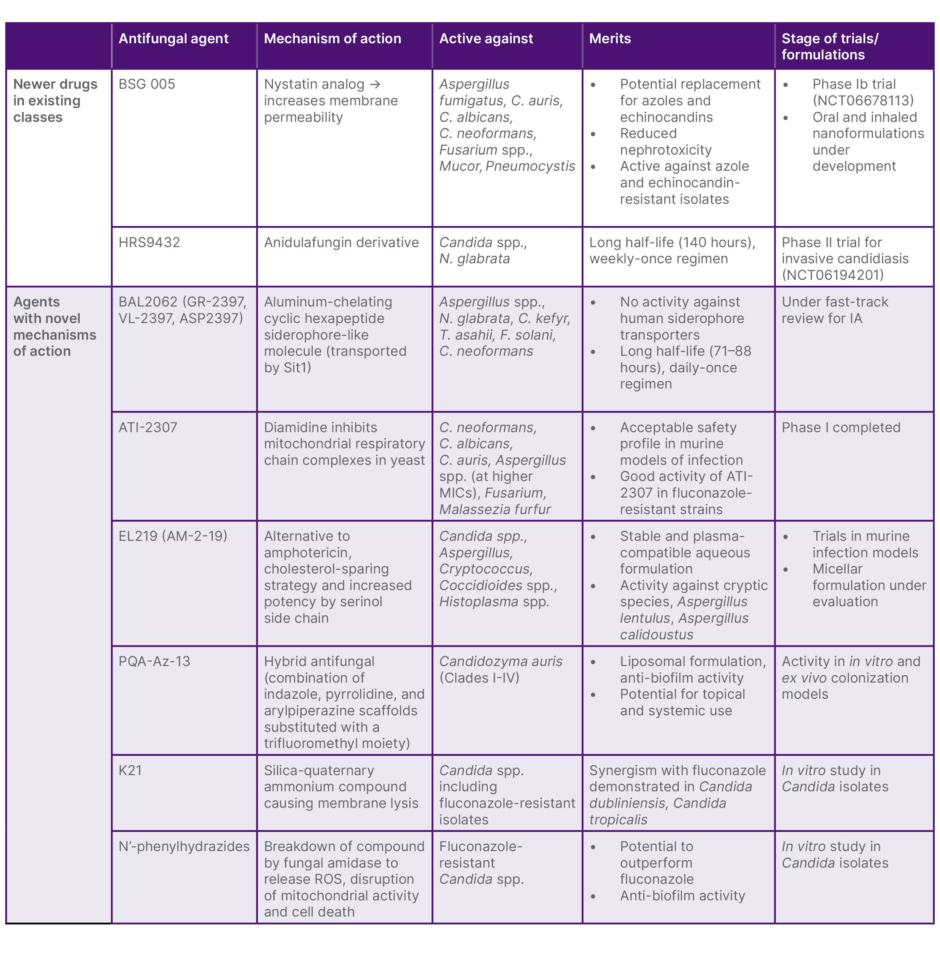
Table 1: List of antifungal compounds that are currently under exploration.8,19,21,56-59
IA: invasive aspergillosis; MIC: minimum inhibitory concentration; Sit1: siderophore iron transporter-1; ROS: reactive
oxygen species.
NOVEL THERAPEUTIC STRATEGIES
Drug Repurposing
Drug repurposing is a favorable strategy for therapeutics in fungal infections, as the safety and pharmacokinetic data are already available. These drugs would therefore undergo fast-track clinical trials in comparison with new compounds or strategies. Among these, niclosamide is increasingly being studied for its anti-cancer and antifungal properties. Originally an anti-helminthic agent, its mode of action involves uncoupling the oxidative phosphorylation in mitochondria, thereby disrupting ATP synthesis, increasing reactive oxygen species, and leading to cell death. Other mechanisms include the inhibition of NADH dehydrogenase subunit 1 (biofilm formation in Candida) and mitochondrial GrpE protein homolog 1 (Mge1; protein import).19 Apart from Candida, the drug is active against S. brasiliensis, H. capsulatum, C. neoformans, and Trichophyton tonsurans (scalp infections). Clindamycin, a lincosamide antibiotic, was evaluated for the treatment of Pneumocystis pneumonia in patients who have undergone a solid-organ transplant (NCT04328688). Although it failed to show improved survival rates, the drug improved the oxygenation index.21 Other repurposed drugs include pioglitazone (undergoing recruitment in a trial in cryptococcal meningitis), statins (interference with ergosterol synthesis in fungal cell membranes), colistin (synergistic activity with azoles in C. auris), lopinavir (anti-biofilm activity in Candida), and miltefosine (disruption of the cell membrane and oxidative stress in Sporothrix and Cryptococcus).19,21 Though repurposing existing drugs offers a practical alternative, with clear advantages in cost and time, most of these compounds were not designed for long-term or chronic administration, which is often necessary in fungal infections.
Extension of Indication
Fosravuconazole, a triazole derivative, is under evaluation for its activity in eumycetoma against Madurella mycetomatis. Although results from clinical trials failed to demonstrate its superiority over itraconazole, it offers the advantage of once-weekly dosing.21 Isavuconazole, FDA-approved for mucormycosis and invasive aspergillosis, was studied in the treatment of cryptococcal meningitis (Phase III trial, NCT00634049) and in dimorphic fungi, showing potential efficacy.21,60 Other extensions of indication include AmB in HIV-related histoplasmosis and voriconazole in cryptococcal meningitis.21
New Formulations
Thin film freezing-voriconazole
Thin film freezing-voriconazole is a dry powder formulation for inhalation, intended for direct application to the lungs.5 This is meant to reduce the systemic toxicity and enhance targeted drug delivery. A Phase Ib trial (NCT04872231) in patients with mild-to-moderate asthma demonstrated good tolerability and minimal hyperactivity. It was also evaluated (Phase II) in patients with invasive pulmonary aspergillosis as an alternative to oral voriconazole (EudraCT number: 2021-006633-19).
AmB formulations
Like lipid complexes of AmB, newer formulations aim to enhance targeted drug delivery and minimize toxicity. CAmB (MAT2203) is a unique oral formulation of lipid nanocrystals that protects the drug in the acidic environment of the stomach and allows delivery to specific sites.8,61 It is hypothesized that the cochleate is phagocytosed and delivered directly into the cytoplasm, after which the drug is released in a low-calcium environment.43 While it maintains the broad spectrum of AmB, it enhances the safety profile and enables slow, sustained drug release.5,19 Two Phase II clinical trials comparing lipid nanocrystal formulations with liposomal AmB (LAmB) for the treatment of cryptococcal meningitis have been completed, showing promising results. A Phase III trial (NCT05541107, EnACT3) is currently under recruitment.62,63 In a Phase II clinical trial (NCT02629419) for esophageal and/or oropharyngeal candidiasis, CAmB (MAT2203) was well tolerated by all enrolled patients, with no renal, hepatic, or hematologic toxicity, and demonstrated good clinical efficacy.8 Other novel antifungal strategies are summarized in Table 2.8,14,64,65
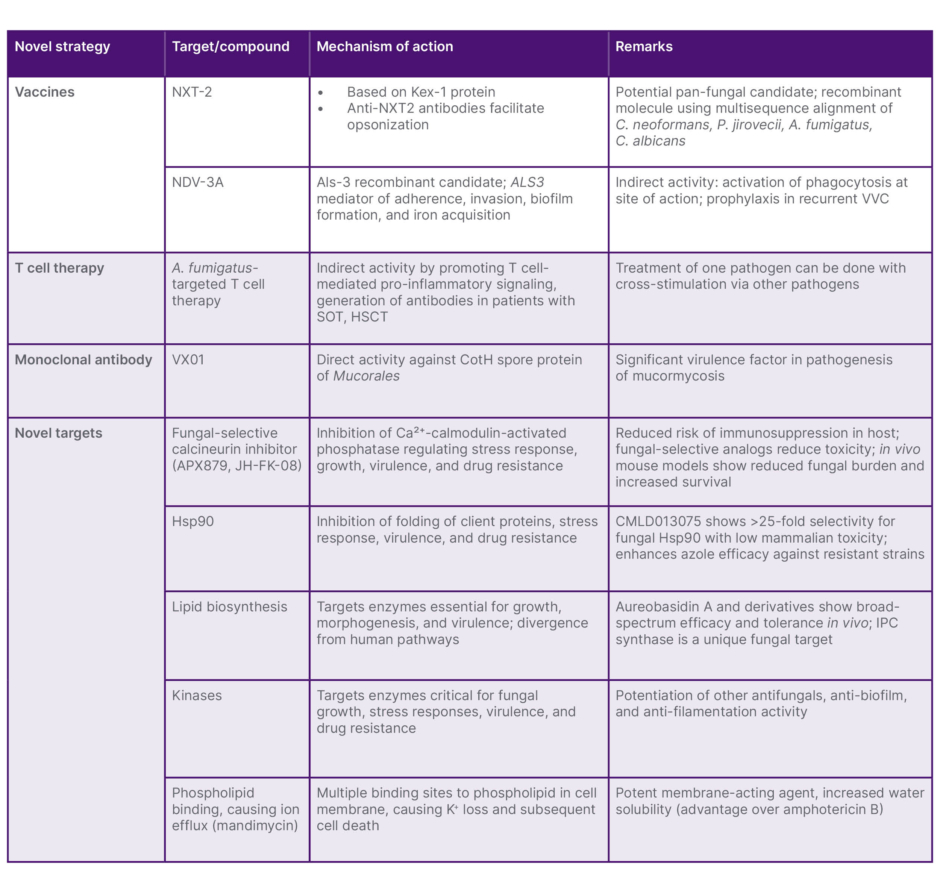
Table 2: Overview of emerging antifungal strategies.8,14,64,65
IPC: inositol phosphorylceramide; SOT: solid-organ transplant; HSCT: hematopoietic stem cell transplantation;
VVC: vulvovaginal candidiasis.
CHALLENGES TO ANTIFUNGAL DEVELOPMENT AND THE WAY FORWARD
The development of newer antifungal strategies remains highly challenging for multiple reasons.
Host Cell Interactions and Limited Targets
The eukaryotic nature of fungal cells offers very few selective targets, as many are homologous to mammalian pathways, thereby raising concerns about host toxicity. In addition, the rigid, chitin-rich cell wall restricts the entry and activity of many compounds, limiting therapeutic options.
Overcoming Cross-Resistance
Though novel agents target alternative sites or pathways of the fungal cell, the long-term development of cross-resistance among these agents needs to be evaluated. The morbid use of antifungals in agriculture has led to the emergence of cross-resistance among human isolates. Alarmingly, even newer agents such as olorofim are already encountering resistance linked to the agricultural use of fungicides.
Requirement of Adequate Funding and Infrastructure
Several promising candidates with novel mechanisms of action remain confined to preclinical or early clinical stages due to limitations in bioavailability and antifungal spectrum. Progress in antifungal drug development is further slowed by a lack of sustained financial investment and limited commercial interest, especially when compared with antibacterial research, despite the escalating global burden of invasive mycoses. Also, despite the significant burden of fungal infections reported in low- and middle-income countries, evaluating novel antifungals is practically difficult in these regions due to limited financial and infrastructural resources. Nodal centers in these countries should be identified to lead the way forward in novel antifungal evaluation, backed by national commitment.
CONCLUSION
The expanding landscape of novel antifungal agents offers renewed optimism in addressing the growing burden of invasive fungal infections. However, therapeutic innovation alone is insufficient to counter the accelerating threat of antifungal resistance. The emergence of multidrug-resistant pathogens, alongside the widespread agricultural use of antifungals, highlights the interconnectedness of human, animal, and environmental reservoirs within a One Health framework. Therefore, the approach to developing a novel therapeutic arsenal must be guided by a multidisciplinary team comprising clinicians, microbiologists, clinical pharmacologists, and environmental scientists.