Key Summary:
- Evidence shows no vaccine–autism association.
- UK vaccines undergo continuous safety monitoring.
- Parents are encouraged to follow the NHS vaccination schedule.
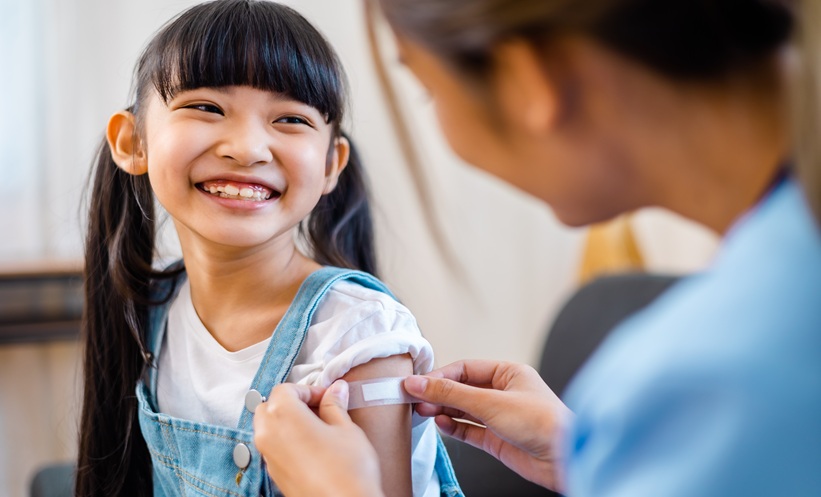
The UK medicines regulator has reaffirmed the safety of childhood vaccination, citing extensive international evidence showing no association between vaccines and autism and emphasising the role of immunisation in preventing serious infectious diseases.
In a statement published on 12 August 2026, the Medicines and Healthcare products Regulatory Agency (MHRA) reiterated that vaccines approved in the UK undergo rigorous assessment for safety, quality, and efficacy before authorisation, followed by continued monitoring once they enter routine use.
The regulator highlighted evidence from large-scale studies involving millions of children, which it said consistently demonstrates no evidence that vaccination causes autism.
Among the evidence highlighted by the MHRA was a 2026 study involving 2.56 million children in the USA, which found no association between receiving a first measles, mumps, and rubella (MMR) vaccination before 2 years of age and childhood autism.
The agency also pointed to a previous meta-analysis incorporating more than 1.26 million children from cohort studies and almost 10,000 children from case-control studies. The analysis similarly found no association between vaccination and autism or autism spectrum disorder.
Evidence concerning vaccine ingredients was also addressed. Aluminium-containing compounds are used as adjuvants in some vaccines to strengthen the immune response, although they are not used in the MMR vaccine. According to the MHRA, a recent large-scale study found no evidence of an increased risk of neurodevelopmental disorders, including autism, associated with early childhood exposure to aluminium-containing vaccines.
The MHRA stressed that vaccine safety assessment does not end when a product is authorised. Surveillance continues using several sources, including the Yellow Card reporting system, large healthcare datasets, international safety information, real-world evidence, and independent scientific review.
If emerging evidence indicates a change in the safety profile of a vaccine, the regulator said it can act to update guidance and information provided to healthcare professionals and the public.
The UK childhood immunisation programme is informed by evidence-based recommendations from the Joint Committee on Vaccination and Immunisation and supported by NHS clinical guidance. Routine childhood vaccination protects against several potentially serious or life-threatening infections, including measles, meningitis, and whooping cough.
Dr Alison Cave, Chief Safety Officer at the MHRA, described vaccination as one of the safest and most effective methods of protecting children from serious infectious diseases, supported by decades of evidence in the UK and internationally.
The agency encouraged parents and carers to continue following the recommended NHS childhood vaccination schedule and to discuss concerns or questions with healthcare professionals.
The MHRA also encouraged patients, parents, and healthcare professionals to report suspected vaccine side effects through the Yellow Card scheme, allowing potential safety signals to be investigated as part of ongoing pharmacovigilance.
Overall, the statement reinforces the regulator’s position that the benefits of routine childhood vaccination substantially outweigh known risks and that current evidence does not support a causal relationship between vaccination and autism.
Reference
Medicines and Healthcare products Regulatory Agency (MHRA). MHRA reaffirms the safety of childhood vaccination. 2026. Available at: https://www.gov.uk/government/news/mhra-reaffirms-the-safety-of-childhood-vaccination Last Accessed: 23 August 2026.
Each article is made available under the terms of the Creative Commons Attribution-Non Commercial 4.0 License.