Aerobic Training and Potential Neurogenesis in Progressive Multiple Sclerosis: Focus on the Hippocampus and the Subventricular Zone - European Medical Journal

This site is intended for healthcare professionals

Aerobic Training and Potential Neurogenesis in Progressive Multiple Sclerosis: Focus on the Hippocampus and the Subventricular Zone

1 Mins
Neurology
Download PDF
Authors:
Tetsu Morozumi , 1 Paola Valsasina , 1 Paolo Preziosa , 1-3 Alessandro Meani , 1 Robert W. Motl , 4 Maria Pia Amato , 5,6 Giampaolo Brichetto , 7,8 Daniele Boccia , 9 Jeremy Chataway , 10,11 Nancy Chiaravalloti , 12,13 Gary Cutter , 14 Ulrik Dalgas , 15 John DeLuca , 12,13 Rachel Farrell , 10 Peter Feys , 16,17 Jenny Freeman , 18 Matilde Inglese , 9,19 Cecilia Meza , 20,21 Amber Salter , 22 Brian M. Sandroff , 12,13 Anthony Feinstein , 20,21 Massimo Filippi , 1-3,23,24 * Maria A. Rocca, , 1-3 CogEx Research Team
  • 1. Neuroimaging Research Unit, Division of Neuroscience, IRCCS San Raffaele Scientific Institute, Milan, Italy
  • 2. Neurology Unit, IRCCS San Raffaele Scientific Institute, Milan, Italy
  • 3. Vita-Salute San Raffaele University, Milan, Italy
  • 4. Department of Kinesiology and Nutrition, University of Illinois Chicago, Illinois, USA
  • 5. Department NEUROFARBA, Section Neurosciences, University of Florence, Italy
  • 6. IRCCS Fondazione Don Carlo Gnocchi, Florence, Italy
  • 7. Scientific Research Area, Italian Multiple Sclerosis Foundation (FISM), Genoa, Italy
  • 8. AISM Rehabilitation Service, Italian Multiple Sclerosis Society, Genoa, Italy
  • 9. Department of Neuroscience, Rehabilitation, Ophthalmology, Genetics, Maternal and Child Health, and Center of Excellence for Biomedical Research, University of Genoa, Italy
  • 10. Department of Neuroinflammation, Queen Square Multiple Sclerosis Centre, UCL Queen Square Institute of Neurology, Faculty of Brain Sciences, University College London, UK
  • 11. National Institute for Health Research, University College London Hospitals, Biomedical Research Centre, UK
  • 12. Kessler Foundation, West Orange, New Jersey, USA
  • 13. Department of Physical Medicine & Rehabilitation, Rutgers New Jersey Medical School, Newark, USA
  • 14. Department of Biostatistics, University of Alabama at Birmingham, USA
  • 15. Exercise Biology, Department of Public Health, Aarhus University, Denmark
  • 16. REVAL, Faculty of Rehabilitation Sciences, Hasselt University, Diepenbeek, Belgium
  • 17. UMSC Hasselt, Pelt, Belgium
  • 18. Faculty of Health, School of Health Professions, University of Plymouth, Devon, UK
  • 19. IRCCS Ospedale Policlinico San Martino, Genoa, Italy
  • 20. Department of Psychiatry, University of Toronto, Canada
  • 21. Sunnybrook Health Sciences Centre, Toronto, Canada
  • 22. Department of Neurology, Section on Statistical Planning and Analysis, UT Southwestern Medical Center, Dallas, Texas, USA
  • 23. Neurorehabilitation Unit, IRCCS San Raffaele Scientific Institute, Milan, Italy
  • 24. Neurophysiology Service, IRCCS San Raffaele Scientific Institute, Milan, Italy
*Correspondence to [email protected]
Disclosure:

To view the disclosure click here.

Acknowledgements:

The study received support from the MS Society of Canada (EGID3185). Ancillary funding was received from the CMSC, Danish MS Society, and US MS Society.

Citation:
Neurol AMJ. ;3[1]:33-35. https://doi.org/10.33590/neurolamj/EN019211.
Keywords:
Aerobic training, hippocampus, progressive multiple sclerosis (MS), subventricular zone (SVZ).

Each article is made available under the terms of the Creative Commons Attribution-Non Commercial 4.0 License.

BACKGROUND AND AIMS

Hippocampal damage is frequent in patients with multiple sclerosis (MS), and is clinically significant due to its impact on cognitive function and mood disorders.1 Also, damage of the subventricular zone (SVZ) has been associated with impaired processing speed in patients with MS.2 Neurogenesis may occur in the dentate gyrus (DG) of the hippocampus and the SVZ throughout the whole lifespan.3,4 In patients with MS, aerobic training may exert a neuroprotective role on the brain by stimulating neurogenesis in DG and SVZ.5

The aim of this study6 was to assess the effects of aerobic exercise on the volume of the hippocampus and its subfields and on diffusivity measures of the SVZ in patients with progressive MS.

MATERIALS AND METHODS

The authors retrospectively analyzed data from 84 patients with progressive MS enrolled at four sites participating in the CogEx MRI substudy.7 Thirty-nine patients with MS performed aerobic training, while 45 patients undertook a balance- and stretching-based sham exercise intervention. Both groups trained twice weekly for 12 weeks. At baseline, post-intervention, and 6-month follow-up, patients underwent MRI assessment on a 3.0 T scanner. FreeSurfer’s (CorTechs Labs, Inc. [now Cortechs.ai], San Diego, California; and The General Hospital Corporation doing business as Massachusetts General Hospital, Boston, Massachusetts, USA) longitudinal processing stream was used to analyze hippocampal subfields’ volumes. Fractional anisotropy and mean diffusivity were extracted from the SVZ and the thalamus, serving as control region.

RESULTS

There were no differences between the two groups in the assessed variables at baseline (p≥0.070). The DG showed a significant volume increase post-intervention in the aerobic exercise group (mean change: 0.63%; 95% CI: 0.04–1.22%; p=0.035; Figure 1), but not in the sham group (mean change: −0.26%; 95% CI: −0.81–0.28%; p=0.337). DG volume increase was significantly greater in the aerobic group compared to the sham group (p=0.029).
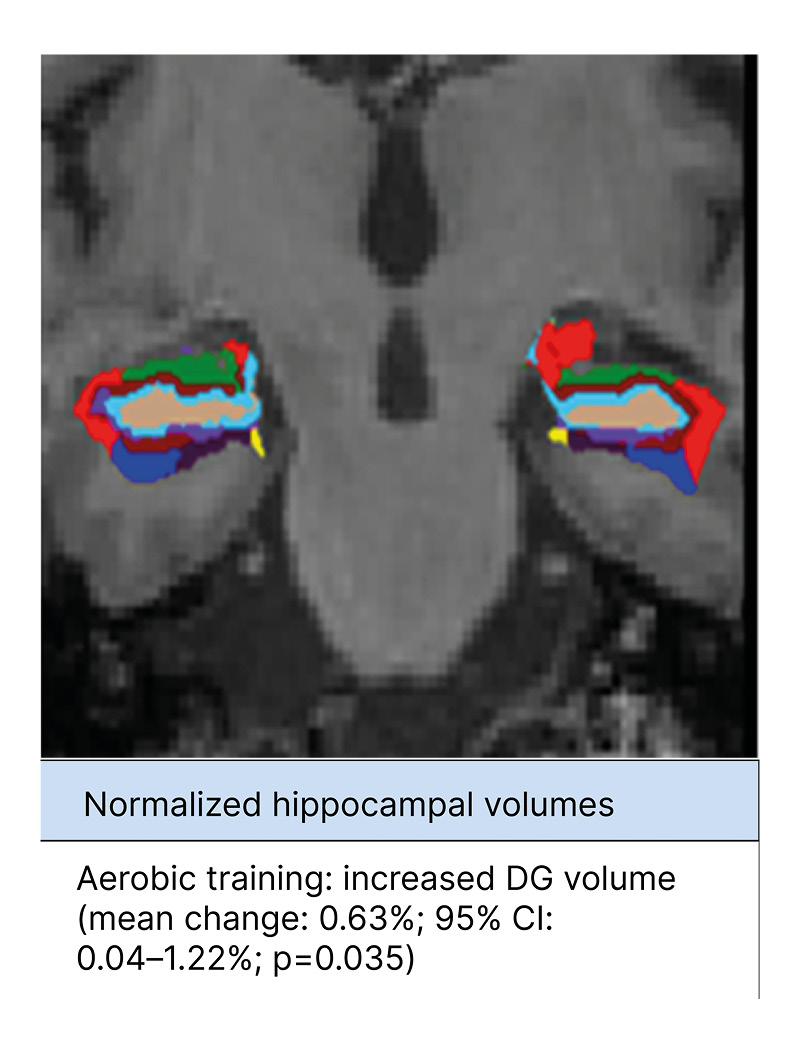
Figure 1: Hippocampal subfield segmentation and results of longitudinal analysis.
Results of hippocampal subfield segmentation using FreeSurfer (CorTechs Labs, Inc. [now Cortechs.ai], San Diego,
California; and The General Hospital Corporation doing business as Massachusetts General Hospital, Boston,
Massachusetts, USA) longitudinal processing, along with significant post-intervention volumetric changes observed in patients with multiple sclerosis undergoing aerobic training.
DG: dentate gyrus.

No significant volumetric changes were found in the other hippocampal subfields, nor in the diffusivity metrics of the SVZ (p≥0.057). No significant changes in either group were found between end of training and the 6-month follow-up (p≥0.061).

CONCLUSION

Aerobic exercise increased DG volume in patients with progressive MS, but did not modify microstructural integrity of the SVZ. The possible neuroprotective effect of aerobic training is particularly relevant, since the hippocampus is a common site of atrophy in MS, contributing to cognitive deficits experienced by these patients.


References
Preziosa P et al. Structural MRI correlates of cognitive impairment in patients with multiple sclerosis: a multicenter study. Hum Brain Mapp. 2016;37(4):1627-44. Butti E et al. Neural precursor cells tune striatal connectivity through the release of IGFBPL1. Nat Commun. 2022;13(1):7579. Christian KM et al. Adult neurogenesis and the dentate gyrus: predicting function from form. Behav Brain Res. 2020;379:112346. David-Bercholz J et al. Astrocyte and oligodendrocyte responses from the subventricular zone after injury. Front Cell Neurosci. 2021;15:797553. Erickson KI et al. Exercise training increases size of hippocampus and improves memory. Proc Natl Acad Sci U S A. 2011;108(7):3017-22. Morozumi T et al. Aerobic training and potential neurogenesis in progressive multiple sclerosis: focus on the hippocampus and the subventricular zone. Abstract 006. AAN Annual Meeting, April 18-22, 2026. Rocca MA et al. Cognitive rehabilitation effects on grey matter volume and Go-NoGo activity in progressive multiple sclerosis: results from the CogEx trial. J Neurol Neurosurg Psychiatry. 2024;95:1139-49.

Rate this content's potential impact on patient outcomes

Average rating / 5. Vote count:

No votes so far! Be the first to rate this content.