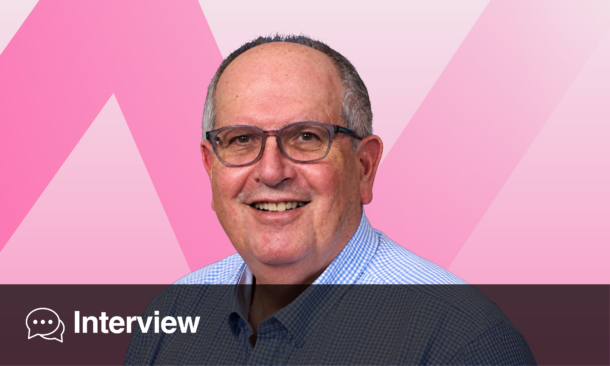
Lisa Hobson-Webb: President, American Association of Neuromuscular & Electrodiagnostic Medicine (AANEM); Duke University Department of Neurology, Neuromuscular Division, Durham, North Carolina, USA
Citation: Neurol AMJ. 2026; https://doi.org/10.33590/neurolamj/48314X87

With over 20 years of clinical experience in neuromuscular medicine, what first drove you to start pairing traditional electromyography tests (EMG) with high-resolution ultrasound? Was there a particular case or a diagnostic roadblock with needle EMG where you felt like you had to visualize the structure to really understand what was going on?
I was fortunate to do my neurology residency at Wake Forest University, Winston-Salem, North Carolina, USA, where Francis Walker was just beginning to explore the use of ultrasound alongside electrodiagnostic testing. During my first week in the EMG laboratory, I was seeing a patient with a median neuropathy that did not localize to the carpal tunnel. We used ultrasound to image the nerve and found a neuroma (an abnormal growth in response to injury) to be the cause. I learned very early that while nerve conduction studies (NCS) and needle EMG can provide us information on nerve and muscle function, we often need anatomical imaging to uncover the exact location or etiology of the patient’s symptoms. My experiences over the years have reinforced this viewpoint. Just yesterday, I saw three patients in which nerve ultrasound played a critical role in their diagnosis and treatment.
For clinicians who still view neuromuscular ultrasound as a redundant luxury, how do you make the case that imaging elevates, rather than threatens, traditional electrophysiology?
The information provided by ultrasound is complementary and elevates the standard of care for patients, often expediting diagnosis and treatment, while reducing the need for more invasive testing. NCS and needle EMG provide information on nerve and muscular function, while ultrasound provides morphological information. The information gathered from each approach is best used in combination, much like a rheumatologist may use serum antibody testing and radiographic images to assess a patient with inflammatory myopathy.
While last year’s meeting looked at ‘Back to the Future’, your theme, ‘Beyond EMG’, pushes us right into it. What specific breakthroughs convinced you that clinicians are ready to transition from traditional testing to a multimodal approach today?
Neuromuscular medicine is advancing at a rapid pace, with new treatments approved each year, new diagnostic technologies becoming available, and an increasing number of patients referred to our care. Today’s scientific breakthroughs are becoming tomorrow’s standard of care more quickly than ever before. This is not a new paradigm for the American Association of Neuromuscular & Electrodiagnostic Medicine (AANEM), however. Our organization was founded in 1953 to promote what was then a novel technology known as EMG. It is in our DNA to be on the cutting edge of translational medicine. This year’s theme of ‘Beyond EMG’ reflects the expanding range of tools available to neuromuscular clinicians. EMG and NCS remain foundational to neuromuscular diagnosis, while advances in imaging, genetics, biomarkers, and AI provide additional information that helps us deliver more precise and comprehensive patient care.
During the Olney Lecture, Nens van Alfen, Radboud UMC Nijmegen, the Netherlands, will discuss the role of AI in EMG and ultrasound. Given the highly operator-dependent nature of these modalities, where do you believe AI will have the most immediate clinical impact, and where do you feel it poses the greatest clinical risk?
Both needle EMG and ultrasound require operator skill and attention to detail. AI is not at a point where it would be advisable to rely upon it for clinical decision making or diagnosis. It should be viewed as a tool that supports physician expertise rather than replacing clinical judgment. However, we are beginning to see research detailing how different AI applications might help with quality control and subsequent analysis of collected data. For example, integrated AI might let an examiner know their EMG needle placement was not optimal in real time or even suggest additional sites be tested. It is not a threat but should be considered as another piece of technology that can help us improve patient care. Its exact role continues to evolve and additional research is warranted. van Alfen has extensive experience in both EMG and ultrasound, along with AI, making her uniquely qualified to discuss this topic in a practical way that does not overstate the promise of AI.
As President, how do you balance forward-looking research sessions, such as 3D neural organoids, with practical educational content that community clinicians can implement immediately?
The AANEM Annual Meetings draw a wonderful multidisciplinary group of non-academic and academic clinicians, along with basic science researchers, electrodiagnostic technologists, medical students, and many others from around the globe. Most of our courses focus on practical clinical care instruction, including workshops that teach NCS, EMG, and ultrasound skills. We use our plenary sessions, abstract presentations, and poster sessions to promote the latest scientific advancements in neuromuscular medicine. This combined approach means there’s something for everyone at every stage of their career. I always leave the Annual Meeting with new knowledge and ideas for enhanced clinical care.
Both AANEM and the American Neuromuscular Foundation (ANF) prioritize health equity and patient advocacy. With specialized diagnostics and advanced therapies often concentrated in urban academic centers, what concrete steps are both organizations taking under your leadership to reach patients in rural and medically underserved areas?
AANEM has been and continues to be proactive in improving access to care for patients with neuromuscular disease. There are not enough neuromuscular medicine specialists and, as you note, they are often concentrated in urban academic medical centers. Our annual meeting is a great resource for community-based physicians and advanced practice providers to update their knowledge on the topic. However, that alone will not completely address the issue.
Through its foundation, the American Neuromuscular Foundation (ANF), AANEM is helping increase the number of neuromuscular medicine specialists by funding scholarships for medical students and residents to attend the AANEM Annual Meeting. The AANEM also offers a virtual educational content program designed for residents in training known as our Training Program Partnership. We have recently taken steps to make this available globally.
To further address access issues, the ANF has worked with the Late-Onset Neuromuscular Disease Consortium (LONDC) to develop the ‘Why Behind Your Weakness’ campaign, which includes a free online tool that can be used by clinicians and patients to help recognize when unexplained weakness may warrant further neuromuscular evaluation. This campaign is designed to raise awareness and help reduce delays in diagnosis.
Patients with neuromuscular disease can experience significant delays in diagnosis, particularly when early symptoms such as muscle weakness are attributed to more common conditions. What should clinicians be looking for that might signal an underlying neuromuscular disorder, and what resources are AANEM and ANF developing to help clinicians and patients recognize when further neuromuscular evaluation may be needed?
One of the greatest challenges in neuromuscular medicine is that patients with persistent weakness often experience significant delays before reaching the appropriate specialist. The ‘Why Behind Your Weakness’ campaign was developed with a team of neuromuscular medicine experts in collaboration with the LONDC, but designed for easy use by both clinicians and patients. The campaign includes a tool that encourages clinicians to consider neuromuscular disease in patients with unexplained weakness. The goal isn’t to have every healthcare professional diagnose neuromuscular disease, but to help them recognize when a patient may benefit from referral to a neuromuscular specialist. Early recognition and diagnosis are increasingly important as disease-specific treatments continue to advance.