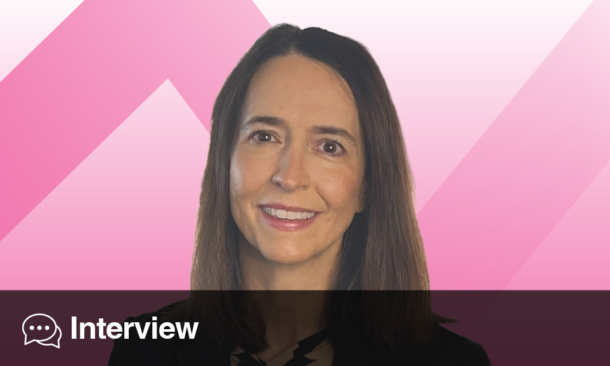
Rebecca Edelmayer | Vice President of Scientific Engagement, Alzheimer’s Association
Citation: EMJ Neurol. 2026; https://doi.org/10.33590/emjneurol/0HF2AR99

The Alzheimer’s field has seen rapid progress in areas such as biomarkers, disease-modifying therapies, and risk reduction. Following the discussions at the Alzheimer’s Association International Conference (AAIC), where do you think the most important momentum is currently building?
I think what we’ve really been seeing is a rapid shift in the field, moving out of the direct research space and into something that is more translational and more about implementation. We saw this a lot at the meeting this year, across a number of different topics, around things like biomarker development and treatment development: it’s not just about how we actually develop those treatments, but how we implement them in our communities across the globe. That’s one of the key things I’ve seen, not only in the papers and abstracts submitted to the Conference and the sessions that were held, but also in the invited programme, which really tries to demonstrate that this field is shifting in a way we haven’t ever experienced before. So, I think that’s what’s most exciting. It’s not just that we’re seeing these changes happening in one aspect of the field, like biomarkers. It really is across diagnostics, biomarkers, and risk reduction, as well as treatments.
Many advances presented at AAIC have significant implications for clinical practice. What developments do you think are most likely to change how patients are diagnosed, monitored, or treated in the near future?
Some of the work we’re seeing presented here really demonstrates that a number of the tools developed for diagnosis have made great advancements over the past few years. We have a better understanding of what types of tests are most robust, and a better understanding of who we should be using those tests on. Again, speaking to the implementation side of things, we’re now creating guidelines and seeing recommendations on how these tests should actually be used in clinical practice. We’re also trying to provide some of that pragmatic education as part of the AAIC programme, allowing us to disseminate the information we’re learning in the research space out to clinicians, so they can have those tools at their fingertips and implement them as part of their clinical workflow.
You oversee the Alzheimer’s Association International Society to Advance Alzheimer’s Research and Treatment (ISTAART), and many AAIC sessions are developed in partnership with ISTAART professional interest areas. How does ISTAART help shape the scientific agenda of AAIC, and why are these collaborations so valuable for advancing the field?
I’m so thrilled that you’re asking about ISTAART. ISTAART is a professional society involving a network of over 16,000 researchers and clinicians across the globe. It’s incredible because this group comes together for a variety of reasons. The Association helps to convene them in professional interest areas: we have over 30 of them, focused on a variety of different topics. We have a professional interest area on biofluid-based biomarkers; we have one on atypical dementia; and one that is focused on elevating early career researchers. So, it’s partly science and partly professional development, but ISTAART is really aimed at growing opportunities for mentorship, leadership, and driving science. We see ISTAART throughout AAIC, with members developing scientific sessions, presenting skills workshops, and creating a lot of the pre-conferences and other activities that are part of AAIC. We wouldn’t be anywhere at AAIC without ISTAART. I think it speaks to the global community that is not only bringing forth progress in Alzheimer’s disease and other dementia science and medicine, but is also a connected global community, which is amazing to see here at the meeting.
After everything presented and discussed at AAIC 2026, what do you see as the most important priority for Alzheimer’s research over the next 5 years?
I’ll answer that very overarchingly: I think we just can’t lose our momentum. The momentum we’re feeling at AAIC is palpable. I just had a meeting with the Scientific Programme Committee, who really help drive the content and experience here at AAIC, and a number of things stood out to me from hearing what they want to see next. One thing that came through as a consensus was that there’s an energy here this year that they’ve never felt before, not only in terms of the number of researchers and clinicians participating (we have over 13,000), but in the science itself, which is well curated and helping them think ahead to the future. I think that energy is giving them hope and re-energising them for the course of the next year, to keep driving forwards the development of new biomarkers, new treatments, new risk reduction strategies, and truly moving towards implementation, so it helps patients and families worldwide.