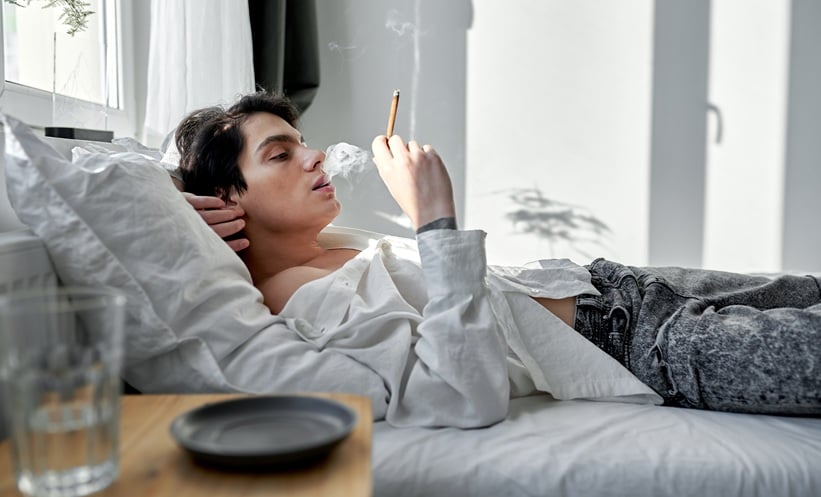
AMONG middle-aged adults, both cumulative and recent cannabis use have been linked to poorer objective sleep quality, according to a new cohort study. However, researchers found no corresponding association with self-reported sleep quality, highlighting a difference between objectively measured sleep and participants’ perceptions of their sleep.
CARDIA Cohort and Sleep Measures
Researchers analysed data from the Coronary Artery Risk Development in Young Adults (CARDIA) study, incorporating 35 years of follow-up through the year-35 examination (2020–2022), alongside its Sleep Ancillary Study.
Of 1,266 participants, 891 had objective sleep data and 1,128 had subjective sleep data. Among those with objective measurements, the mean age was 60.7 years; 564 (63.3%) were female, 365 (41.0%) were Black, and 526 (59.0%) were White.
The researchers examined cumulative cannabis exposure, measured in cannabis-years, with one cannabis-year equivalent to 365 days of use. They also assessed recent cannabis use, distinguishing use within the previous 30 days from former or never use. These measures allowed the analysis to consider both accumulated exposure and more recent consumption.
Objective sleep outcomes were recorded using wrist actigraphy over seven days. Measures included sleep duration, sleep percentage, sleep fragmentation, and wakefulness after sleep onset (WASO). Subjective sleep quality was assessed using the Pittsburgh Sleep Quality Index.
Poorer Objective Sleep Quality
Each additional cannabis-year was associated with greater odds of lower sleep percentage (odds ratio [OR]: 1.10), higher sleep fragmentation (OR: 1.04), and prolonged WASO (OR: 1.21). These findings linked cumulative exposure to several measures of disrupted sleep.
Compared with participants who had never used cannabis, recent users had greater odds of prolonged WASO (OR: 3.23) and long rather than optimal sleep duration (OR: 4.60).
Despite these objective associations, cannabis use was not associated with subjective sleep quality. The discrepancy suggests that participants’ perceptions of their sleep may not fully reflect the differences captured by actigraphy.
Future Research
The findings highlight the value of assessing both objective and subjective sleep outcomes when investigating cannabis use and sleep health in midlife. Relying on self-reported sleep quality alone may overlook associations detectable through objective monitoring.
However, these observational findings do not establish that cannabis use caused poorer sleep. Further longitudinal, mechanistic, and randomised studies incorporating objective sleep assessment are needed to clarify the relationship and determine how cannabis exposure may influence different aspects of sleep.
Reference
Vu TT et al. Recent and cumulative cannabis use and sleep in middle-aged adults. JAMA Netw Open. 2026;9(10):e2638303.
Featured image: Roman on Adobe Stock