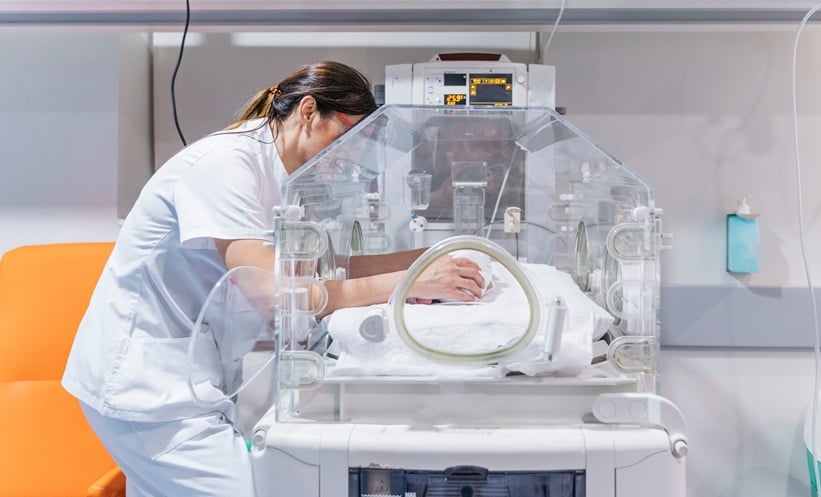
A NEW study has found that early neonatal infection is strongly associated with increased risk of cerebral palsy, with sepsis and meningitis linked to markedly higher odds of severe motor outcomes including nonambulatory status and bilateral cerebral palsy subtypes.
Cerebral Palsy Burden and Early-Life Risk Factors
Cerebral palsy remains the most common motor disability in childhood, yet its early-life determinants are not fully understood. In particular, the role of invasive bacterial infection in the first week of life as a driver of cerebral palsy risk has been uncertain, prompting investigation into its long-term neurological impact on Cerebral Palsy outcomes in near-term and full-term infants.
Nationwide Cohort Examining Cerebral Palsy Associations
This nationwide population-based cohort study included over one million singleton live births in Denmark between 2004 and 2022, with follow-up through 2025. All near-term and full-term infants without major congenital anomalies were included. Early-onset infection was defined as invasive bacterial sepsis or meningitis within the first week of life, identified using diagnostic codes or bacterial cultures from blood or cerebrospinal fluid.
The primary outcome was the association between neonatal sepsis and Cerebral Palsy, with secondary analyses assessing meningitis, culture-positive infections, CP subtypes, neuroimaging findings, and motor function.
Markedly Increased Risk with Sepsis and Meningitis
Among 8,151 infants with sepsis (0.8%), 350 (4.3%) had culture-confirmed infection, while 236 infants (<0.1%) had meningitis, including 41 (17.4%) with culture-positive disease. Sepsis was associated with a significantly increased risk of Cerebral Palsy (adjusted OR 8.13; 95% CI 6.32–10.45), with stronger associations observed for nonambulatory status and bilateral subtypes. Culture-positive sepsis showed an even higher risk (OR 23.58; 95% CI 11.66–47.65). Meningitis demonstrated the strongest associations, with odds ratios of 49.27 (95% CI 26.82–90.54) overall and 79.57 (95% CI 24.52–258.18) for culture-confirmed cases.
Implications for Prevention and Early Care Strategies
These findings indicate that early neonatal infection is a major risk factor for Cerebral Palsy, particularly severe phenotypes. Improved prevention, early detection, and treatment of neonatal sepsis and meningitis may offer a pathway to reducing long-term neurological disability, although further research is needed to clarify mechanisms and intervention strategies.
Reference
Andersen M et al. Early-onset neonatal infection and cerebral palsy. JAMA Netw Open. 2026;9(5):e2614775.
Featured image: karrastock on Adobe Stock
- Author: