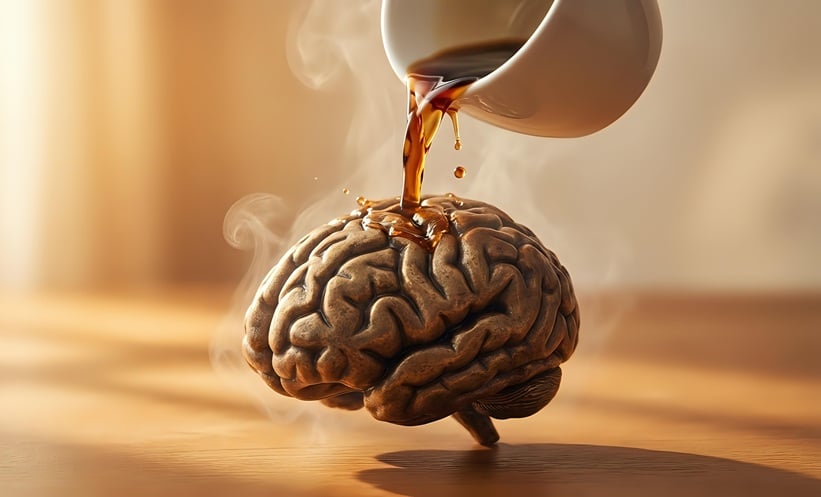
CAFFEINE and mental health are closely linked, with new evidence suggesting moderate coffee consumption may be associated with lower risks of mood and stress disorders, offering nuanced insights into how daily habits could influence psychological wellbeing across populations.
Understanding Caffeine and Mental Health Associations
Interest in caffeine and mental health has grown due to conflicting evidence on whether coffee consumption protects against or exacerbates psychiatric conditions. Biological mechanisms, including inflammation and neurostimulation, have been proposed, but population-level clarity has been limited. This study aimed to define these associations while examining differences by sex and genetic variation in caffeine metabolism.
Large-Scale Prospective Analysis in UK Biobank Cohort
This prospective cohort study analysed 461,586 participants from the UK Biobank, with 46.4% men and a mean age of 56.6 years. Individuals were followed for a median of 13.4 years after baseline assessment between 2006 and 2010. Exposure included daily coffee intake across subtypes. Outcomes were incident mood and stress disorders identified via ICD-10 codes. Multivariable-adjusted Cox proportional hazards models and restricted cubic splines assessed associations. Effect modification by sex and caffeine metabolism polygenic risk scores was evaluated. A total of 18,220 mood disorder cases and 18,547 stress disorder cases were recorded during follow-up.
J-Shaped Relationship and Sex-Specific Effects Observed
A J-shaped association between caffeine and mental health outcomes was identified, with the lowest risk at 2–3 cups per day. Among 326,514 coffee drinkers, 144,119 consumed 2–3 cups daily. Mood disorders totalled 18,220 cases and stress disorders 18,547 cases. Associations were stronger in men, with a significant interaction (P=0.02). No statistically significant modification by caffeine metabolism genotype was observed, indicating consistent associations regardless of genetic caffeine processing capacity.
Implications for Mental Health Guidance and Future Research
These findings suggest moderate coffee consumption may support mental health without adverse effects at typical intake levels. Clinically, guidance may incorporate balanced caffeine consumption while recognising individual variability. Future research should further explore biological mediators such as inflammation and clarify causal pathways underpinning caffeine and mental health relationships.
Reference
Song BR et al. Daily coffee drinking and mental health outcomes: sex differences and the role of caffeine metabolism genotypes. Journal of Affective Disorders. 2026;DOI:10.1016/j.jad.2025.120992.
Featured image: Yuliia on Adobe Stock
- Author: