RADIOGRAPHERS showed substantial variation and limited overall recognition of developmental dysplasia of the hip (DDH) in an exploratory image-review study, highlighting a need to evaluate targeted education and preliminary assessment pathways.
The findings concern recognition of possible abnormalities on paediatric pelvic radiographs, rather than formal diagnostic reporting, and should not be treated as a definitive measure of radiographer performance in routine practice.
Reviewing Paediatric Pelvic Images
DDH encompasses abnormalities of hip development ranging from dysplasia and instability to subluxation or dislocation. Delayed recognition can increase the need for invasive treatment and contribute to longer-term problems with pain, gait and joint health.
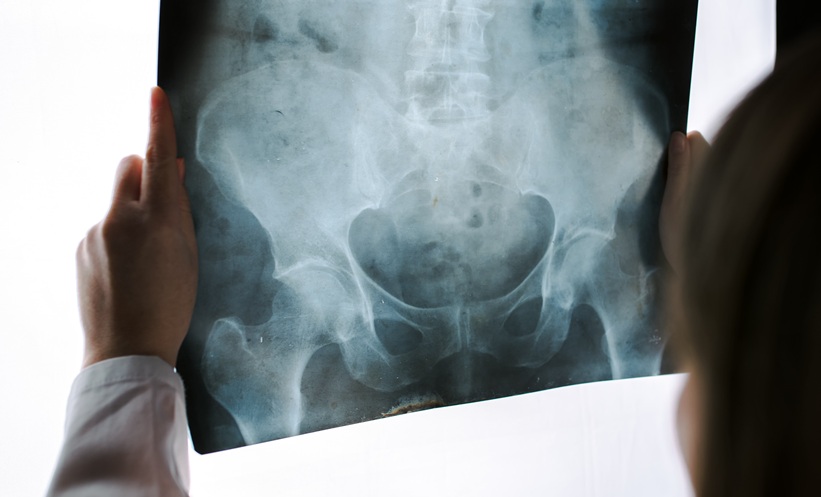
Researchers recruited 30 radiographers at the European Congress of Radiology 2023. Each independently reviewed 25 anonymised anteroposterior pelvic radiographs from a teaching dataset, using reference labels supplied by three specialists.
The image set included 13 normal cases and 12 with DDH: four left-sided, four right-sided and four bilateral. Participants identified the apparent abnormality, rated confidence from 1 to 10 and assessed subjective image quality.
Recognition Varied Widely
Mean reported sensitivity was 56.2%, while mean specificity was 40.2%. Performance varied substantially between readers, and image-level confidence ratings were generally moderate, predominantly between 4 and 6.
For the main binary analysis, any response identifying DDH in at least one hip counted as positive. Consequently, identifying only one affected hip in a bilateral case still counted as recognition, because it could prompt further assessment. The results therefore do not describe accuracy in identifying the full extent or laterality of disease.
Participants frequently identified collimation, pelvic rotation, lower-limb positioning, centring and artefact removal as important image-quality considerations. However, these were reported perceptions: the study did not demonstrate that any technical factor independently predicted recognition accuracy.
Exploratory Findings Require Caution
The convenience sample was small and professionally diverse, with one-third reporting no paediatric imaging activity. Only 25 cases were assessed, without a formal sample-size calculation, and their distribution should not be assumed to represent everyday clinical workloads.
The analysis was also primarily descriptive and did not account for reader and case clustering using a multireader, multicase model. Patient-level details such as age, disease severity and previous treatment were unavailable for the selected cases.
The findings support developing and prospectively testing DDH education and clearly defined routes for escalating suspected abnormalities. They do not establish that additional training, radiographer flagging or artificial intelligence improves diagnostic timeliness or patient outcomes. Larger studies in representative practice settings are needed to evaluate those questions.
Reference
Carr N et al. Radiographers’ recognition of developmental dysplasia of the hip on paediatric pelvic radiographs and perceived image-quality factors: an exploratory observer-performance study. Radiol Res Pract. 2026;2026:8279959. doi:10.1155/rrp/8279959. Author repository full text.