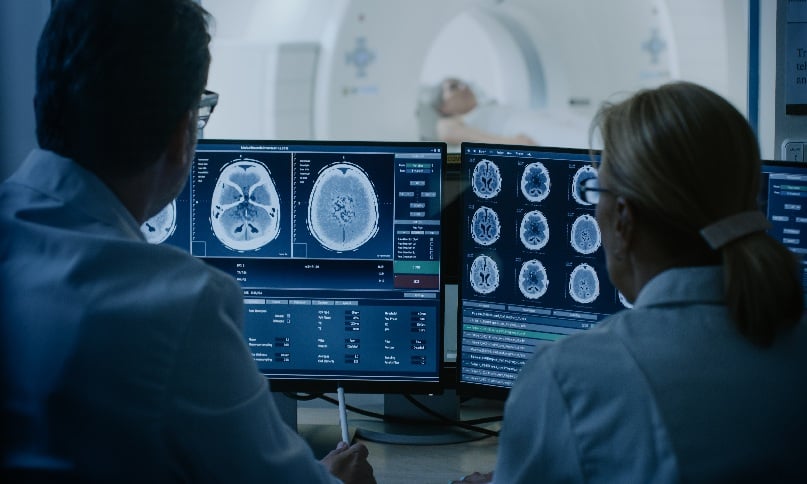
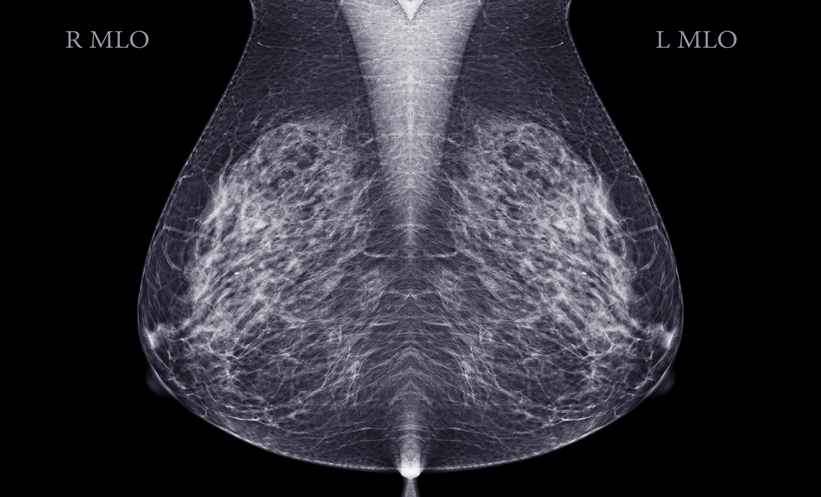
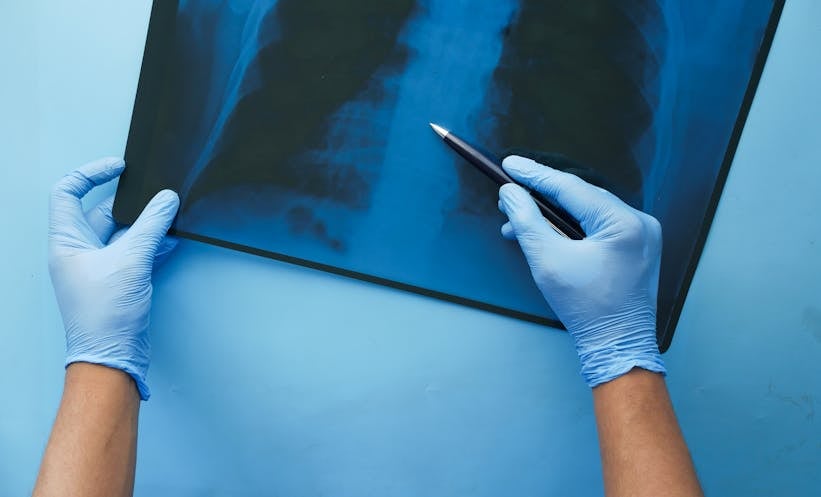
RADIOLOGISTS correctly identified AI-generated images only about three quarters of the time in a study examining whether clinicians could distinguish synthetic radiology scans from genuine ones. The findings suggested that cross-sectional imaging, particularly CT and MRI, were more difficult to classify accurately than x-rays or ultrasound.
Text-to-image AI models can now generate synthetic radiological images that closely resemble genuine scans. These images may support education and AI model training, although their realism also raises concerns about potential misuse.
Cross-Sectional Imaging Proved Most Difficult to Classify
The study included 182 radiologists, who completed an online survey featuring 30 images comprising 20 AI-generated and 10 real radiological images. Participants classified each image as either real or AI generated and rated their confidence on a five-point scale.
Researchers created the synthetic images using the Dreambooth fine-tuning approach applied to Stable Diffusion v2.1. The model was fine-tuned using 20 to 30 reference images for each imaging modality or anatomical region, including chest and hand radiographs, several CT applications, and brain and knee MRI. Nearly all training images depicted normal anatomy.
Radiologists correctly classified a median of 77.8% of images. Detection rates were similar for AI-generated images (75.0%) and genuine images (83.4%), with no statistically significant difference between the two.
Performance varied by imaging modality. Ultrasound and x-ray images were identified more accurately than CT and MRI, with correct classification rates of 88%, 91%, 70% and 77%, respectively. Confidence scores were comparable when assessing AI-generated and real images.
Specialist Expertise Influenced Accuracy
Years of radiology experience and self-reported familiarity with AI did not affect performance. However, radiologists with specialist expertise relevant to the image being assessed achieved higher classification accuracy (80.7%) than those without a matching subspecialty (76.9%) interest (p=0.012).
The findings suggested AI-generated radiological images could support applications such as AI model training. However, the difficulty many radiologists had distinguishing synthetic from genuine CT and MRI images also highlighted the potential for misuse.
Reference
Cronshaw RA, Williams MC. Real or not real? Can radiologists distinguish artificial intelligence generated radiological images from real ones? Clin Radiol. 2026;DOI:10.1016/j.crad.2026.107438.
Featured image: Gorodenkoff on Adobe Stock