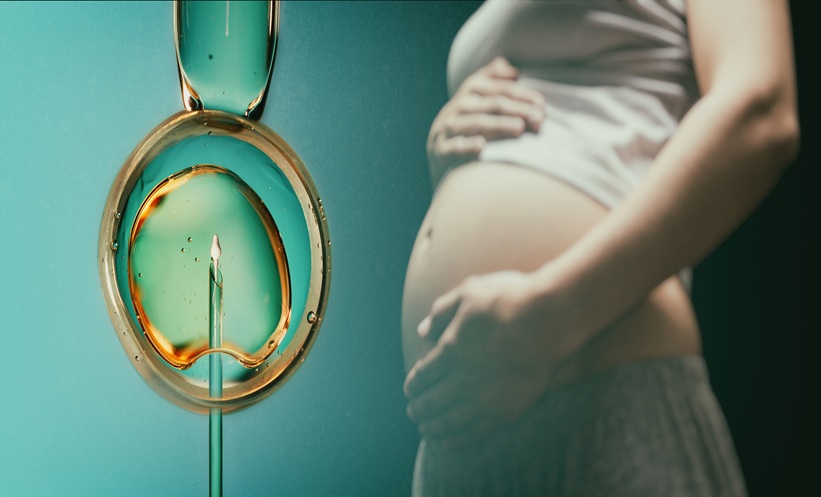
INTRAUTERINE platelet rich plasma (PRP) treatment was associated with higher pregnancy rates among women with recurrent implantation failure undergoing euploid embryo transfer, according to a prospective observational cohort study.
The study included 230 women treated at a single tertiary centre between December 2023 and December 2024. Of these, 110 received PRP and 120 formed the control group. Participants were aged 18 to 45 years, had an endometrial thickness greater than 7 mm, and underwent single euploid blastocyst transfer.
PRP was administered as a single intrauterine infusion 36 to 72 hours before embryo transfer. The researchers assessed pregnancy outcomes, with reproductive follow up continuing through December 2025.
Higher Clinical Pregnancy Rates
Clinical pregnancy was reported in 71.8% of women who received PRP, compared with 40.8% of those in the control group. The crude risk ratio was 1.76, with a 95% confidence interval of 1.38 to 2.25. The difference was statistically significant (p<0.001).
The researchers also found higher rates of positive beta human chorionic gonadotropin (beta hCG), ongoing pregnancy, and live birth in the PRP group.
Findings After Statistical Adjustment
The researchers used propensity score overlap weighting and modified Poisson regression to adjust for potential confounding factors. The adjusted analysis included 228 women because infertility duration data were missing for two participants in the PRP group.
Following adjustment, PRP remained associated with a higher clinical pregnancy rate, with an adjusted risk ratio of 1.86 (95% confidence interval 1.44 to 2.39; p<0.001). The analysis also found associations between PRP treatment and the other three principal outcomes: positive beta hCG, ongoing pregnancy, and live birth.
Further Research Needed
The findings suggest that intrauterine PRP may be associated with improved pregnancy outcomes in women with recurrent implantation failure undergoing euploid embryo transfer, even when endometrial thickness is within the study’s specified range.
However, treatment allocation was based on patient choice rather than randomisation. As an observational study, the research cannot establish that PRP caused the differences in pregnancy outcomes.
The researchers concluded that randomised controlled trials are needed to confirm the findings and further assess the role of intrauterine PRP in this patient group.
Reference
Costanzi F et al. Beyond endometrial thickness: platelet-rich plasma and reproductive outcomes in recurrent implantation failure following euploid embryo transfer. Front Endocrinol .2026. DOI; 10.3389/fendo.2026.1962479.