BACKGROUND AND AIMS
Pre-transplant respiratory tract colonization with Aspergillus species has been associated with an increased incidence of invasive aspergillosis after lung transplant in certain transplant populations.1 Although less common, diagnoses of invasive infections by other non-Aspergillus fungal species are increasing.1,2 Despite this increased recognition of rarer infections from species such as Alternaria, Cladosporium, Fusarium, Lomentospora, Mucorales, Scedosporium, and others, how pre-transplant colonization with these organisms influences post-transplant outcomes is unknown.
MATERIALS AND METHODS
This was a multicenter, retrospective cohort study of all adult bilateral lung transplant recipients at Mayo Clinic sites in Rochester, Minnesota, and Jacksonville, Florida, USA, between January 1, 2016–December 31, 2024.3 Patients with pre-transplant respiratory tract fungal colonization were compared to those without colonization. Exclusion criteria included previous organ transplantation and multi-organ transplantation. Fungal colonization was defined as positive respiratory fungal culture(s) in asymptomatic patients without evidence of infection. Only fungal cultures that were speciated were included. Candida species and Penicillium species were not included in analysis. The primary outcome was severe post-transplant invasive fungal infection (IFI), which was defined as proven or probable IFI (based on European Organization for Research and Treatment of Cancer/Mycoses Study Group [EORTC/MSG] criteria) that required subsequent hospitalization or additional procedures.4 Baseline characteristics were summarized using descriptive statistics (medians with interquartile ranges or counts with percentages) and groups were compared using standardized mean differences. Unadjusted risk ratios (RR) with 95% CIs were used to analyze associations with post-transplant infection and mortality (Table 1).
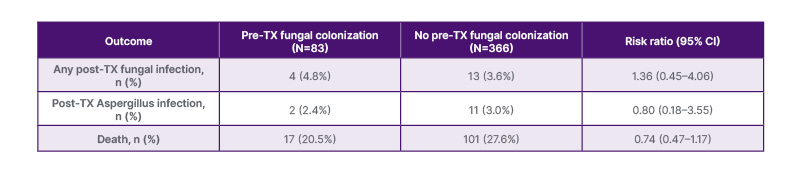
Table 1: Association between pre-transplant fungal colonization and any post-transplant fungal infection.
TX: transplant.
RESULTS
Four hundred and forty-nine patients were included in the author’s analysis. In total, 83 patients (18.5%) had pre-transplant fungal respiratory tract colonization, 45 (10%) colonized with Aspergillus species and 38 (8.5%) with non-Aspergillus species. Nineteen of the 45 patients with Aspergillus colonization were also colonized with at least one non-Aspergillus species. Three hundred and sixty-six patients did not have pre-transplant colonization. The most common pre-transplant fungal species were Cladosporium (28), Alternaria (15), and Fusarium (14). Other fungal species included Scapulariopsis (three), Rhizopus (two), and Scedosporium (two). The two cohorts primarily differed in indication for transplant, with a higher percentage of patients with muco-obstructive disease in the colonization group. A total of four patients (4.8%) in the fungal colonization cohort developed severe fungal infection post-transplant. Fungal species differed pre- and post- transplant in all cases, with none of the species of colonizers being a causative organism in any of the post-transplant infections. There was no significant association between pre-transplant colonization and severe post-transplant fungal infection (RR: 1.36 [0.45–4.06]), severe post-transplant Aspergillus infection (RR: 0.08 [0.18–3.55]), or unadjusted mortality (RR: 0.74 [0.47–1.17]).
CONCLUSION
Previous studies showing an increased risk of post-transplant aspergillosis in patients with cystic fibrosis could be explained by their sinus involvement, and thus lung transplantation potentially did not remove all sites of fungal airway colonization. The results of this study show that pre-transplant fungal colonization is not associated with severe post-transplant IFIs in the author’s cohort of bilateral lung transplant recipients. Although limited by the retrospective nature of the study and low incidence of the primary outcome, the author’s results do add supporting evidence to the idea that airway fungal colonization should not be a reason to preclude patients from undergoing lung transplantation.