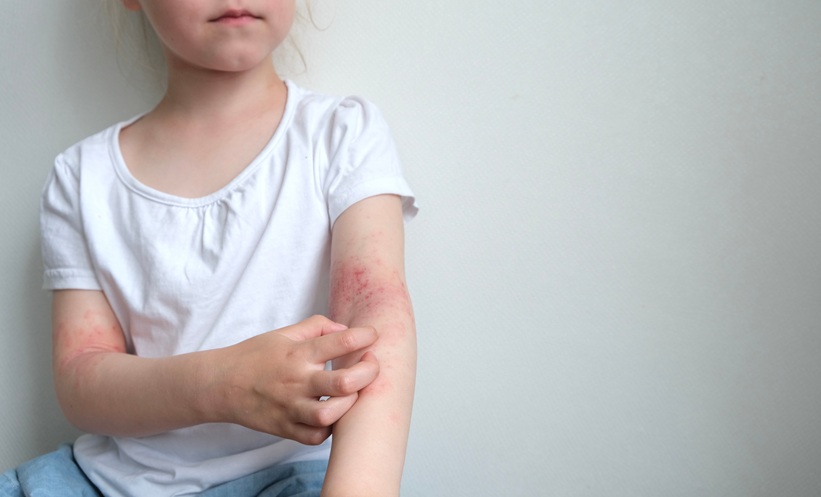
GUT-ASSOCIATED bacterial DNA detected on the skin of children with atopic dermatitis was linked to lower rates of later allergic sensitisation and allergic rhinitis, a longitudinal study has found.
The findings suggest that microbial patterns on skin without visible eczema may help explain differing allergic trajectories, although they do not establish that the bacteria directly prevent allergy.
Following Children With Eczema
Researchers used metagenomic shotgun sequencing to study the skin microbiome in the Mechanisms of Progression of Atopic Dermatitis to Asthma in Children cohort. The main analyses included 775 non-lesional skin samples from 328 children, collected across up to five annual visits.
Children were aged 3 years or younger at enrolment. Across analysed samples, ages ranged from infancy to just over 8 years. The team identified 436 bacterial species present in at least 5% of samples and grouped associated species into microbial clusters.
Gut-Associated Cluster Linked to Later Outcomes
One group, Cluster 5, contained 44 species typically associated with the gastrointestinal tract, including Bifidobacterium and Bacteroides species. Its abundance was lower in sensitised children and those classified as having a progressor phenotype, after adjustment for factors including age and maternal education.
Importantly, progression was defined using food allergy, allergic rhinitis or an elevated Paediatric Asthma Risk Score. It did not necessarily mean that a child had developed confirmed asthma.
In a further analysis of 122 children, Cluster 5 presence at ages 2–3 years was associated with lower rates of sensitisation (p=0.0014) and allergic rhinitis (p=0.0018) after age 5.
The association did not indicate uniformly better eczema outcomes. Cluster 5 presence was associated with higher later SCORAD scores, although scores remained within the mild eczema range.
Microbial Changes With Age
Skin bacterial diversity and richness declined with age. A repeated-sample analysis in 147 children supported a decline within individual children, rather than simply differences between younger and older participants.
Staphylococcus aureus was the only individual species associated with eczema severity, but its abundance did not differ between progressors and non-progressors. This distinction suggests that microbial patterns associated with skin severity may differ from those linked to broader allergic outcomes.
The study lacked healthy controls, examined bacteria rather than the full skin microbiome and included uneven follow-up. Detection of microbial DNA also does not establish that living gut bacteria permanently colonised the skin.
The findings provide a basis for investigating the gut–skin relationship in childhood allergy. Further studies must establish mechanisms and test interventions before these associations can support microbiome-based prevention or treatment.
Reference
Dahal A et al. Longitudinal skin bacterial cluster associated with protection against allergic co-morbidity in pediatric atopic dermatitis. Allergy. Published online 27 October 2026. doi:10.1111/all.70554.