THE Medical Dermatology Potpourri session at SCALE 2026, Nashville, Tennessee, USA, explored diverse topics in medical dermatology, providing scientific insights and clinical pearls for diagnosis and management, highlighted below.
Laser Therapy for Complex Dermatologic Cases
Lasers should be considered as a potential treatment modality for challenging medical cases. Picosecond lasers can be helpful in the treatment of topical-induced argyria and erythema dyschromium perstans (EDP), with shorter wavelengths (e.g. 532 nm) preferred for topical-induced argyria due to more superficial deposition in the upper dermis, while EDP warrants longer wavelengths like 1064 nm. Pulsed dye laser may be beneficial for ulcerated verrucous venous malformations.
Inflammaging and Senescence in Skin Aging
Inflammaging and senescence are interconnected hallmarks of aging that behave in a positive feedback loop, accelerating the skin aging process. There is now considerable research dedicated to developing strategies for controlling inflammaging and senescence, through lifestyle modifications (e.g. anti-inflammatory diet, aerobic exercise, resistance training, glycation control) and therapeutic targeting with both senotherapeutics and immunomodulators.
Recognizing Neurogenic Rosacea
While vasodilation and inflammation are well-known presentations of rosacea, neurogenic rosacea, which presents with stinging or burning, often with other neuropsychiatric comorbidities, is an under-recognized subtype. Neuropathic agents like gabapentin, or beta-blockers like carvedilol may improve both flushing and neurogenic symptoms.
New Acne Treatment Directions
New updates in acne expand the efficacy and safety of clascoterone cream 1% to skin of color, with significant improvement in severity and no adverse events after 16 weeks. Fatty acid synthase inhibitors, like denifanstat, disrupt key sebum production and inflammatory pathways and may be alternative options to existing systemic treatments (i.e. antibiotics, hormonal agents, and retinoids).
Photoprotection Across Skin Types
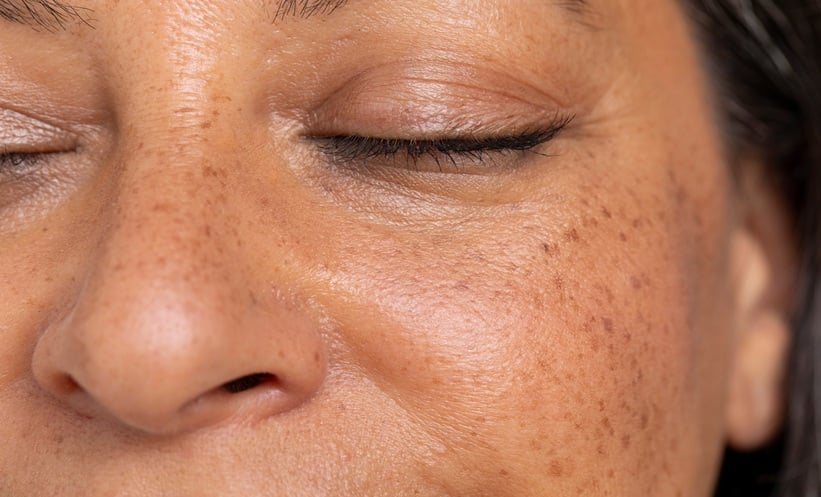
Photoprotection is critical in all skin types, with special considerations for skin of color. In darker skin types, while melanin provides endogenous protection against rhytid formation, photoaging is more likely to present with pigmented lesions and dyschromia. In these individuals, tinted sunscreen with protection against the visible light spectrum is important to reduce the risk of hyperpigmentation.
Reference
Helen He. Medical Derm Potpourri. SCALE 2026 Annual Meeting, Nashville, Tennessee, USA, May 13-17.
Featured Image: Cultura Creative on Adobe Stock.
- Author: