Abstract
Familial partial lipodystrophy Type 2 (FPLD-2) causes extreme insulin resistance with limited treatment options, particularly when metreleptin (recombinant human leptin analogue) is not effective. The authors report a woman in her late 30s with genetically confirmed FPLD-2 (c.1444C>T; p.Arg482Trp). She had persistent hyperglycaemia despite 280 units/day of insulin (degludec 60 units twice daily; aspart 60–40–60 units), and glucose time-in-range (3.9–10 mmol/L) was 8%. Treatment with tirzepatide was associated with marked improvement in glycaemic control and insulin requirements. Glycated haemoglobin improved from 98 mmol/mol to 49 mmol/mol, time-in-range increased to 86%, and total daily insulin dose fell to 50 units/day. Weight also decreased, and treatment was well tolerated with minimal side effects. This case highlights the potential role of dual incretin agonists as a therapeutic option in severe insulin resistance associated with FPLD-2.
Key Points
1.Consider familial partial lipodystrophy Type 2 in patients with severe insulin resistance, limb/gluteal lipoatrophy, and pseudoacromegalic features.2. Previous pancreatitis can deter glucagon-like peptide-1-based therapy, yet uncontrolled diabetes and dyslipidaemia themselves perpetuate pancreatitis risk, creating a therapeutic dilemma.
3. In this case of familial partial lipodystrophy Type 2, tirzepatide was associated with rapid, clinically meaningful improvements in glycaemia, insulin burden, and weight.
BACKGROUND
Familial partial lipodystrophy Type 2 (FPLD-2) caused by heterozygous LMNA variants, most commonly p.Arg482 substitutions, is a rare condition characterised by limb and gluteal lipoatrophy with relative facial and cervical adiposity, severe insulin resistance, dyslipidaemia, and fatty liver disease.1 A pseudoacromegalic appearance can accompany severe insulin resistance and FPLD, without growth-hormone excess.2,3
Conventional agents (metformin, thiazolidinediones) and high-dose insulin often fail to deliver durable glycaemic control.1,4,5 Metreleptin is beneficial in generalised lipodystrophy, but responses in partial forms are variable, and use may be limited by access and acceptability.4,6,7 Evidence for glucagon-like peptide-1 (GLP-1)-based therapies in lipodystrophy is limited: small case reports and a retrospective FPLD cohort series described benefit.5,8 Dual glucose-dependent insulinotropic polypeptide (GIP)/GLP-1 agonism has not been systematically studied in this population.
CASE PRESENTATION
A woman in her late 30s, with genetically confirmed FPLD-2 due to an LMNA pathogenic variant (p.Arg482Trp), was referred to the authors’ tertiary diabetes service for management of severe insulin resistance and difficult-to-control diabetes.
She first presented for medical attention around two decades earlier after an episode of acute pancreatitis associated with severe hypertriglyceridaemia. She was also diagnosed with Type 2 diabetes secondary to severe insulin resistance. Clinically, she had selective loss of subcutaneous fat from her limbs and gluteal region, with relative preservation in the face and trunk and a pseudoacromegalic facial appearance of prognathism and soft-tissue overgrowth.
At the time of diagnosis, plasma leptin was low (4.2 µg/L); a trial of metreleptin was undertaken. This produced little benefit, particularly for appetite and insulin sensitivity, and the patient declined subsequent offers to restart it, citing injection burden. Diabetes was managed over nearly two decades with escalating therapies. Metformin gave little benefit, while pioglitazone and empagliflozin were stopped due to intolerance (dizziness and headaches with both). Her insulin requirements rose steadily, reaching 280 units daily (insulin degludec 60 units twice daily plus insulin aspart 60–40–60 units with meals). Insulin pump therapy was attempted but abandoned owing to technical difficulties with the infusion sets and associated patient intolerance. The patient then preferred to continue with multiple daily insulin injections.
At the time of referral, HbA1c was 98 mmol/mol and glucose time-in-range (TIR: 3.9–10 mmol/L) was 8%. Additional complications included hepatic steatosis on imaging (Supplementary Table 1), microalbuminuria, and diabetic maculopathy. Lipids were controlled with diet and medical treatment (Table 1).
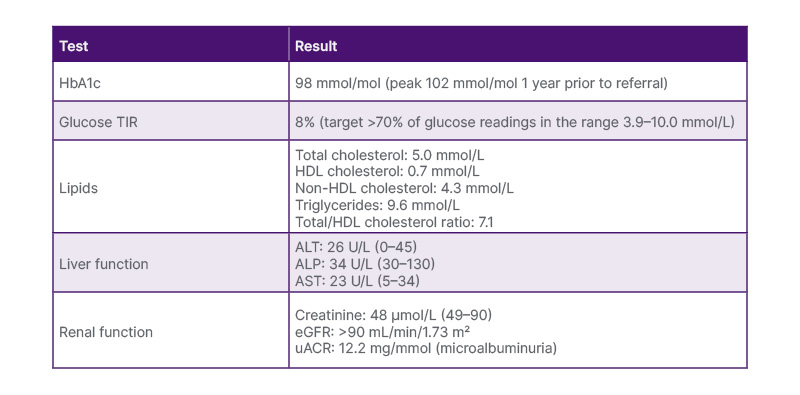
Table 1: Biochemistry results (at the time of initiation of tirzepatide).
ALP: alkaline phosphatase; ALT: alanine aminotransferase; AST: aspartate aminotransferase; eGFR: estimated
glomerular filtration rate; HDL: high-density lipoprotein; TIR: time-in-range; uACR: urine albumin-to-creatinine ratio.
DIFFERENTIAL DIAGNOSIS
The differential diagnosis included Type 2 diabetes; however, several features were inconsistent with this diagnosis. These included extreme insulin resistance relative to body mass, selective loss of subcutaneous fat from the limbs and gluteal region with relative preservation of facial and cervical fat, and longstanding hypertriglyceridaemia and hepatic steatosis. This characteristic fat-redistribution pattern prompted consideration of a lipodystrophy syndrome rather than isolated Type 2 diabetes.1,2,4
Autoimmune diabetes (Type 1 or latent autoimmune diabetes of adults) was considered. Circulating β-cell autoantibodies (glutamic acid decarboxylase and islet antigen-2 [IA-2]) were negative, and C-peptide levels were elevated, arguing against autoimmune β-cell failure and supporting a state of insulin resistance.2,4 Type 3c diabetes (pancreatogenic diabetes) was also considered in view of the history of pancreatitis. However, preserved C-peptide secretion and the absence of pancreatic atrophy on cross-sectional imaging (Supplementary Table 1) argued against this diagnosis.
Generalised lipodystrophy was unlikely because subcutaneous fat loss was partial and patterned (post-pubertal onset affecting limbs/gluteal areas) rather than near-total.1,4 Acquired partial lipodystrophy was also considered less likely: there was no cranio-caudal pattern of loss, no history to suggest complement-mediated disease, and the phenotype matched the classic Dunnigan pattern of familial partial lipodystrophy.1,2,4
Other secondary causes of severe insulin resistance (for example, acromegaly) were evaluated and excluded; insulin-like growth factor 1 (IGF-1) levels were normal.2
Taken together, extreme insulin resistance out of proportion to body mass, the stereotyped pattern of fat loss, longstanding dyslipidaemia/hepatic steatosis, and negative diabetes autoantibodies with preserved C-peptide supported the working diagnosis of FPLD-2, which was confirmed by genetic testing (Supplementary Table 2; heterozygous LMNA c.1444C>T, p.Arg482Trp).1,2,4
TREATMENT
By early 2025, the patient was started on tirzepatide (a dual GIP and GLP-1 receptor agonist) at a dose of 2.5 mg subcutaneously once weekly. The dose was increased to 5 mg after 4 weeks and further to 7.5 mg after 12 weeks, in line with usual clinical practice. Given her prior episode of hypertriglyceridaemia-associated acute pancreatitis, tirzepatide was commenced only after shared decision-making, with slow dose titration, pre-treatment pancreatic imaging (normal pancreas, no gallstones), and advice to stop treatment and seek urgent review should abdominal pain develop. Concomitant dietary advice for fat restriction (to limit hypertriglyceridaemia risk) and weight management was reinforced throughout.
No surgical or device-based interventions were undertaken during this period. Supportive care included ongoing structured diabetes education and dietary adherence.
OUTCOME AND FOLLOW-UP
The patient was followed up after initiation of tirzepatide.
At the first review (10 weeks after initiation), HbA1c had fallen from 98 mmol/mol to 65 mmol/mol. Continuous glucose monitoring showed a marked improvement in TIR from 8% to 86%, with no recorded hypoglycaemia. Insulin requirements reduced to 190 units per day (insulin degludec 40 units twice daily and insulin aspart 35–40–35 units). Body weight declined modestly, from 84.4 kg to 82.0 kg. The drug was well tolerated, with only transient constipation noted.
At the second review (21 weeks after initiation), further improvement was evident. HbA1c had fallen to 49 mmol/mol. Continuous glucose monitoring showed excellent control (TIR: 88%). In view of postprandial hypoglycaemia, prandial insulin was ceased altogether. Total insulin requirements fell further to 50 units per day. Body weight decreased to 72 kg, representing a 12 kg loss from baseline (Table 2 and Figure 1).
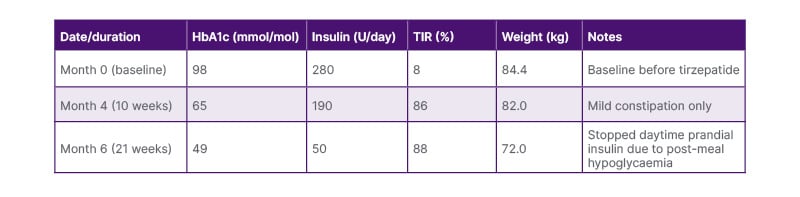
Table 2: Summary of metabolic improvements following tirzepatide initiation.
TIR: time-in-range; U: units.
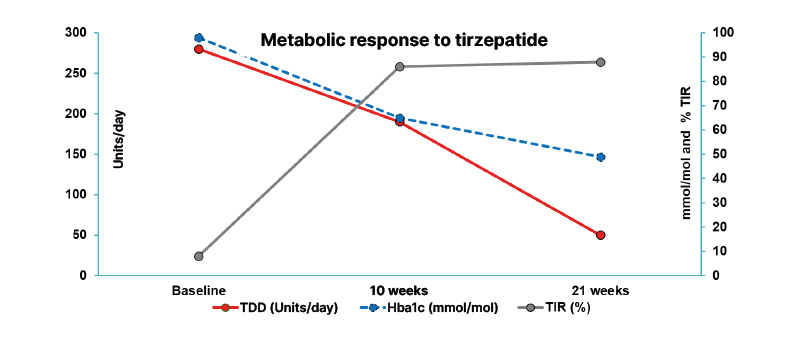
Figure 1: HbA1c, TIR, and total daily insulin dose following tirzepatide initiation.
TDD: total daily dose; TIR: time-in-range.
Throughout follow-up, there were no episodes of pancreatitis, no significant gastrointestinal side effects, and no hospital admissions. Triglyceride levels improved to 4 mmol/L, and liver function tests remained normal. Diabetic maculopathy remained unchanged, and urine albumin/creatinine ratio improved to 6.6 mg/mmol.
Ongoing follow-up is planned at 3–6-month intervals, including repeat biochemical monitoring (HbA1c, lipid profile, liver and renal function), retinal screening, and surveillance for lipodystrophy-related complications.
DISCUSSION
FPLD-2 due to LMNA variants is characterised by selective peripheral fat loss with relative cephalic/visceral fat preservation and severe metabolic complications including insulin-resistant diabetes, dyslipidaemia, and hepatic steatosis.1,2,4,7 Management is difficult: guidelines emphasise conventional agents (metformin, thiazolidinediones) and high-dose insulin, with metreleptin considered in specialised settings. Yet durable glycaemic control often remains suboptimal, and efficacy of metreleptin is variable.1,4,6,7
The patient first presented with a single episode of acute pancreatitis attributed to severe hypertriglyceridaemia. Given this history, there was initial hesitancy to initiate GLP-1 receptor agonist (RA) therapy, as GLP-1 RAs have historically been associated with concerns about the risk of pancreatitis.9 Standard prescribing guidance recommends caution and consideration of alternative therapies in patients with a history of pancreatitis, and to discontinue therapy if pancreatitis is suspected.10 Before initiation, the patient’s triglyceride levels were reassessed. Given that these were now significantly improved, and that there were no other identifiable risk factors for recurrent pancreatitis (e.g., gallstone disease, significant alcohol use, or metabolic derangements), after shared decision-making, a trial of GLP-1 RA therapy was commenced with close clinical and biochemical monitoring. More recent data have found no increased risk of pancreatitis with GLP-1 RA in diabetes.11,12
Evidence for GLP-1-based therapies in lipodystrophy is limited but emerging. A retrospective FPLD cohort treated with GLP-1 analogues reported improvements in HbA1c and weight, albeit with variable effects on insulin dose and no continuous glucose monitoring metrics reported.8 Two case reports in lipodystrophy similarly describe partial metabolic benefit with GLP-1 analogues.5 To the authors’ knowledge, use of the dual GIP/GLP-1 agonist tirzepatide in monogenic lipodystrophy has not been systematically reported. In their patient with long-standing, severe insulin resistance, tirzepatide was associated with rapid and substantial benefit.
Potential mechanisms include reduced appetite and improved postprandial glycaemic control, as well as broader effects on hepatic insulin sensitivity and nutrient partitioning;13 dual GIP/GLP-1 signalling could plausibly enhance these benefits compared with GLP-1 alone. Given that current guidance does not yet incorporate incretin therapy for FPLD,1,4,6 these findings highlight an important therapeutic gap and support prospective evaluation of GLP-1–based therapies in familial partial lipodystrophy.