Abstract
Background: Type 2 diabetes (T2D) is characterised by insulin resistance and progressive β-cell dysfunction. Although fruits are nutrient-dense, their role in diabetes management remains debated.
Objective: To evaluate short-term changes in fasting blood glucose, body weight, and self-reported tolerance and energy levels during a 7-day all-fruit-based diet (FBD) among adults with T2D already following a whole-food, plant-based diet.
Methods: Retrospective analysis of 39 adults (N=39) with T2D enrolled in an online diabetes-reversal coaching programme. Participants followed a 7-day FBD protocol (three fruit meals and one salad daily). Paired-sample tests assessed pre-post changes with 95% CIs.
Results: Fasting blood glucose decreased from 7.51±2.62 to 6.61±1.76 mmol/L (Δ: −0.89±1.17; p<0.001). Body weight decreased from 76.49±19.95 to 74.51±19.21 kg (Δ: −1.97±1.63; p<0.001). Reported adverse effects were mild and transient.
Conclusion: A 7-day FBD was safe, well-tolerated, and associated with statistically and clinically significant short-term improvements in glycaemic control and body weight. Larger controlled trials are warranted.
Key Points
1. Short-term fruit-based diets may significantly improve fasting blood glucose and body weight in adults with Type 2 diabetes.2. Short-term fruit-based diets may significantly improve fasting blood glucose and body weight in adults with Type 2 diabetes.
3.Findings suggest that whole fruits, when consumed without added fats or processed foods, may enhance insulin sensitivity safely.
INTRODUCTION
Type 2 diabetes (T2D) has become one of the leading global health challenges of the 21st century.1 The condition arises from insulin resistance, relative insulin deficiency, and progressive β-cell failure, resulting in persistent hyperglycaemia and numerous long-term complications. Modern lifestyle patterns, characterised by energy-dense diets, refined foods, and physical inactivity, have played a major role in the sharp rise in diabetes prevalence.2 Pharmacological therapies can effectively lower blood glucose levels but do not address the underlying metabolic dysfunction. Dietary and lifestyle interventions have therefore become a central focus in diabetes remission strategies. Whole-food, plant-based dietary patterns emphasising vegetables, fruits, legumes, and whole grains have demonstrated improvements in insulin sensitivity, body weight, and glycaemic control.3 Yet the role of fruit remains controversial because of its natural sugar content.4 The author hypothesised that an exclusively fruit-based, short-term dietary intervention would improve fasting glucose and body weight without adverse glycaemic excursions. This study investigated whether an exclusively fruit-based diet (FBD) could safely and effectively improve metabolic outcomes in people living with T2D.
METHODS
Study Design and Participants
The author conducted a retrospective cohort analysis of 39 adults with T2D participating in an online dietary intervention programme. Thirty-nine adults with clinically diagnosed T2D voluntarily participated through an online diabetes reversal coaching programme. All participants had already maintained a whole-food plant-based diet (WFPBD) for at least 6 months. The cohort included 25 males and 14 females, with a mean age of 45 years. Baseline mean body weight was 76.5 kg and mean fasting blood glucose (FBG) was 7.5 mmol/L. Before the intervention, participants followed a WFPBD rich in whole grains, legumes, fruits, and vegetables, while avoiding animal products, processed foods, alcohol, and stimulants. Average daily energy intake ranged from 1,500–2,100 kcal with high carbohydrate, moderate protein, and low-fat proportions, providing 55–75 g of dietary fibre.
Intervention Protocol
Participants transitioned from WFPBD to a strict FBD for 7 consecutive days. Participants ate three fruit mono-meals daily, each 600–900 g of a single fruit (e.g., apple, orange, papaya), and one mixed salad daily combining water-rich vegetables (e.g., cucumber, tomato, bell pepper) and leafy greens (lettuce). Estimated daily intake was 1,500–1,600 kcal, 300–400 g carbohydrates (≈75–80% energy), 15–25 g protein (≈5–10%), 15–25 g fat (≈10–15%), and 70–80 g fibre. Participants chose fruit varieties based on preference while maintaining the target quantities. Baseline assessments included demographic data, body weight, and FBG levels. Follow-up evaluations were conducted on Day 7 to record changes in body weight and FBG. Body weight and FBG measurements were self-reported by participants through the online coaching programme. Participants used their own weighing scales and blood glucose monitoring devices, and measurements were not independently verified under standardised clinical research conditions. Additionally, participants provided self-reported feedback on parameters such as energy levels, digestion, mood, satiety, and any adverse effects experienced during the intervention period.
Statistical Analysis
Continuous data are presented as mean±standard deviation. Within-subject changes from baseline to Day 7 were analysed with paired t-tests (two-tailed, α: 0.05). Mean differences, 95% CIs, and Cohen’s d (effect sizes) were calculated using complete-case data.
Ethics Statement
The 7-day fruit-based dietary intervention was conducted as part of an established online diabetes coaching programme and was not introduced specifically for research purposes. The present study involved a retrospective analysis of previously collected coaching records from participants located across multiple countries. No additional interventions or assessments were undertaken for the retrospective research analysis. Participant information was anonymised for analysis and reporting.
RESULTS
A total of 39 adults with T2D completed the intervention. Mean FBG decreased from 7.51±2.62 to 6.61±1.76 mmol/L (Δ: −0.89±1.17; 95% CI: −1.27–−0.52; p<0.001; Cohen’s d: 0.76). Mean body weight decreased from 76.49±19.95 to 74.51±19.21 kg (Δ: −1.97±1.63; 95% CI: −2.50–−1.45; p<0.001; Cohen’s d: 1.21; Table 1). Participants reported improved digestion, reduced constipation, lighter body feeling, better mood, and higher energy. No severe adverse events were reported; mild transient headache (n=3) and fatigue (n=2) resolved spontaneously.
As shown in Figure 1, both FBG and body weight decreased significantly within 7 days, with a mean reduction in FBG of 0.89±1.17 mmol/L (p<0.001) and a mean reduction in body weight of 1.97±1.63 kg (p<0.001).
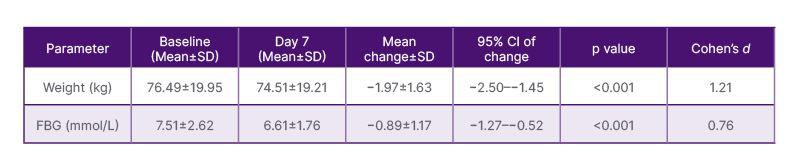
Table 1: Mean±SD changes in weight and fasting glucose after 7 days of fruit-based diet (N=39).
FBG: fasting blood glucose.
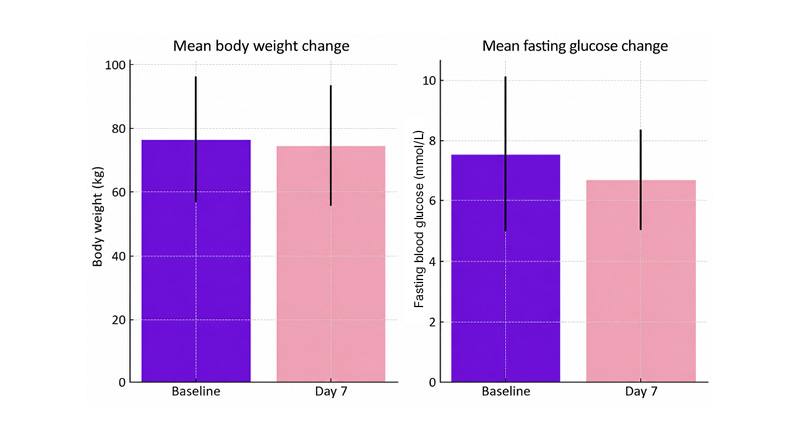
Figure 1: Changes in body weight and fasting gucose over 7 days.
Bars represent mean±SD; both parameters improved significantly (p<0.001, paired t-test).
DISCUSSION
The present study demonstrated that a short-term, fruit-centred dietary intervention can produce rapid and measurable improvements in both glycaemic control and body weight among adults with T2D. The absence of a control group makes it impossible to distinguish the effects of the fruit-based dietary composition from those of caloric restriction. The estimated daily energy intake of 1,500–1,600 kcal may have contributed to the observed reductions in FBG and body weight. Therefore, these improvements cannot be attributed exclusively to fruit consumption or its macronutrient composition. Future RCTs with energy-matched comparison groups are needed to determine the independent effects of the fruit-based dietary pattern.
Within only 7 days, mean FBG declined by approximately 0.9 mmol/L (12%), while body weight decreased by nearly 2 kg (2.6%). The mean weight reduction of 1.97 kg over 7 days should be interpreted cautiously, as rapid short-term weight loss may be substantially influenced by fluid shifts, glycogen depletion, and changes in gastrointestinal contents rather than reductions in adipose tissue alone. Since body composition, hydration status, and glycogen stores were not directly measured, the relative contribution of these factors to the observed weight loss cannot be determined. These changes are not only statistically significant but also clinically meaningful, corresponding to an estimated reduction in HbA1c of roughly 0.5 percentage points, similar to the effect typically achieved by first-line pharmacological agents such as metformin over several months.5 The large effect sizes (Cohen’s d: 0.76 for glucose and 1.21 for weight) highlight the magnitude of response despite the brief duration.
Mechanistic Interpretation
Prior evidence shows that low-fat, high-fibre diets can restore hepatic insulin responsiveness within days.6,7 In addition, the substantial increase in soluble fibre (≈ 70–80 g/day) might have slowed glucose absorption and blunted postprandial excursions, while the high-water content of fruits enhanced satiety and reduced total caloric intake. Collectively, these features create a physiological environment conducive to glucose disposal rather than storage.
Integration with Prior Research
The magnitude of change observed in this cohort parallels outcomes from other whole-food, plant-based interventions. Barnard et al.8 reported a 1.2 kg weight loss and 0.6 mmol/L fasting-glucose reduction in 14 days using a low-fat vegan diet, and Jenkins et al.4 demonstrated similar improvements using high-fruit, low-glycaemic-load diets rich in soluble fibre. The current results extend those findings by showing that even when fruits constitute the primary caloric source, without grains, legumes, or nuts, glycaemic stability can be maintained or improved. This challenges the long-held assumption that natural fruit sugars are inherently detrimental for people with T2D.
Physiological and Behavioural Correlates
Participants frequently reported feeling lighter, more energetic, and less inclined toward processed foods. Such subjective improvements may stem from gut–brain hormonal responses (e.g., increased glucagon-like peptide-1 [GLP-1] and peptide YY) triggered by fibre-rich, low-fat meals.9 Enhanced hydration from high-water fruits could also contribute to reduced osmotic stress and improved kidney glucose handling. Additionally, the simplified eating pattern of three mono-fruit meals plus one salad likely minimised decision fatigue, increasing adherence and metabolic consistency across the week.
Limitations and Future Directions
This investigation was retrospective, short-term, and lacked a control group, precluding causal inference. Self-reported dietary adherence and glucose data introduce possible bias, although the consistency of change across participants (85% improved FBG, 87% reduced weight) supports robustness. This study population represents a selected group of adults with T2D who were already accustomed to a WFPBD rather than the general population with T2D. Their previous dietary habits may have influenced their response to the 7-day fruit-based intervention. Future research should include RCTs comparing fruit-dominant diets with traditional plant-based or low-carbohydrate regimens, ideally incorporating continuous glucose monitoring and biomarkers of lipid metabolism and inflammation. Longitudinal assessment is also warranted to evaluate nutrient adequacy, microbiome adaptation, and the durability of glycaemic remission.10
Clinical Implications
Despite these limitations, the findings support the feasibility and metabolic safety of an FBD as a short-term therapeutic adjunct within plant-based nutrition frameworks. The observed improvements in FBG and body weight may reflect the combined effects of dietary composition, reduced caloric intake, and other metabolic factors. Due to the absence of a control group, the independent contribution of the fruit-based dietary pattern cannot be established. This perspective reframes fruit not as a glycaemic threat but as a potential accelerant of metabolic recovery in T2D.
CONCLUSION
A 7-day fruit-based dietary intervention appeared to be safe, well-tolerated, and associated with meaningful short-term reductions in FBG and body weight among adults with T2D. These preliminary findings challenge prevailing concerns regarding fruit intake in diabetes management and generate a hypothesis that whole fruits, when consumed abundantly and devoid of added fats or refined foods, may play a therapeutic role in improving metabolic outcomes. Larger, controlled studies are warranted to further explore these observations.