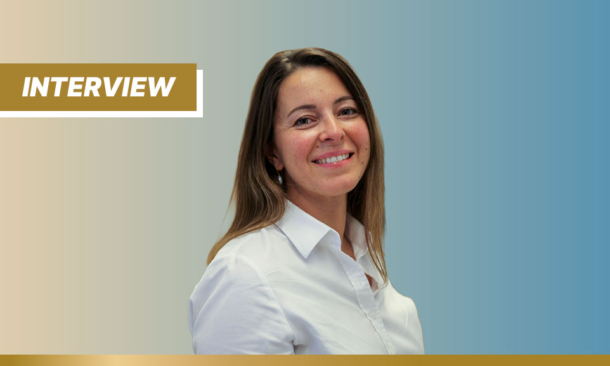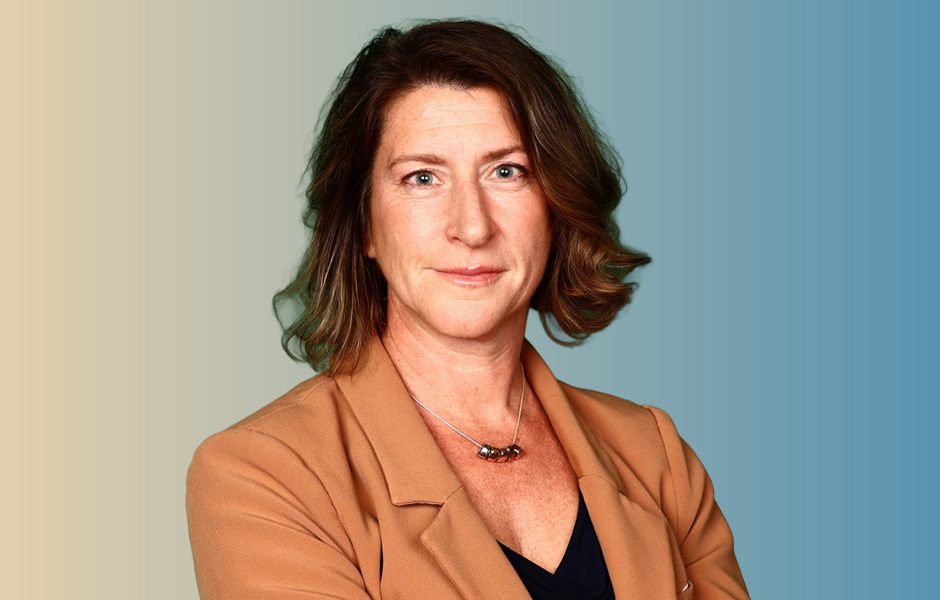
In our latest 5 minutes with, Kathryn (Kate) Nichol, Vice President, Medical Affairs, Neuromodulation, LivaNova, explores how dementia shaped her career, the promise of brain implants and why great leadership starts with compassion
Interview by Isabel O’Brien
Was there a moment that sparked your fascination with the brain, and how did it lead you to where you are today?
“Sparked” is the exact right word to use when thinking about the brain! My great grandmother was an amazing figure in my childhood. She was witty and fun, super-smart and a smart-alec. I knew she had been a schoolteacher in a one-room schoolhouse in North Dakota, but before that she was in the Women’s Air Corp in WWII.
When I was in high school, she developed Alzheimer’s and had a behavioural episode that was very out of character for her. I thought it was fascinating that an organic disorder could completely unravel a person and make them into someone entirely different. That was the beginning for me. That led me to my graduate work in dementia and eventually to industry, where I work to deliver meaningful therapies in neurology.
For those unfamiliar with neuromodulation, what makes this field so promising, and what possibilities for patients excite you most?
What makes the field of neuromodulation so exciting now is the advent of new software; artificial intelligence models that can take the complexity of brain disorders and work within that complexity to forecast seizures, or alert families and caregivers to impeding events. We are watching as several different companies race to develop implantable brain-computer interfaces (BCIs). It is only a matter of time until someone designs a non-invasive BCI. Neuromodulation holds great promise for chronic neurological conditions, as it has the potential to rewire the whole system.
From your experience with VNS, what is the biggest challenge between showing that a treatment works and getting it into routine clinical practice?
Your treatment has to be approachable. If clinicians don’t understand when to use it, how to use it, then they won’t use it. Vagus nerve stimulation (VNS) has been on the market for decades with better outcomes than most pharmacological products I have brought to market. Yet, it is one of the least utilised therapeutic options in refractory epilepsy. I joined LivaNova to share evidence and help put VNS in the treatment pathway where it belongs.
You’ve previously written about “leading with love”. How can leaders balance compassion with the demands of delivering results?
You can’t deliver results long term without compassion for the people you lead. Individuals work hardest when they are happy and feel fulfilled by the work. You have to understand them in order to drive that kind of fulfilment. Compassion also drives loyalty. If you have hired good people and you keep them excited about their work, you WILL deliver results year after year.
If your life were a novel, what would its title be, and why?
“I should’ve taken that left turn at Albuquerque…” Why? Because I am a huge Bugs Bunny fan! And because my life has been filled with all kinds of twists and turns. Some were planned and others just happened. Every path led to a new adventure, new learning, valuable experience and sometimes an opportunity for grace. I am filled with innate optimism and a belief that it will all work out in the end, so if it isn’t working out, then this must not be the end.
Guest bio
Kate Nichol is a medical affairs leader with more than 15 years of experience in neurology and psychiatry, with deep expertise in drug-resistant epilepsy. At LivaNova, she leads the US and Global Medical Affairs teams for VNS Therapy, focusing on evidence generation, scientific exchange, and expanding the role of neuromodulation in patient care. She is a co-author of the CORE-VNS 36-month outcomes study.
Before LivaNova, Kate was the second Medical Affairs hire at Greenwich Biosciences (GW Pharmaceuticals). She helped grow the function to about 30 people. Earlier, she built the epilepsy MSL team at Upsher-Smith and held Medical Affairs leadership roles at Lundbeck.
Kate holds a PhD in Physiology from Texas A&M University, an MS in Neurobiology from UC Irvine, and an Executive MBA.