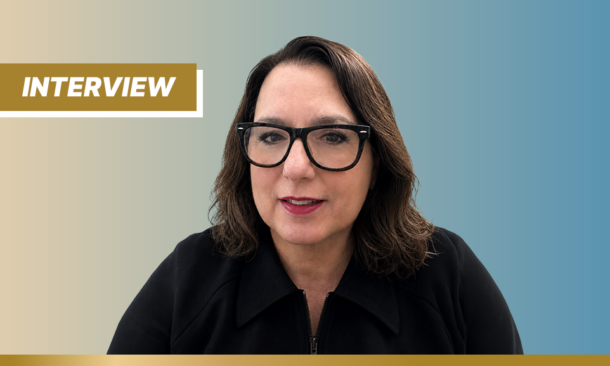
In our latest 5 minutes with, Tia Vincent, Vice President, Global Medical Lead, Vaccines, GSK, talks vaccines, the shifting information landscape and why pharma must meet people where they are without losing sight of the science
Interview by Isabel O’Brien
What motivated you to pursue a career in pharma, and what led you specifically to the vaccines field?
I’ve always been very passionate about health, and I started my career as a scientist. But I spent a lot of time reflecting on how distant I was from being able to make a health impact, and that’s how my curiosity about entering pharma came about.
From there, I discovered that I had a real pull towards areas that made a big public health impact at scale, and that’s how I developed my interest in infectious diseases. Then I realised that the thing I’m most passionate about is prevention, and there’s no better place to make an impact in that space than in the field of vaccines. That was the trail of thought that brought me to where I am today.
As the way people find and engage with healthcare information evolves, how is that making your role more challenging?
The landscape is changing in terms of where people access information, and with that comes a challenge. I have two young children who think about social media as a source of information, and that’s reflective of the wider shift.
Traditionally, pharma focused communication of science in scientific forums – at conferences and in peer-reviewed journals. But the reality is that doesn’t translate to where the audience is accessing information, which is very much within the social media context and AI.
In a survey we conducted ahead of World Meningitis Day, around 9 in 10 people, whether parents or young people, said they trust healthcare professionals as a source of health information. But the fact that a quarter of young people access social media as their source of truth is a real challenge for pharma.
What role can pharma play in helping people navigate an increasingly complex vaccine information landscape?
The number one thing pharma can do is continue putting an emphasis on transparency – being very credible and transparent about information that relates to a disease area or medicines and vaccines that they produce, because that’s the way to build trust.
The second thing is supporting the development of clear, accessible educational resources and working alongside patient organisations to help make complex health information easier to understand. The challenge is communicating evidence-based information in a way that is relevant, engaging and easy to navigate, while ensuring people have the information they need to make informed decisions.
Looking ahead, what do you think could be the wider consequences of this changing information landscape for vaccination and public health?
Knowledge makes you equipped to make informed decisions moving forward. The consequence of being misinformed in the context of meningitis is that you might not be aware of the symptoms to look out for that enable you to act fast.
If your information comes from sources that are anecdotal rather than scientifically evidence-based, you may be less well-equipped to make informed decisions about preventing disease for yourself, your family or the broader population.
In the context of public health, there’s no greater example of what misinformation can do than the resurgence of diseases that we had managed to eliminate. As a mother, as a person, as a pharma employee, I think that’s the greatest tragedy.
I would love to see more responsible use and regulation of AI and social media, particularly around algorithms that enable sensationalism to be propagated and robust, evidence-based information not to be propagated.
What are you most passionate about outside of work, and how would your closest friends describe you?
I’m absolutely passionate about my family, and particularly my two young children. Part of my passion for healthcare is also my passion for them, which is good health. I want to be able to look back and say I’ve made the choices that are the right ones for them, that have kept them healthy and happy, and there’s no greater success than to think that you’ve achieved that.
In terms of how my closest friends would describe me, I think number one would be curious, or even nosy. I’ve always had an insatiable curiosity to understand how things work, both in the scientific context and the human context. Empathic, because I genuinely care about people’s health. And resilient, because I don’t necessarily see things as obstacles. I try to see challenges as pieces of a puzzle that I need to rearrange to find the path forward.
Guest bio
Tia Vincent is Vice President and Global Medical Lead for GSK’s Neisseria vaccines portfolio, leading global medical strategy for in-market and pipeline vaccines. She has nearly 20 years of medical affairs experience in infectious diseases, including prior leadership roles in HIV at ViiV Healthcare, and expertise in evidence generation, public policy, and global stakeholder engagement including working very closely with patient organisations and advocacy groups