Key Summary:
- MDS AML and bone marrow failure risk increased substantially with age in SDS.
- Two-year survival after HCT for high-risk features was approximately 82%.
- Two-year survival after HCT for high-risk features was approximately 82%.
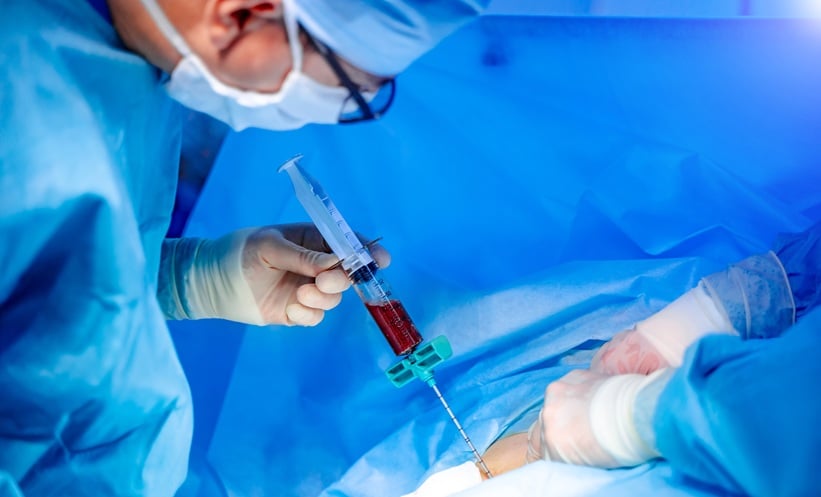
EARLIER haematopoietic cell transplantation (HCT) could improve survival among patients with Shwachman-Diamond syndrome (SDS) who develop features indicating a high risk of myeloid malignancy, according to an international study.
Researchers found that the cumulative risks of myelodysplastic syndrome (MDS), acute myeloid leukaemia (AML), and bone marrow failure increased substantially with age, while outcomes following transplantation appeared better when HCT was performed before malignant transformation.
SDS is a rare inherited bone marrow failure syndrome associated with haematological abnormalities and an increased risk of myeloid malignancies.
For the study, the international research team assembled a large cohort of patients with SDS, examining haematological complications and long-term outcomes from infancy through adulthood.
More than 90% of children with SDS survived beyond 20 years of age, but long-term survival declined substantially thereafter.
By the age of 50 years, the cumulative risk of MDS, AML, or bone marrow failure approached 78%, highlighting the progressive haematological burden associated with the condition.
Researchers also examined whether identifying high-risk features before overt malignancy could provide an opportunity for earlier intervention.
High-risk features included the emergence of abnormal clones of mutated bone marrow cells and evidence of progressive dysplasia.
Among 24 patients who underwent HCT after developing high-risk features but before overt malignancy, approximately 82% were alive two years after transplantation.
In comparison, two-year survival was approximately 55% among patients transplanted after MDS had developed and 36% among those transplanted following AML.
The findings suggest that waiting for malignant transformation before proceeding to transplantation may be associated with poorer outcomes.
The researchers propose that close haematological and molecular surveillance could help identify patients approaching malignant transformation and provide an opportunity for HCT at an earlier stage.
Increasing access to genetic testing may also lead to more people with SDS being diagnosed before severe haematological complications develop.
However, HCT carries substantial risks and the findings do not mean that all patients with SDS should undergo transplantation at an early age. Further research is required to establish which combinations of molecular and clinical features most reliably identify patients who would benefit from pre-emptive treatment.
Access to transplantation may also be limited in lower-resource settings.
The findings support continued surveillance throughout the lifespan and further evaluation of risk-adapted HCT strategies aimed at preventing progression to MDS and AML.
Reference
Myers KC et al. Cumulative hematologic morbidity and outcomes in Shwachman-Diamond syndrome. N Engl J Med. 2026. doi:10.1056/NEJMc2605001.
Featured image: Vadim on AdobeStock
Vadim
Each article is made available under the terms of the Creative Commons Attribution-Non Commercial 4.0 License.