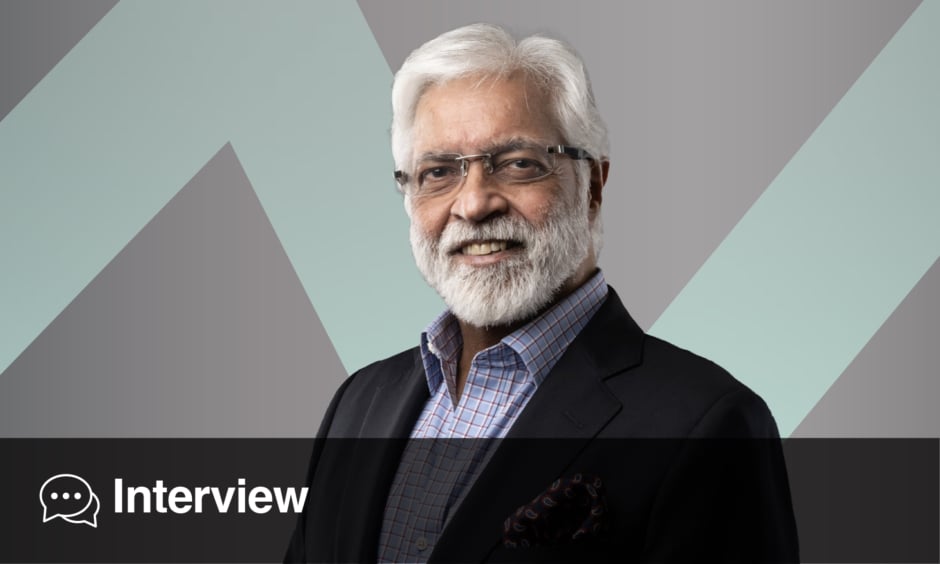
Ashok Seth: Chairman, Fortis Escorts Heart Institute & Research Centre, New Delhi, India
Citation: EMJ Int Cardiol. 2026;14[1]:49-54. https://doi.org/10.33590/emjintcardiol/6Q2QE8SX

What first inspired you to pursue medicine and cardiology, and how did your training at Jawaharlal Nehru Medical College, Aligarh, India, and the University of Birmingham, UK, shape your clinical philosophy and approach to innovation?
I entered cardiology almost by default. To be frank, I had initially wanted to pursue gastroenterology. When I came to the UK in 1981, my first goal was to obtain Membership of the Royal College of Physicians, a qualification that provides excellent training and is widely respected, shaping you into a strong physician.
At the time, gastroenterology was far more procedurally advanced, with endoscopy, colonoscopy, and endoscopic retrograde cholangiopancreatography. Cardiology, by contrast, was largely ‘stethoscope cardiology’. Echocardiography and angiography were still primitive, and even the management of acute myocardial infarction in the early 1980s had not yet evolved; trials with streptokinase were still ongoing. Gastroenterology was simply more exciting.
I had hoped to secure a super-specialty post in gastroenterology, particularly to train in endoscopic retrograde cholangiopancreatography, as I was already performing a significant number of endoscopies even in acute gastrointestinal bleeders. Unfortunately, I did not get the position. Instead, a role opened in cardiology at the same university teaching hospital. With limited options, I decided to take it.
Within 6 months, University Hospital Birmingham launched its angioplasty programme, the third centre in the UK to do so. I found myself at the very beginning of the balloon angioplasty era, initially assisting former consultant, Man Fai Shiu, who was himself advancing procedural boundaries. He became an exceptional mentor, and as his first assistant, I was drawn into what quickly became a transformative period.
Cardiology was no longer confined to the stethoscope; it was entering a new, interventional era. Despite the crude technology, there was a strong sense that this was a defining moment, a new dimension in the treatment of cardiac disease. That early exposure to innovation shaped my entire career with conviction and competence.
After returning to India, you helped build the invasive and interventional cardiology programme at the Escorts Heart Institute, New Delhi, India, now part of Fortis Healthcare. What were the key challenges of introducing advanced interventional techniques in that environment?
After nearly a decade abroad, I returned to India in 1988–89, primarily because of my mother’s ill health. Communication at the time was extremely limited, one phone call a week that was often difficult to arrange, so being far away during a family illness was deeply stressful.
In retrospect, it was also the right time professionally. Interventional cardiology in India had barely begun. There were perhaps six or seven of us performing balloon angioplasty. This created both an opportunity and a responsibility not only to establish programmes, but to help build an entirely new field.
Coronary bypass surgery was already well established, and many patients travelled abroad for it. We aimed to bring high-quality cardiac care to India, including interventional approaches that were rapidly advancing in the West.
Balloon angioplasty itself was evolving, but its limitations were clear. In the West, new devices were emerging to address these challenges: rotational and directional atherectomy, extraction catheters, and others. As we recognised the shortcomings of balloon angioplasty, I made it a priority in the early 90s to adopt these technologies and introduce them in India and the wider Asia-Pacific region.
At the time, India was leading interventional cardiology in Asia. However, the procedure was far from ideal. Around 5% of patients experienced acute vessel closure within 24–48 hours, sometimes on the table. Myocardial infarction occurred in roughly 3%, and mortality was about 1%. Even when successful, restenosis rates approached 50% within 6 months.
By today’s standards, such outcomes would be unacceptable. Yet, that was the state of the art.
It was a challenging environment. Cardiac surgeons were essential partners, often on standby with a vacant operating theatre to manage complications immediately. Despite the risks, we believed strongly in the potential of a non-surgical approach to coronary disease. The key was to improve both our skills and our tools. This conviction was our guiding path.
I began to push boundaries, taking on increasingly complex cases and adopting new devices to overcome the limitations of balloon angioplasty. Regulatory frameworks for devices were still evolving, which allowed me to introduce innovations earlier than in many other regions.
This positioned me to train not only Indian cardiologists but colleagues across Asia, in Indonesia, Malaysia, Thailand, Singapore, Bangladesh, Sri Lanka, and even China in the late 1980s. In many ways, we helped disseminate these technologies throughout the region.
You introduced several firsts in Asia-Pacific interventional cardiology, including new devices and procedural techniques. How do you decide when to be an early adopter of innovation, and what safeguards do you use to balance technological advancement with rigorous evidence and patient safety?
Introducing new technologies, often for the first time in the Asia-Pacific region, and sometimes globally, requires a clear philosophy. Over the years, I have been involved in several first-in-human procedures, including orbital atherectomy, the coronary sinus reducer, and early transcatheter valve work such as the first CoreValve™ (acquired by Medtronic, Minneapolis, Minnesota, USA) implantation in the world in a patient with aortic regurgitation as part of a first-in-human study in 2004. I was also the first to introduce a microaxial flow pump (Impella, Abiomed, Danvers, Massachusetts, USA) in the Asia-Pacific region in 2007, and to do a live demonstration at the Transcatheter Cardiovascular Therapeutics® (TCT®) meeting 2007.
Our decision to adopt new technologies was guided by three principles.
First, many innovations were designed to address the limitations of existing treatments. Even before large trials were completed, experienced clinicians could identify where current tools were inadequate and where new approaches might improve outcomes.
Second, new technologies expanded treatment options for patients who were not candidates for surgery or conventional interventions, particularly those with complex diseases.
Third, and most important, was the responsibility to the patient. My guiding principle has always been: would I offer this to my own family? If the answer is yes, then it is reasonable to consider for my patients, provided it is done with the highest level of expertise and care.
Innovation requires three elements: good intent, sound judgement, and technical expertise. Safety must always come first. Evidence, in the form of RCTs, follows over time, but careful, judicious use can ensure safety from the outset.
Having performed tens of thousands of angioplasties and angiograms, is there a particular case that altered your understanding of coronary disease or influenced the way you approach complex interventions today?
Interventional cardiology is a continuous learning process. We learn from every patient, from our peers, and through constant reflection, reviewing cases, analysing outcomes, and refining techniques. Teaching is also integral to that process.
Over the years, I have directly trained more than 500 interventional cardiologists in India, as well as many from neighbouring countries and across the world. Indirectly, perhaps three generations have learned from me through live case demonstrations and conferences, and in catheterisation laboratory (cath lab) teaching programmes. I am privileged to have trained more than 50 interventional cardiologists from Bangladesh as my fellows over the last 25 years.
Experience is not just about improving success rates; it is about preventing complications. With time, this becomes almost instinctive. The responses become reflexive.
Two cases, however, stand out.
The first was the implantation of the first CoreValve in the world in a patient with aortic regurgitation in 2004. Watching severe regurgitation disappear instantly in the cath lab, reduced to zero, felt almost miraculous. It was a moment I will never forget.
The second was performing a complex angioplasty on my own father at the age of 86 years. I treated critical lesions with rotational atherectomy and stents but deliberately chose not to pursue complete revascularisation, recognising the risks of doing too much.
He went on to live well, reaching the age of 102 years, without myocardial infarction, remaining active and independent. That experience profoundly shaped my thinking.
It reinforced that in stable coronary artery disease, medical therapy can be as important as intervention. Not every lesion requires a stent simply because it is visible. The goal is not to treat images, but to treat patients, balancing intervention with optimal medical therapy to achieve the best long-term outcomes.
Which areas of interventional cardiology, in your opinion, still lack sufficient evidence or consensus, and where do you believe the research community should prioritise its efforts in the coming decade?
I think there are still major gaps in our knowledge. Part of the reason is that by the time pivotal randomised trials are completed, the technology has already moved on. That is happening more and more rapidly now than it did in the past, which is understandable: as science, techniques, and knowledge advance, innovation and iteration also accelerate.
In interventional cardiology, one issue is very clear. Metallic stents have progressed enormously in terms of safety, and we now practice a far more precise form of medicine, guided by imaging and physiological assessment before and during procedures. We have better tools, better technology, and better outcomes. But even so, metal in the coronary arteries is not the ideal answer. Science has to move towards treatments that are temporary.
That is why the bioresorbable scaffold story remains so compelling. I implanted the first scaffold in the Asia-Pacific region in 2010, and also demonstrated the ‘bifurcation two-scaffold strategy’ at the TCT meeting in 2014. I was one of the strongest proponents of scaffolds, and my own results with them were excellent because I had learned and mastered the technique of implantation. I was also the principal investigator for the novel, second-generation, thinner 100 µm scaffold. Although that field has had setbacks, I believe it will return in some form, because the idea of leaving nothing permanent behind and allowing the vessel to be restored over time is still very attractive. Turning coronary arteries into metal tubes cannot be the final answer, especially when event rates continue year after year.
There is also still much to be done in acute coronary syndromes (ACS). Predicting ACS, managing it better, and developing better drugs remain major challenges. Acute myocardial infarction is still one of the biggest killers, and ACS continues to have poor outcomes despite all the therapies we have. If we could develop sensors, perhaps even implantable ones, that could detect changes in the biological environment before an event occurs and warn us that plaque instability or thrombosis is likely, then we could intervene earlier and more effectively.
Diabetes is another major area. The world is suffering from diabetes, and we certainly are. Coronary artery disease in patients who are diabetic, whether treated by intervention or surgery, remains a huge challenge. We still need therapies that are more robust, more durable, and more effective, with the lowest possible event rates. The answer may well be a combination of approaches.
Structural heart disease is another field that is advancing rapidly. We have already seen how devices can transform treatment in a minimally invasive way, making procedures safer and more effective. But there are other valves and other structural problems that still need better solutions, and I think that area will expand significantly.
Bleeding and antiplatelet therapy also remain critical issues. Improvements in antiplatelet therapy have been central to better percutaneous coronary intervention (PCI) outcomes. We now have better tools, better technology, and more precision through imaging and physiology, all of which have improved long-term results. But balancing efficacy against bleeding risk remains a major challenge. We need antiplatelet therapies that are both safer and effective.
Finally, precision medicine with genomics could influence not just treatment, but also the prevention of life-threatening heart diseases.
Those, to me, are some of the key priorities for the coming years in interventional cardiology.
Advanced cardiac interventions can be lifesaving, but they often remain inaccessible to many patients. What strategies or policy approaches could better balance cutting-edge technology with equitable access, particularly in resource-limited settings?
That is a very important question, not just for India or the Asia-Pacific region, but for the entire world. Resource-limited settings exist in every country. In India, many patients pay out of pocket. In Europe, governments often pay. In the USA, insurers pay. But no system has unlimited resources.
In practical terms, complex angioplasty has become more expensive. Precision-based PCI, using intravascular imaging, physiology, calcium-modification tools, thrombus extraction devices, better stent platforms, percutaneous mechanical circulatory support, and other advanced technologies, can improve outcomes, but all of it comes at a cost.
So how do we balance this in settings where resources are limited? In many places, intravascular ultrasound or optical coherence tomography may not even be available. Even when these tools are available, they may not be reimbursed. If they are not reimbursed, then the patient pays, and in countries like India, that often means a direct out-of-pocket expense.
There is another important dimension: in many settings, bypass surgery may actually be less expensive and more durable than a complex multivessel PCI. That is certainly true in India. So, the answer has to be a practical, value-based approach.
For example, if a patient with triple-vessel disease and complex anatomy is paying from his own pocket and has travelled from a remote town a thousand miles away, where medical facilities are limited, I may well recommend bypass surgery. It may be less expensive, more durable, and less likely to leave him facing a repeat emergency in a place without access to a cath lab.
Similarly, in some patients with multivessel disease, we may choose partial revascularisation combined with aggressive medical therapy, leaving borderline lesions alone, reducing the amount of metal implanted, and treating the rest medically. In others, bypass surgery may offer the best long-term value. The important thing is to offer the patient value-based options: medical therapy, PCI, or surgery, selected according to durability, safety, cost, and access to follow-up care.
That same principle also applies to the use of precision tools. At my own tertiary centre, we use all available devices and technologies. But I also have to think about the wider reality: India has around 2,800 cath labs, and most interventional cardiologists do not have routine access to imaging, optical coherence tomography, or physiology. So, when I teach, whether at courses or large meetings, I have to explain how to optimise outcomes with angiography guidance alone, and which cases can safely be done that way.
At the same time, I also have to define the limits. There are some patients and some lesion subsets where, if you do not have imaging, you should not proceed. You should refer them to a centre that does. So, part of training in a resource-limited environment is not only teaching what to do, but also what not to do, and when to refer.
The final piece is indigenous research, development, and manufacturing. In India, this has significantly reduced costs over the past 2 decades. Many stents and structural devices are now developed and manufactured locally. I have served as principal investigator for much of the indigenous technology developed in PCI and structural heart therapy, including an Indian transcatheter heart valve that is now regularly used in Europe.
All of this technology had to go through rigorous evaluation, but it has helped lower costs and expand access. That is crucial. Technology has to be balanced with what can be developed and sustained within our own country.
For me, this is the essence of value-based medicine: it must still be quality medicine. Lower cost should never mean compromised outcomes. A patient should not come back because the initial treatment was inadequate. If the patient stays out of hospital and does well, then we know we have delivered value.
In the end, I come back to a very simple principle: treat every patient as if they were your own relative. There will always be gaps in knowledge, in technology, and in what a patient can afford. The task is to balance medical therapy, PCI, and surgery in the most appropriate way, to achieve the safest, most durable result at the lowest reasonable cost. That is how I think these decisions should be made.
Looking ahead, which developments, such as bioresorbable scaffolds, digital health, or AI, do you believe will most transform interventional cardiology, and how should clinicians prepare for these changes?
With bioresorbable scaffolds, and also with drug-coated balloons, the central concept is the same: ‘leave nothing behind’.
If coronary artery disease can be treated without leaving a permanent foreign body in the vessel, that is a major step forward. Whether that is achieved through bioresorbable scaffolds, drug-coated balloons, or other future technologies, the principle is very important. Treating the lesion and restoring the artery without implanting something permanent is where the field should be heading.
Digital health is another hugely important area. We learned a great deal during COVID-19, especially about the possibilities of remote monitoring, digital tools, and self-assessment. These become even more important in large countries where affordability, accessibility, and healthcare infrastructure vary enormously.
In our country, as care extends into smaller towns and rural areas, digital health will become increasingly central. AI will also play a major role. A simple example is ECG interpretation. In remote areas, patients with chest pain and acute myocardial infarction can now have ECGs recorded using a phone. That is already happening.
India is one of the most digitally connected countries in the world, with vast mobile phone penetration. Conditions such as diabetes, hypertension, and coronary artery disease are widespread, and digital health offers a powerful way to monitor, triage, and manage this burden. AI can process large volumes of information, filter what is normal, identify what needs specialist review, and guide what action should be taken. Our prime minister has already emphasised and promoted the National Digital Health Mission infrastructure.
If thousands of ECGs are being performed in remote villages, it is simply not possible for every tracing to be reviewed immediately by a cardiologist. But AI can screen them, identify the small number that need urgent attention, and help direct treatment rapidly.
So, I think AI will become a major partner in delivering high-quality care at a fraction of the cost, and in a much shorter timeframe. It will not replace the specialist, but it will become an essential assistant to the doctor, to the specialist, and, ultimately, to the patient.
What guidance would you offer young cardiologists entering interventional practice today, and how would you like your contribution to cardiology and patient care to be remembered?
I have often thought about that. How would I like my contribution to cardiology and patient care to be remembered?
I do not want to be remembered simply as the person who did the greatest number of complex cases. I do not want people to say, “What skills?” or “Look at how many teaching programmes he ran,” or “Look at the papers he wrote.” I would simply like to be remembered as a good doctor and a good man. At the end of the day, that is enough. That is what we owe to our patients.
When I think about what guidance I would give to a young interventional cardiologist, it comes down to what I call the five Cs.
The first is care. That is what we are here to give our patients. It is an ethos; it is the foundation.
The second is commitment. Commitment is why we became doctors, why we went into cardiology, and why we chose interventional cardiology. We have committed ourselves to the care of patients, and that commitment has to remain absolute.
The third is compassion. When a patient walks in, they should feel that they are being treated like family. Medical science is still incomplete. There are many grey areas and relatively few black-and-white answers. Guidelines help us navigate those grey areas, but they do not replace judgment. The way we make those decisions properly is to ask ourselves: if this were me, or my relative, what would I want done?
If a patient has heavily calcified proximal left anterior descending artery disease, for example, an interventional cardiologist may immediately think of multiple tools, a long stent, and a complex PCI strategy. But one also has to ask: would a surgical graft, perhaps a left internal mammary artery graft to the left anterior descending artery and diagonal, offer a more durable result? The moment you ask what you would choose for yourself or your family, your judgment changes. You begin to think not only as an interventional cardiologist, but as a doctor trying to make the right decision.
The fourth C is competence. If I am going to treat someone as I would treat my own father, then I have to keep myself at the highest level. I must stay updated, maintain my skills, and ensure that what I offer is safe and excellent. Competence is an ethical obligation.
And the fifth, and perhaps most important, is conscience. Conscience means ethics. We must practise ethical medicine. We must do for the patient what we would do for ourselves. If we hold on to conscience, then the rest follows.
Those are the five Cs I would want every young cardiologist to absorb: care, commitment, compassion, competence, and conscience. If you live by those, you will do the best for your patients. In the end, it is not only the hands, or the technical skill, or even the knowledge. It is the person behind them that matters.