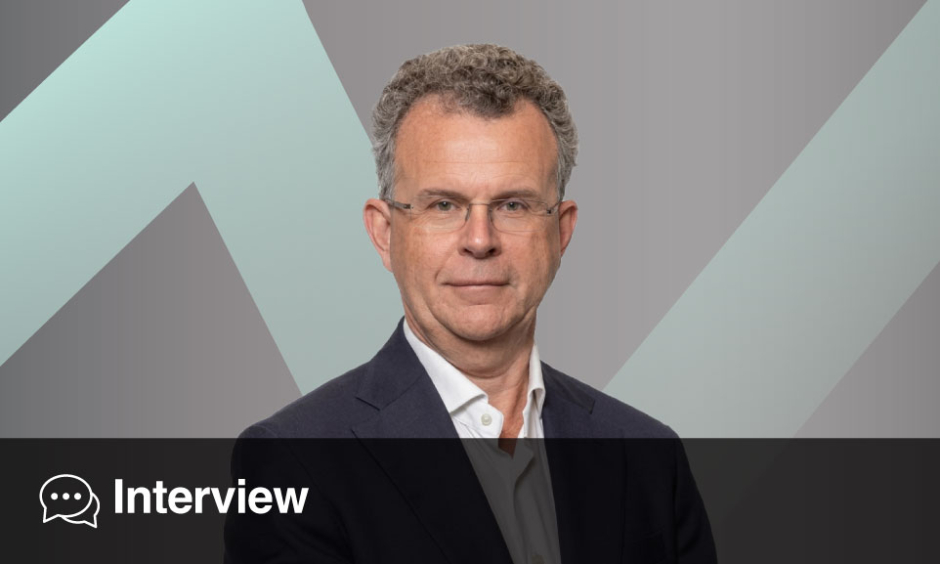
Robert Kelly | Associate Professor of Clinical Medicine, University College Dublin; Consultant Cardiologist; Lifestyle Medicine Physician; Medical Director for Lifestyle Health and Wellbeing, Beacon Hospital, Dublin, Ireland
Citation: EMJ Int Cardiol. 2026;14[1]:59-64. https://doi.org/10.33590/emjintcardiol/970TBR76

What first drew you toward interventional cardiology, and how did your perspective on cardiovascular disease evolve as you progressed through training?
I trained in cardiology in Ireland in the 1990s. I went through the Irish training scheme and was very engaged in the idea of looking after patients acutely. I was particularly drawn to the immediacy of the work, patients presenting with conditions like heart attacks, receiving treatment such as primary angioplasty, moving through coronary care, and being discharged within a matter of days. That fast-paced, intervention-focused environment was very appealing to me at the time, especially as I thought I wouldn’t have to spend all my hours in the outpatient department seeing patients.
I didn’t realise that my career would evolve in such a way that I would travel abroad, spend a lot of time doing interventional cardiology in the USA, and do a lot of other work. I came back to work as an independent operator in the private health system in Ireland.
The nature of that is that you don’t have a steady flow of acute coronary interventions through the system, which means that you would have to find your own patients by seeing patients. So ultimately, my whole ambition in the first instance flipped, and I ended up doing a lot of outpatient care, seeing many patients, to build my own interventional practice.
Many clinicians specialise in either procedural cardiology or preventative medicine. What motivated you to pursue both interventional cardiology and lifestyle medicine, and do you view these as complementary disciplines or distinct paradigms that require careful boundary management?
My approach when it comes to cardiology has always been about treating the patient. It really doesn’t matter what’s wrong with them, whether they need a stent or need to stop smoking; ideally, they may need both.
In clinical practice, I work closely with patients, and shared decisions guide both investigations and treatment.
Patients come back for follow-up care, and some may return with their same original complaint despite stents and medications. Not surprisingly, many patients don’t follow the behavioural changes required as part of their care. Many assume that having a stent solves the problem and that means they go back to their lives and old ways.
Seeing this repeatedly made me feel there must be a better way to treat patients beyond just prescribing tablets. Data from EUROASPIRE studies showed how many patients stop taking medications after a heart attack, which further highlights the issue.
In practice, all the patients I see coming back with repeat procedures are those who have not made changes in their behaviour. I needed to offer more to my patients.
This led me down the route of lifestyle medicine with a whole-patient approach, treating the patient from presentation, through necessary tests and procedures, to diagnosis and treatment, and then bringing them along a parallel journey to help them sustainably change unhealthy behaviours.
That’s how my practice has evolved. I now focus much more on prevention than I did before and receive more referrals from primary care as a result. I still do a significant amount of invasive assessment and angioplasty, so I’ve managed to balance both.
Interventional cardiology has made enormous advances in device technology and procedural safety. From your research experience, where do you see the most meaningful opportunities for innovation now, in devices, procedural techniques, patient selection, or post-procedural care?
I think it depends on where you look at that from. From a patient perspective, people would love a quick fix. When you come out the other side and just carry on, they don’t want to have to change anything.
I think the greatest opportunity lies in prevention, because the size of the population, both in body size and in health risk, is only increasing. We know from cardiology efforts that guidance is still trying to push us to lower cholesterol and blood pressure to levels that were considered normal in the past, because the impact on lower cardiovascular mortality hasn’t really changed over the decades.
As we make progress with intervention, we find that hypertension creeps through at an almost exponential level as a problem. So, I think there is still a huge opportunity in prevention, optimising, and detecting and treating hypertension.
A major gap in care is the need for consistent patient follow-up (perhaps supported with AI and connected health platforms). While technology can support this, it can also create new problems, and we are still learning how best to apply it.
In terms of intervention, I’ve been very fortunate. I trained in cardiology from the late 1980s–early 2000s, and during that time, angiotensin-converting enzyme inhibitors and statins came to market, and guidelines became more widely practised.
One of the highlights of training in the USA was being part of a study on primary percutaneous coronary intervention (PCI) for patients with heart attacks, developing strategies to get patients from their homes to a dedicated PCI centre within the required timeframe, and ensuring they received the best treatment (RACE study).
This work has significantly improved myocardial infarction care through better systems and processes. Meanwhile, technology has advanced considerably: stents are now smaller, more effective, faster, and more affordable, and surgical techniques, including arterial graft selection, have also improved.
Defibrillators were introduced during my training years. In the late 1990s in Ireland, patients were being asked to spend almost 30,000 EUR to pay for one, and we were trying to convince the state of the economic benefit of saving lives.
On a personal note, my younger brother died from sudden cardiac death when I was in medical school. At that time, we didn’t have implantable defibrillators available. Only ambulance-based ones existed, but not in a system where you could access them quickly in the community. Thirty years on, the pace of change has been enormous to educate the public, teach CPR, access to automated external defibrillators everywhere, and an opportunity to save young people from sudden cardiac death.
In 2026, we see a huge number of patients with arrhythmias undergoing ablation procedures, particularly for atrial fibrillation. Evidence and guidelines are telling us that these interventions may replace need for multiple medications along with better quality of life patient outcomes. Great for patients. We just need to find and train enough cardiologists to do the ablations.
In terms of angioplasty and primary PCI care, much of the progress has been system-based: better pathways, aligned with ambulance services and getting patients access to care as quickly as possible. AI may help in this space.
However, we still struggle as cardiologists to reduce the burden of heart disease, because, as a health system, we spend all our time treating sick people instead of keeping people healthy and preventing illness. Medicine has two partners, doctor and patients both must be part of the solution: we need patients to be an active part of the partnership. We need broader public health changes, such as food industry regulation, smoking cessation, and exercise spaces, because the system cannot treat everybody.
The reality is that many people don’t even enter the health system because they believe they know better. We, as doctors, are very good at treating things, but not so good at helping people to prevent them.
Interventional cardiology is excellent at fixing acute problems, but long-term outcomes often depend on patient behaviour after the procedure. What lessons from behavioural science and lifestyle medicine can interventional teams apply to improve adherence and long-term cardiovascular health, and how might these lessons change the way we structure follow-up care?
In terms of follow-up care, cardiac rehab as a programme is essential for all patients. It would be wonderful if it was accessible to everyone. In Ireland, you must have a PCI, a heart attack, or a bypass operation to access cardiac rehab. We cannot accommodate everybody with a heart condition, which is a shame.
At a primary care level, there’s certainly an increased interest in lifestyle medicine, particularly from female general practitioners. There’s a huge opportunity to support that, but the structure around behaviour change is key, because information alone won’t change anybody’s behaviour. You need a system in place that shows people how to change behaviour, and that system must work in the simplest, easiest way possible, because people are too busy and do not make time for their own personal health.
Trying to get people to stop smoking, to change their diet can be very challenging. You need a behaviour-designed system in place to do that, and a lot of people use the diet industry to try and change their eating behaviour, which doesn’t work very well because it’s very motivation-driven, and motivation is not sustainable.
I don’t think the system is necessarily there. I was involved in writing a book chapter last year for a group in the UK, where we came up with the concept of dedicated heart health coaches. They could be nurses, trained coaches, and don’t have to be doctors. They could be trained through a university programme and deployed in hospitals or in the community, with the primary purpose of supporting patients in improving their behaviour.
One of the things I learned in a programme through Stanford University, California, USA, during COVID-19, on ‘Tiny habits’ by BJ Fogg, is that small steps compound together to achieve long-lasting change. It’s the same principle as saving money: small amounts over time lead to a large gain (compounding).
The same applies to health. Small steps like eating a healthy breakfast or going for a short walk can build over time. If you set a trigger and enjoy the behaviour, you can sustain it to create a habit.
This approach is now widely reflected in public health messaging from organisations like the British Heart Foundation (BHF) and the American Heart Association (AHA), focusing on small steps and emotional reinforcement.
If you don’t enjoy a behaviour, you won’t sustain it. So, habit formation depends on that. A practical example is medication adherence. If you link taking tablets to something you already do, like brushing your teeth, you’re much more likely to remember to take them there and then.
There are lots of simple steps like this, but people do need guidance. We all need to be on the same page, general practitioners, specialists, and other resources, to reinforce the same message: that health is important.
Heart interventions are traditionally judged by technical success (for example, stent patency or reduced lesion severity). Should we broaden the definition of success to include outcomes like quality of life, functional capacity, and prevention of future disease?
I think so, to a point, but I don’t think the technology has that role. I don’t think having a stent reduces your risk of future disease prevention. I think adding those lifestyle medicine pillars, or that preventative medicine as part of care, is what drives that outcome.
I don’t think it’s fair to say that the stent improves quality of life and addresses other issues. I think the approach is more holistic to what cardiology treatment is, putting it all together, probably bringing rehab at Phase I into every patient’s care within the hospital.
It is a bit like heart attack care; it’s a system. Improve the system and deliver the care by having the right people in the system and having the patient at the centre, rather than lots of moving parts that do not align or work together.
Whereas with stents as an intervention, yes, they reduce heart attacks. They also reduce lesion severity, which is expected.
The danger, though, is when you combine multiple outcomes and try to score them in a way that makes the results look better for the sake of numbers. It is also difficult now (because we have made so many advances, particularly over the last 20 or 30 years) to achieve superiority with new treatments. Most trials are non-inferior and inevitably prove equal benefit as additional measure, such as different heart failure treatments.
You might also realise, or perhaps not, that 20 years ago we could run studies comparing an active treatment with a placebo, with patients not on anything else. Those studies involved tens of thousands of patients. We do not have that luxury anymore.
At the same time, we do need to be innovative. New medications, such as drugs that support weight loss, can bring significant benefits, including cardiac, kidney, liver, sleep apnoea, blood pressure reduction, diabetes reversal, and weight loss.
With advances in preventative cardiology, imaging, and medical therapy, do you foresee a future where the volume of traditional coronary interventions declines? If so, how should the interventional cardiology workforce and training pathways adapt to remain relevant and impactful?
I sadly will say to you that nothing will change. The demand for cardiology services will continue to rise because prevention is not happening, and because patients choose to live very busy lives. People are stressed, and that number is continuing to grow. The same is true of body weight, with poor dietary choices and everything that comes with that. Overall, the population remains inactive, although there is improvement in younger age groups.
We have an emerging drug issue. There are also challenges related to isolation, time spent on mobile phones, and very little social connection amongst everybody, all of which continue to drive significant levels of heart disease and premature death.
We’re also seeing real challenges in the generation that came through COVID and their capacity to cope with mental health issues. So, there’s no real expectation that demand in cardiology, whether for interventional cardiologists or others, is going to decline. If anything, we’re getting busier. That’s positive to a degree, but there simply aren’t enough of us to meet the true level of demand.
You’d have to say we’re probably playing a lot of catch-up here. The issue is, we are not really catching up, because we are not reducing overall levels of heart disease or improving outcomes to a significant degree. That is because patients need to change their behaviour to be part of the solution, and they do have to be part of that solution.
There’s no concern about a lack of work for doctors. I think junior doctors coming through need training in personal self-care, because those of us who have been in healthcare long enough are seeing a lot of burnout, stress, and pressure in the profession.
Our capacity to work within the system, meet patient demands, and still look after our own self-care is a huge issue. It’s something that is often overlooked in the drive to do more procedures or be an even better doctor, putting ourselves at risk to our own health in the process.
AI and advanced analytics are entering clinical decision making. How might these tools influence patient selection, procedural planning, or risk stratification in interventional cardiology, and what safeguards are needed to preserve clinical judgement?
I’m very interested in AI. In fact, I’ve recently been made the clinical lead for our cardiology department for AI by the senior leaders in the hospital, and it’s interesting to look at.
There’s a lot of low-hanging fruit in AI for healthcare. There’s a lot of learning to be done in terms of how accurate it is, because if you put poor data into a system, you’ll get poor results, even if they look good.
A lot of the emerging technology is fantastic. There is a wonderful study published recently showing how breast calcification can be used in women to predict heart disease. So that’s incredible, technology like this can help identify disease, particularly in women, where we miss a lot of heart disease.
In terms of interventional cardiology and cardiology, it will be great to select and identify patients: I always thought it would be great if you could pull patient data, identify risk, and match it up with interventions and treatments all in one place at the touch of one button or voice command.
The challenge, though, is whether patients will act on this information. Many patients who undergo medical tests simply throw the results away.
I still think we need a human touch. It’s great for somebody like me, who’s been in this job for a while, engaging with AI gives me the opportunity to be part of its introduction into science and medicine, as opposed to a younger generation, who run a risk where AI might jump in ahead of them and start guiding their decisions, which I think is dangerous.
Another concern, highlighted by a recent programme on a mainstream media platform showed how AI algorithms are used to predict patient outcomes without any human medical oversight. I think that may be dangerous if machines decide patient care instead of doctors.
There’s a big challenge, legally and otherwise, in terms of maintaining the integrity of what medicine is about. It’s not the machines making the decisions, it is the doctors. That is medicine.
I think there are a lot of challenges. Trackers and similar tools are great, but they add a lot more information that doesn’t necessarily solve problems. Some of that information is incredibly valuable, particularly in radiology, where the technology is better suited because it’s interpreting images.
As I said, it’s very exciting. I think even to be a medical student now; you should probably have to do an AI qualification alongside your medicine degree. You might also need some form of lifestyle medicine or self-care qualification on top. I think that is needed to help the next generation of doctors.
Looking ahead 10–20 years, what does the ideal model of cardiovascular care look like? Will interventional cardiologists primarily be procedural specialists, prevention-oriented clinicians, or members of integrated teams where traditional role distinctions blur?
I think it would be wonderful if it were integrated, if all the preventative, diagnostic, and interventional cardiologists worked together, but I think that’s unlikely. More realistically, you’ll need a team to support you.
Prevention is the ultimate prize to be achieved, because the size of the global heart disease problem so large. We’re trying to prevent, or at least reduce, the burden of disease. Some patients will still need angioplasty or surgery, and that’s fine, but the bigger goal is reducing heart failure, managing hypertension to prevent strokes, disability, and dementia.
So, I think trying to get patients to buy in, or facilitate that in an effective way, would be the biggest achievement one could attain. Not just for heart disease, but across all diseases.
Is it likely to happen? It’s down to people like me and others who try to empower change. Some people sit back, treat patients, do a stent, give tablets, and send them on their way, but that doesn’t necessarily lead to meaningful improvement in patient health outcomes.
In terms of interventional cardiology, we will continue to do things very much as we do now. We are learning to do more complex procedures for patients who previously would have been treated surgically.
I’m sure valves will get smaller, go through smaller arteries, and become easier to place. Pacemakers are already changing into tiny devices that can be placed directly into the heart, but, ultimately, it would be far more impressive if we could help people age well, reduce disease burden, and be engaged in their own health. Instead of complaining about the system, people become part of the solution.
As simple as that sounds, it’s a little more complex, but it’s not impossible. The problem with complexity is that we make things complex, rather than thinking in the opposite direction and trying to simplify and create solutions. Small steps and ‘Tiny Habits’!