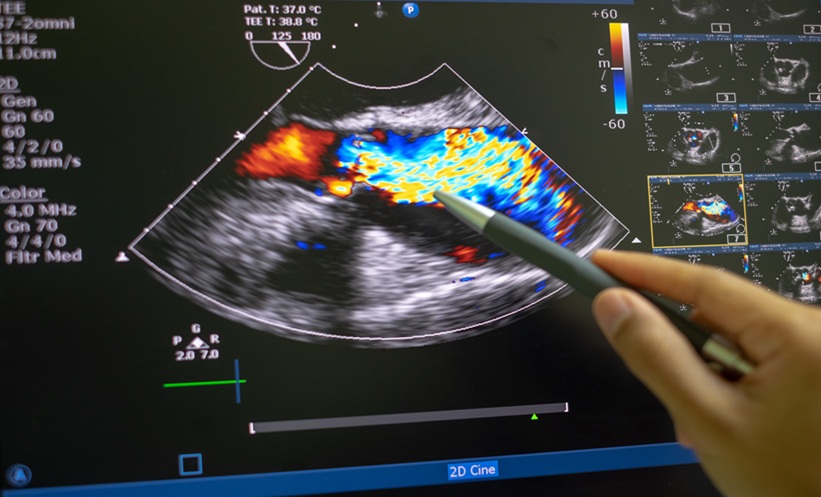
ECHOCARDIOGRAPHIC guidance has been highlighted as a cornerstone of transcatheter tricuspid valve interventions (TTVI), according to evidence from a new comprehensive review.
Researchers have emphasised the importance of comprehensive transoesophageal echocardiography (TOE) before, during, and after TTVI.
The researchers reported that high-quality imaging is essential for evaluating tricuspid regurgitation severity, leaflet morphology, right ventricular size and function, and procedural suitability for either transcatheter tricuspid edge-to-edge repair (T-TEER) or transcatheter tricuspid valve replacement (TTVR).
Echocardiographic Guidance for Patient Selection
The review noted that pre-procedural TOE provides crucial anatomical and functional information that helps determine the most appropriate treatment strategy.
Assessment includes tricuspid regurgitation mechanism, coaptation gap, annular dimensions, leaflet characteristics, and haemodynamic findings.
According to the review, comprehensive imaging is particularly important because tricuspid valve anatomy can be challenging to evaluate using transthoracic echocardiography alone.
Detailed assessment allows clinicians to identify favourable and unfavourable anatomical features that may influence procedural success. For example, complex valve morphology, which may affect device selection and treatment planning.
Real-Time Imaging Supports Procedural Success
During TTVIs, real-time three-dimensional (3D) TOE combined with fluoroscopy was described as critical for guiding device steering, leaflet engagement, and deployment.
For T-TEER, imaging enables operators to optimise device trajectory, confirm leaflet insertion, and assess tissue capture.
In situations where transoesophageal imaging is sub-optimal, 3D intracardiac echocardiography may provide additional support for procedural guidance.
Similarly, TTVR relies heavily on echocardiographic imaging to ensure accurate valve positioning, alignment, anchoring, and deployment.
3D multiplanar reconstruction was highlighted as especially valuable for monitoring device orientation and confirming successful leaflet capture throughout the procedure.
Assessing Outcomes After Intervention
Following device implantation, echocardiography plays a key role in evaluating procedural results and detecting complications.
The review described assessment of residual tricuspid regurgitation, paravalvular leak, transvalvular gradients, right ventricular functional changes, and pericardial effusion as essential components of postprocedural care.
The authors concluded that as TTVIs continue to expand, standardised echocardiographic protocols and specialist imaging expertise will remain fundamental to optimising procedural safety, patient selection, and long-term clinical outcomes in patients with tricuspid regurgitation.
Reference
Kam KKH et al. Echocardiographic guidance in transcatheter tricuspid valve interventions. J Cardiovasc Imaging. 2026;DOI:10.1186/s44348-026-00079-4
Featured image: Pitchy on Adobe Stock