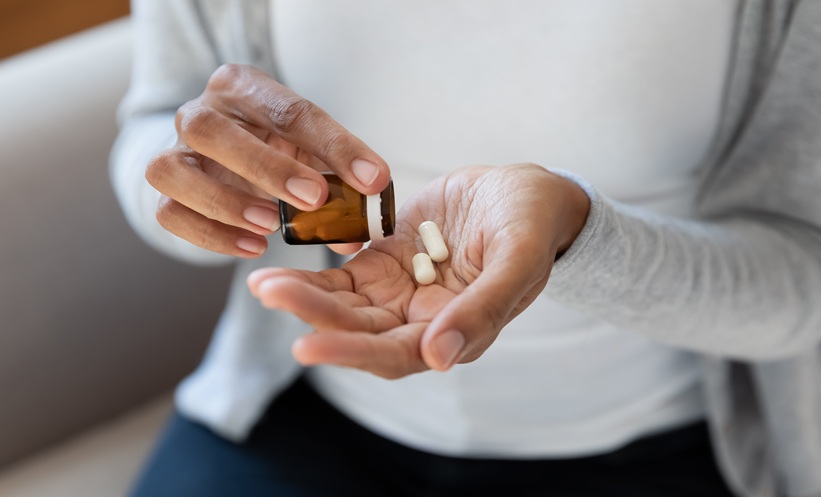
A COMBINATION of THC and CBD significantly reduces agitation in people with late-stage dementia, according to the findings of a double-blind, placebo-controlled, Phase 2 study presented at AAIC 2026, with benefits emerging within two weeks.
Dementia-Related Agitation at End of Life
Agitation affects around half of people with dementia near the end of life, and more than a third continue to experience symptoms despite off-label treatment with benzodiazepines, opioids or antipsychotics, which can be difficult to manage and carry significant risks. Agitation often signals unmet physical or emotional needs once communication becomes difficult in late-stage disease. Researchers therefore tested whether a THC and CBD combination could safely ease these symptoms in a population historically excluded from clinical trials.
Oral THC/CBD Formulation
The LiBBY trial was a multicentre, randomised, double-blind, placebo-controlled, Phase 2 study conducted across several US sites. It enrolled 120 hospice-eligible participants with Alzheimer’s disease or another form of dementia and clinically significant agitation, with a mean age of 80.5 years and 55% female. Participants received either an oral THC/CBD formulation, increasing from a half dose to a full dose of 4 mg THC and 200 mg CBD twice daily from week two, or a matching placebo, over 12 weeks. The primary endpoint was change in agitation on the Cohen-Mansfield Agitation Inventory at two weeks, with key secondary endpoints assessing sustained reduction at 12 weeks and global clinical change.
Rapid and Sustained Reductions in Agitation Scores
At two weeks, participants receiving THC/CBD showed a significantly greater reduction in agitation than those on placebo (mean difference −6.27; 95% CI −9.66 to −2.87; p=0.0004), a benefit sustained through 12 weeks (AUC difference −8.23; 95% CI −11.6 to −4.86; p<0.0001). Clinician-rated global improvement was significantly higher with THC/CBD at both two weeks (83.9% versus 30.5%; p<0.0001) and 12 weeks (87.2% versus 23.6%; p<0.0001). Adverse event rates were similar between groups (46.7% versus 42.4%), though serious adverse events were more frequent with THC/CBD (23.3% versus 11.9%), none judged related to the study medication.
A New Therapeutic Option
The authors concluded that the LiBBY trial met its primary and key secondary endpoints, suggesting that THC/CBD may offer an important new therapeutic option for agitation in people with dementia at the end of life.
Reference
Mintzer J et al. Life’s End Benefits of cannaBidiol and tetrahYdrocannabinol. resentation. AAIC, 12-15 July, 2026.
Featured image: ronstik on Adobe Stock
- Author: